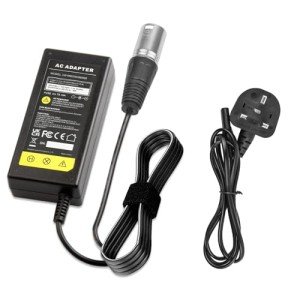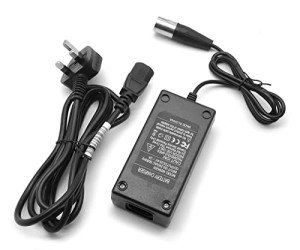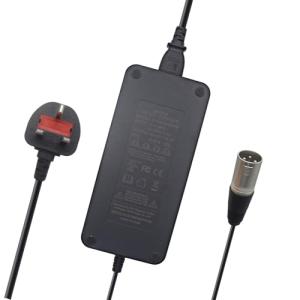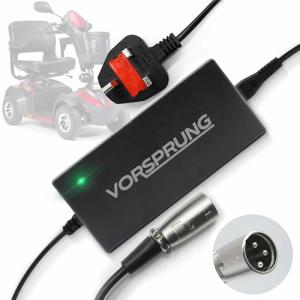

For individuals who rely on mobility scooters, the equipment represents much more than a simple vehicle; it is a gateway to independence, social interaction, and daily functionality. At the heart of this mobility is the battery system, and by extension, the battery charger. Among the various configurations available, the 24V 5A lead-acid charger is widely considered the industry standard for medium-to-large mobility scooters.
This guide provides an in-depth look at how these chargers work, why the 5-amp specification is critical, and how to maintain both the charger and the batteries to ensure long-term reliability.
Understanding the Specifications: 24V and 5A
The technical specifications of a charger are not arbitrary numbers; they must precisely match the requirements of the scooter’s battery bank.
The Voltage (24V)
Most mobility scooters operate on a 24-volt system. This is typically achieved by connecting two 12-volt lead-acid batteries in a series. A 24V charger is designed to provide the correct electrical pressure to push energy back into these combined units. Using a charger with the wrong voltage—such as a 12V or 36V charger—can result in either a failure to charge or catastrophic damage to the batteries.
The Amperage (5A)
Amperage refers to the speed of the current flow. A 5-amp charger is often referred to as a "fast" or "heavy-duty" charger compared to the 2-amp versions frequently bundled with smaller, travel-sized scooters.
- Faster Recovery: A 5A charger can replenish a depleted battery significantly faster than lower-amp alternatives.
- Capacity Matching: It is ideal for batteries ranging from 20Ah (Amp-hours) to 50Ah.
Technical Specifications Table
The following table summarizes the typical features found in a high-quality 24V 5A lead-acid charger.
| Feature | Specification |
|---|---|
| Input Voltage | 100-240V AC (Auto-sensing for global use) |
| Output Voltage | 24V DC (Nominal) |
| Charging Current | 5.0 Amperes |
| Battery Chemistry | Lead-Acid (AGM, Gel, SLA) |
| Connector Type | 3-Pin XLR (Standard) |
| Cooling Mechanism | Forced Air (Internal Fan) |
| Safety Certifications | UL, CE, RoHS |
| Efficiency | >85% |
The Three-Stage Charging Process
Modern 24V 5A chargers are "smart" devices. They do not simply pump electricity into a battery at a constant rate; instead, they use a multi-stage process to protect the battery’s internal chemistry.
- Stage 1: Bulk Charge: The charger provides the maximum 5A current to bring the battery up to approximately 80% capacity as quickly as possible.
- Stage 2: Absorption Charge: The voltage remains constant while the current (amperage) gradually tapers off. This stage ensures the battery is topped off without overheating.
- Stage 3: Float/Maintenance Mode: Once the battery is fully charged, the charger drops to a very low voltage. This "trickle" keeps the battery at 100% while preventing the "sulfation" that occurs when lead-acid batteries sit partially discharged.
Compatible Battery Types
While the 24V 5A charger is designed for lead-acid batteries, it is important to distinguish between the two primary types used in the mobility industry:
- AGM (Absorbent Glass Mat): These batteries are common because they are spill-proof and maintenance-free. They handle vibration well, making them ideal for scooters.
- Gel Cell Batteries: Often found in high-end or heavy-duty scooters, Gel batteries are more resistant to extreme temperatures and deep discharges.
Note: A standard lead-acid charger should never be used on Lithium-ion (Li-ion) batteries unless specifically labeled as compatible, as the charging profiles are fundamentally different and potentially dangerous if mismatched.
Key Features to Look For in a Replacement Charger
When purchasing a replacement 24V 5A charger, several features are non-negotiable for safety and longevity:
1. Automatic Shut-off
A "smart" charger must be able to detect when a battery is full. This prevents overcharging, which can lead to "gassing" (the release of hydrogen gas) or the swelling of the battery casing.
2. LED Status Indicators
Clear visual cues are essential. Most chargers use a color-coded system:
- Red: Power is connected or the battery is deeply discharged.
- Yellow/Orange: Charging is in progress.
- Green: Charging is complete/Float mode is active.
3. Safety Protections
The charger should have built-in safeguards against:
- Short Circuits: Prevents sparks if the connector is damaged.
- Reverse Polarity: Protects the system if the battery is connected incorrectly.
- Over-Voltage Protection: Prevents surges from reaching the scooter's electronics.
Troubleshooting Common Charging Issues
| Issue | Potential Cause | Recommended Solution |
|---|---|---|
| Charger stays on Green | Battery is already full or a fuse is blown. | Check the scooter's main fuse or connector pins. |
| Charger stays on Red | Battery voltage is too low to start the charge. | Test batteries individually; they may need replacing. |
| Charger is very hot | Internal fan failure or poor ventilation. | Ensure the fan is spinning and the charger is on a hard surface. |
| Charger makes a clicking noise | Relay issue or unstable power source. | Unplug and try a different wall outlet; if it persists, replace the charger. |
Maintenance Tips for Longevity
To get the most out of a 24V 5A charger and the batteries it services, users should follow these best practices:
- Charge Every Night: Lead-acid batteries do not have a "memory effect." They actually last longer if they are charged after every use, rather than being allowed to drain completely.
- Avoid Extreme Temperatures: Do not charge a scooter in a freezing garage or in direct, blistering sunlight. Room temperature (approx. 68-75°F) is ideal for chemical efficiency.
- Check the Connectors: The 3-pin XLR port can collect dust or corrosion. Periodically inspect the plug and the charging port on the scooter for debris.
- Keep it Dry: Chargers are electronic devices. Ensure they are used in dry environments to avoid short-circuiting the internal transformer.
Frequently Asked Questions (FAQ)
Can I leave my 24V 5A charger plugged in all the time?
If the charger is a modern "smart" charger with a float mode, it is generally safe to leave it plugged in. However, most manufacturers recommend unplugging the charger once the green light has been solid for several hours to save energy and protect against power surges during storms.
How long does it take to charge a scooter with a 5A charger?
This depends on the battery size. For a standard 35Ah battery that is 50% discharged, it will take roughly 4 to 5 hours. A full charge from empty may take 8 to 10 hours.
Can I use a 5A charger if my scooter came with a 2A charger?
In many cases, yes, provided the voltage (24V) and connector type match. Upgrading from 2A to 5A will speed up the charging process. However, if the batteries are very small (under 12Ah), a 5A current might be too aggressive and could shorten the battery life.
Why is there a fan inside my charger?
Higher amperage chargers (like the 5A models) generate significant heat during the bulk charging phase. The internal fan dissipates this heat to protect the internal circuitry and the battery.
Does the brand of the charger matter?
While minor brands can work, it is safer to stick with chargers certified by agencies like UL or CE. Lower-quality chargers may have poor voltage regulation, which can "cook" expensive batteries prematurely.
The 24V 5A lead-acid charger is a vital component for anyone utilizing a mid-to-high-range mobility scooter. By understanding the three-stage charging process, maintaining clean connections, and ensuring the charger’s specifications match the battery type, users can ensure their mobility aids remain ready for action. Investing in a high-quality, smart charger is not just an equipment choice—it is an investment in the reliability of one’s daily independence.