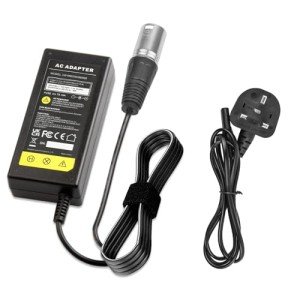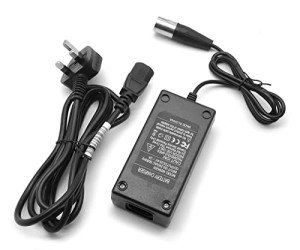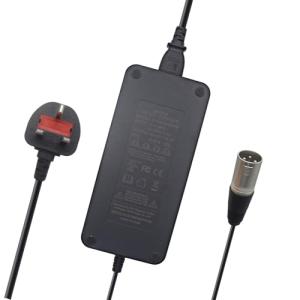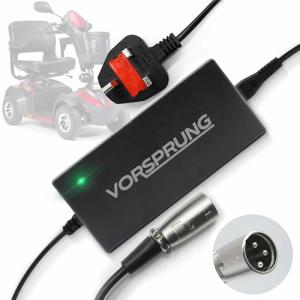


For individuals who rely on mobility scooters and electric wheelchairs, autonomy is inextricably linked to the reliability of their equipment. At the heart of these mobility aids lies the battery system, a component that requires precise care to ensure consistent performance and longevity. Among the various charging solutions available on the market, the 5A 24V charger has emerged as a standard-setter for mid-to-high capacity mobility devices.
This guide provides an in-depth exploration of the 5A 24V charger, detailing its technical specifications, compatibility requirements, and the benefits of its "smart" technology. By understanding how these devices function, users and caregivers can better maintain the batteries that provide the gift of movement.
Understanding the Specifications: 24V and 5A
To understand why a 5A 24V charger is chosen for specific mobility aids, one must first break down the electrical terminology.
The Voltage (24V)
Most modern mobility scooters and power wheelchairs operate on a 24-volt system. This is typically achieved by connecting two 12-volt Lead-Acid (SLA), AGM, or Gel batteries in a series. A 24V charger is designed specifically to provide the correct electrical pressure to push energy into these paired batteries simultaneously. Using a charger with a different voltage rating can cause catastrophic damage to the electronics or lead to battery failure.
The Amperage (5A)
Amperage represents the speed or "flow rate" of the electricity. A 5-ampere (5A) charger is considered a "medium-fast" charger. While many smaller travel scooters come with 2A chargers, larger scooters designed for outdoor use or heavy-duty wheelchairs require the 5A output to recharge larger-capacity batteries within a reasonable timeframe.
Power Output Comparison
| Charger Rating | Typical Battery Capacity | Estimated Charge Time (50% to 100%) |
|---|---|---|
| 2A 24V | 12Ah – 20Ah | 6 – 10 Hours |
| 5A 24V | 30Ah – 55Ah | 6 – 11 Hours |
| 8A 24V | 60Ah – 100Ah | 7 – 12 Hours |
Key Features of High-Quality 5A 24V Chargers
Modern 5A 24V chargers are not merely "power bricks"; they are sophisticated electronic devices equipped with "Smart Charging" technology. These features are designed to protect the battery’s chemistry and extend its lifespan.
1. Multi-Stage Charging Cycles
An intelligent 5A charger typically follows a three-stage profile:
- Bulk Stage: The charger delivers the full 5A current to bring the battery up to approximately 80% capacity quickly.
- Absorption Stage: The voltage remains constant while the current gradually tapers off, ensuring the battery is saturated deeply without overheating.
- Float/Maintenance Stage: Once the battery reaches 100%, the charger drops to a very low "trickle" voltage. This maintains the charge and prevents the natural self-discharge that occurs in lead-based batteries.
2. Safety Protection Mechanisms
Safety is paramount when dealing with high-capacity electrical storage. Premium 5A chargers include:
- Short-Circuit Protection: Prevents damage if the charging terminals accidentally touch.
- Over-Voltage Protection: Ensures the battery is never subjected to more voltage than it can handle.
- Reverse Polarity Protection: Protects the system if the batteries are connected incorrectly.
- Thermal Cut-off: If the charger becomes too hot during the 5A output phase, it will throttle down or shut off to prevent fire hazards.
3. LED Indicator Systems
Most 5A 24V chargers utilize a simple color-coded LED system to communicate status to the user:
- Solid Red: Power is connected, and the device is currently charging.
- Flashing Red/Yellow: Error detected (voltage too low or battery fault).
- Solid Green: Charging is complete; the device is in float mode.
Compatibility and Connector Types
The most critical factor when purchasing or replacing a 5A 24V charger is the connector type and battery chemistry compatibility.
The XLR Connector
The industry standard for mobility scooters and wheelchairs is the 3-pin XLR connector. It is a circular plug with three small pins inside a protective metal or plastic shroud.
- Pin 1: Positive (+)
- Pin 2: Negative (-)
- Pin 3: Often used as an inhibit signal (this prevents the scooter from being driven while still plugged into the wall).
Battery Chemistry
Not all 24V batteries are the same. It is vital to match the charger to the specific chemistry:
- AGM & Gel (SLA): These are the most common. Most 5A 24V chargers are optimized for these.
- Lithium (LiFePO4): Lithium batteries require a specific charging profile. A standard 5A 24V charger designed for Lead-Acid batteries should never be used on a Lithium battery unless specified, as it may result in a fire or permanent battery degradation.
The Importance of Battery Capacity Matching
A common question among users is whether they can use a 5A charger on a scooter that originally came with a 2A charger. While a 5A charger will charge a small battery faster, it can sometimes be too aggressive for very small batteries (under 12Ah), causing them to heat up and shorten their lifespan.
Conversely, using a 2A charger on a large 50Ah battery is inefficient. It may take over 24 hours to reach a full charge, and the charger may struggle to complete the "absorption" stage, leading to "stratification" of the battery acid and reduced capacity over time.
Recommended Battery Pairings for 5A Chargers
| Battery Size (Ah) | Compatibility Level | Notes |
|---|---|---|
| 12Ah - 18Ah | Low | May cause excessive heat; 2A is preferred. |
| 20Ah - 30Ah | Ideal | Rapid charging with safe thermal levels. |
| 35Ah - 55Ah | Ideal | The standard "sweet spot" for 5A chargers. |
| 70Ah+ | Low | 5A will work but will be very slow; 8A is preferred. |
Best Practices for Maintenance and Safety
To maximize the life of both the 5A 24V charger and the mobility device batteries, certain protocols should be followed:
- Charge Daily: Lead-acid batteries (AGM/Gel) do not have a "memory effect." They should be charged after every use, even if the trip was short.
- Avoid "Deep Discharge": Never let the battery gauge reach the red "empty" zone. Repeatedly running batteries until the device stops will significantly shorten their lifespan.
- Ventilation is Key: 5A chargers generate heat during the bulk charging phase. Ensure the charger is placed on a hard, flat surface (not carpet) and is not covered by blankets or clothing.
- Sequential Plugging: The safest way to connect the charger is to plug it into the mobility device first, and then plug it into the wall outlet. When finished, unplug from the wall first.
- Store in a Cool Place: High temperatures are the primary enemy of batteries and chargers. Avoid charging in a hot garage during the peak of summer if possible.
Frequently Asked Questions (FAQ)
1. Can a 5A 24V charger be left plugged in overnight?
Yes. Most modern 5A chargers feature an automatic shut-off or "float mode." Once the batteries are full, the charger reduces its output to a maintenance level. However, it is generally recommended to unplug the charger if the vehicle will not be used for more than 24 hours.
2. Why is the charger fan so loud?
Because a 5A charger moves a significant amount of current, it generates internal heat. Many 5A models include an internal cooling fan. This fan usually runs at high speed during the initial stages of charging and may slow down or stop once the battery reaches the float stage.
3. Can I use a 5A 24V charger for my electric bike?
Typically, no. While some e-bikes are 24V, many use Lithium-Ion batteries and different connector types. Always verify the battery chemistry and pin configuration before attempting to use a mobility scooter charger on other devices.
4. How do I know if the charger is broken or if the batteries are dead?
If the charger remains on "Red" (Charging) for more than 14 hours without turning green, the batteries may be unable to hold a charge. If the charger's lights do not turn on at all when plugged into a known working wall outlet, the charger itself has likely failed.
5. Will a 5A charger make my scooter go faster?
No. A charger only replenishes the energy in the batteries. It does not change the motor's power output or the scooter's top speed. However, healthy, well-charged batteries will ensure the scooter maintains its peak performance for a longer duration.
The 5A 24V charger is a vital tool for the modern mobility user. It offers a perfect balance between charging speed and battery preservation, particularly for mid-sized scooters and power wheelchairs. By adhering to the manufacturer’s guidelines and ensuring compatibility with battery chemistry and capacity, users can ensure that their mobility equipment remains a dependable partner in their daily lives. Investing in a high-quality "smart" charger is not just an equipment upgrade; it is an investment in the long-term health of the mobility device.