




Ensuring accessibility within a residential environment is a fundamental requirement for individuals with mobility challenges. Whether due to aging, injury, or chronic disability, the presence of steps, curbs, or raised thresholds can turn a home into a series of navigational hurdles. One of the most versatile and effective solutions to this problem is the 5FT portable aluminum wheelchair ramp. This guide explores the technical specifications, benefits, and practical applications of these essential tools to help homeowners make an informed decision.
Understanding the Necessity of Home Accessibility
Home is meant to be a sanctuary of comfort and independence. However, standard residential architecture often includes architectural barriers such as porch steps, high door thresholds, or uneven transitions between rooms. For a person using a wheelchair, power scooter, or walker, even a three-inch elevation can be impassable.
A 5-foot (60-inch) ramp serves as a mid-range solution that balances the need for a manageable slope with the requirement for portability. By installing a portable ramp, families can avoid expensive permanent renovations while significantly improving the quality of life for those with limited mobility.
Why Choose Aluminum?
When selecting a ramp, the material composition is a critical factor. Aluminum has become the industry standard for portable accessibility solutions for several reasons:
- Strength-to-Weight Ratio: Aluminum is remarkably strong, capable of supporting significant loads (often up to 800 lbs), yet it remains light enough for one or two people to move easily.
- Corrosion Resistance: Unlike steel, aluminum does not rust. This is vital for home ramps that may be exposed to rain, snow, and humidity.
- Low Maintenance: Aluminum ramps do not require painting or sealing. An occasional cleaning with soap and water is usually sufficient to maintain their appearance and functionality.
- Durability: It withstands extreme temperatures without warping or becoming brittle, ensuring safety across all seasons.
Technical Specifications and Dimensions
A standard 5FT portable aluminum ramp is designed to accommodate most manual wheelchairs, power chairs, and scooters. Below is a detailed look at the typical specifications found in high-quality models.
Table 1: General Specifications of a 5FT Portable Aluminum Ramp
| Feature | Typical Specification |
|---|---|
| Total Length | 5 Feet (60 Inches) |
| Material | High-Strength Aircraft-Grade Aluminum |
| Weight Capacity | 600 lbs – 800 lbs |
| Product Weight | 25 lbs – 35 lbs |
| Usable Width | 28 inches – 31 inches |
| Folding Style | Bi-fold (Suitcase style) or Tri-fold |
| Surface | High-traction grit or ribbed non-slip surface |
| Safety Features | Side curbs, locking pins, transition plates |
Choosing the Right Slope: The Rise and Run
One of the most important aspects of choosing a ramp is calculating the "rise." The rise is the vertical height of the obstacle the ramp needs to cover. While the Americans with Disabilities Act (ADA) recommends a 1:12 ratio for public spaces (1 foot of ramp for every 1 inch of rise), residential settings often use a 1:6 or 1:8 ratio depending on the user's strength and the type of mobility device.
Table 2: Recommended Rise for a 5FT Ramp
| Slope Ratio | Maximum Rise (Inches) | Best Suited For |
|---|---|---|
| 1:12 (ADA standard) | 5 Inches | Manual wheelchairs with independent users |
| 1:10 (Gentle) | 6 Inches | Most manual wheelchairs with an attendant |
| 1:8 (Steep) | 7.5 Inches | Power scooters and heavy-duty power chairs |
| 1:6 (Maximum Gradient) | 10 Inches | Temporary use; requires a strong attendant |
Essential Features of a 5FT Portable Ramp
When evaluating different models, certain features are non-negotiable for safety and convenience:
1. Folding Mechanisms
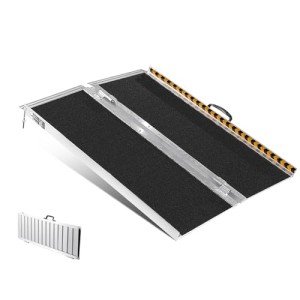
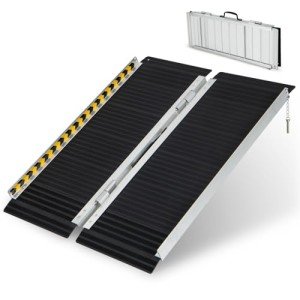
Most 5FT ramps feature a "suitcase" design. They fold in half lengthwise and often come equipped with a built-in handle. This allows the ramp to be stored in a closet or transported in the trunk of a vehicle with ease.
2. High-Traction Surfaces
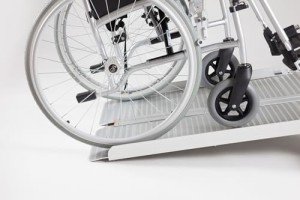
To prevent slipping, especially in wet conditions, aluminum ramps feature either a sandpaper-like "high-grit" tape or an extruded serrated surface. These ensure that wheelchair tires maintain a firm grip throughout the ascent or descent.
3. Integrated Curbs
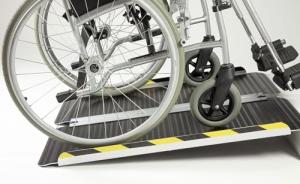
Safety curbs (side rails) are usually 2 to 3 inches high. They prevent the wheels of the mobility device from accidentally slipping off the side of the ramp, providing peace of mind for both the user and the caregiver.
4. Transition Plates
The top of the ramp features a lip or transition plate that rests securely on the landing (the porch or the car bumper). At the bottom, a tapered transition plate ensures a smooth entry from the ground onto the ramp.
Practical Applications at Home
A 5FT ramp is uniquely positioned to handle various home-based scenarios:
- Front or Back Porch Steps: Ideal for homes with 2 to 3 standard steps.
- Vehicle Access: Perfect for loading a wheelchair or scooter into the side or rear of a minivan or SUV.
- Threshold Navigation: Useful for bridging large door sills or sliding glass door tracks that are too high for standard threshold ramps.
- Raised Sunrooms or Decks: Provides easy access to outdoor living spaces that are slightly elevated from the main floor level.
Pros and Cons of a 5FT Portable Aluminum Ramp
Pros:
- Versatility: Long enough to provide a safe slope for most low rises but short enough to remain portable.
- No Installation Required: Unlike permanent wooden ramps, these do not require building permits or concrete footings.
- Cost-Effective: Significantly cheaper than custom-built accessibility structures.
- Weatherproof: Designed to stay outdoors if needed without deteriorating.
- Multi-use: Can be moved from the front door to the car as needed.
Cons:
- Weight Limits: Users must ensure the combined weight of the person and the chair does not exceed the ramp's capacity.
- Storage Space: While they fold, a 5-foot ramp still requires a storage area approximately 5 feet long or 2.5 feet (if bi-folded).
- Gradient Limits: Cannot be used safely for high porches (e.g., 4 or more steps) as the slope becomes too steep.
Safety Maintenance Tips
To ensure the longevity and safety of the aluminum ramp, owners should follow a simple maintenance routine:
- Periodic Inspection: Check for loose bolts, damaged hinges, or worn-out traction tape.
- Cleanliness: Remove leaves, mud, or snow immediately, as debris can create a slip hazard regardless of the ramp’s surface.
- Secure Attachment: Always use the provided safety pins or straps if the ramp is being used for vehicle loading to prevent it from kicking out.
- Center Loading: Ensure the wheelchair is centered on the ramp to maintain balanced weight distribution.
Frequently Asked Questions (FAQ)
Q: Can a 5FT ramp be used for all types of wheelchairs?A: Most 5FT aluminum ramps are designed to accommodate manual wheelchairs, power wheelchairs, and four-wheeled scooters. However, users should always check the width of their device against the usable width of the ramp (typically 28-31 inches).
Q: Is it safe for one person to set up the ramp?A: Since 5FT aluminum ramps weigh between 25 and 35 pounds, they are generally manageable for one able-bodied adult to set up. Most come with a suitcase handle to facilitate easy carrying.
Q: Can the ramp stay outside permanently?A: While aluminum is weather-resistant and will not rust, it is recommended to store the ramp indoors when not in use for extended periods to prevent the accumulation of debris and to extend the life of the non-slip surface.
Q: What is the maximum height a 5FT ramp can safely reach?A: For residential use, it is generally recommended not to exceed a 10-inch rise with a 5FT ramp, as anything higher results in a very steep and potentially dangerous slope.
The 5FT portable aluminum wheelchair ramp is an indispensable tool for creating a barrier-free home environment. Its blend of durability, lightweight construction, and safety features makes it a premier choice for those seeking a temporary or mobile accessibility solution. By understanding the relationship between rise and run and selecting a ramp with high-quality features like safety curbs and traction surfaces, homeowners can ensure that everyone, regardless of mobility level, can move in and out of the home with dignity and ease.