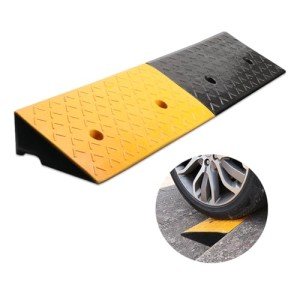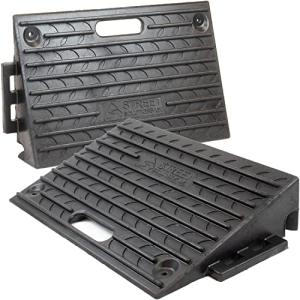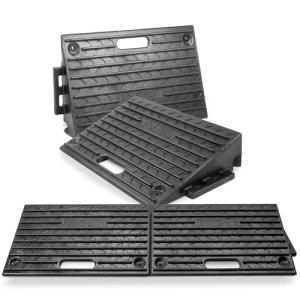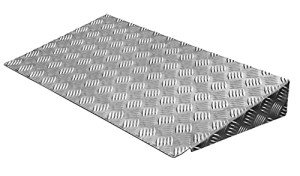





For individuals utilizing mobility scooters, the home should represent a space of total accessibility. However, even the smallest architectural barriers—such as a sliding glass door track, a slightly raised front door threshold, or a single step leading to a porch—can represent a significant obstacle. These small vertical rises can cause jarring impacts, damage the undercarriage of a mobility device, or even cause the scooter to stall or tip.
The adjustable aluminum threshold ramp has emerged as one of the most effective and versatile solutions for bridging these gaps. By providing a smooth, gradual transition between different floor heights, these ramps ensure that mobility scooter users can navigate their environments with independence and safety.
Understanding the Necessity of Threshold Ramps
Mobility scooters are designed for stability and comfort on flat surfaces, but their low ground clearance makes them sensitive to uneven terrain. A threshold of just one or two inches can be enough to bottom out a scooter, potentially damaging the transaxle or the battery housing.
Adjustable threshold ramps are specifically engineered to eliminate these hazards. Unlike fixed wooden ramps or temporary rubber mats, adjustable aluminum models offer a level of precision that allows for a flush fit against the doorway, regardless of the specific height requirements of the structure.
Key Benefits of Aluminum Construction
When selecting a material for a mobility ramp, aluminum remains the industry standard for several critical reasons:
- Strength-to-Weight Ratio: Aluminum is incredibly strong, capable of supporting the combined weight of a heavy-duty mobility scooter and its operator, yet it is light enough to be moved or repositioned by a single person if necessary.
- Corrosion Resistance: Unlike steel, which can rust when exposed to rain or humidity, aluminum is naturally resistant to oxidation. This makes it ideal for both interior and exterior transitions.
- Durability: Aluminum does not warp, rot, or crack over time. A high-quality aluminum ramp is a one-time investment that can last for decades.
- Surface Safety: Most aluminum ramps feature an extruded or "high-traction" surface that provides excellent grip, even in wet conditions.
The Importance of Adjustability
The standout feature of these modern accessibility aids is their adjustability. Every doorway is unique; a front door might have a three-inch rise, while a transition from a kitchen to a sunken living room might only be an inch and a half.
Adjustable ramps typically utilize one of two mechanisms:
- Threaded Legs: These allow the user to independently rotate feet at the top or bottom of the ramp to fine-tune the height to the exact millimeter.
- Modular Slats: Some designs feature interlocking sections that can be added or removed to reach the desired elevation.
This flexibility ensures that there is no "lip" at the top of the ramp, allowing the scooter wheels to transition seamlessly from the ramp to the internal flooring.
Standard Specifications Table
Below is a comparison of typical specifications found in professional-grade adjustable aluminum threshold ramps:
| Feature | Standard Mobility Ramp | Heavy-Duty Mobility Ramp |
|---|---|---|
| Weight Capacity | 600 lbs (272 kg) | 800 - 1,000 lbs (362 - 453 kg) |
| Material | Grade 6061-T6 Aluminum | Reinforced Anodized Aluminum |
| Typical Width | 32 inches | 36 inches |
| Height Range | 1 to 3 inches | 3 to 6 inches |
| Surface Texture | Serrated / Ribbed | High-Traction Grit or Punched Mesh |
| Compliance | ADA Recommended | ADA Compliant |
Key Features to Consider
When evaluating an adjustable aluminum threshold ramp, there are several technical features that contribute to the overall safety and functionality of the device.
1. High-Traction Surfaces
Scooter tires are often made of solid rubber which can slip on smooth metal. A quality ramp will feature a "deeply ribbed" or "serrated" surface. Some premium models utilize a "grit" surface, similar to heavy-duty sandpaper, to ensure maximal friction.
2. Safety Flanges or Curbs
While threshold ramps are usually short, some models include small raised side rails. These act as physical guides to prevent the scooter wheels from veering off the side of the ramp during the transition.
3. Pre-drilled Mounting Holes
While many threshold ramps are designed to stay in place via their own weight and rubberized backing, most come with pre-drilled holes. This allows the ramp to be permanently bolted into the subfloor or concrete for maximum stability.
4. Flap/Transition Plates
The most effective ramps include a top "flap" or a pivoting transition plate. This piece rests on the higher surface (the door sill), creating a bridge that compensates for any gaps between the ramp and the floor.
Installation and Placement Guide
Proper installation is critical for ensuring the safety of the mobility scooter user. Because these ramps are adjustable, the setup process is straightforward, but it requires attention to detail.
Step-by-Step Installation Process:
- Measurement: Measure the height of the rise from the ground to the highest point of the threshold.
- Clearance Check: Ensure the door can still open and swing freely over the area where the ramp will be placed.
- Adjustment: Turn the adjustable legs or feet until the top of the ramp is flush with the threshold. Use a bubble level to ensure the ramp is not tilting to one side.
- Testing: Before the user attempts to climb the ramp, apply pressure to the ramp to ensure there is no wobbling or movement.
- Securing: If the ramp is intended for permanent use, use the provided hardware to secure it to the surface.
Incline and Gradient Safety
The steeper the ramp, the harder the scooter's motor must work. For longer ramps, the Americans with Disabilities Act (ADA) recommends a 1:12 ratio (one inch of rise for every 12 inches of length). For short threshold transitions, a steeper 1:8 or 1:6 ratio is often acceptable, provided the scooter has sufficient power.
| Rise Height | Recommended Ramp Length (1:12 Ratio) | Minimum Length (1:8 Ratio) |
|---|---|---|
| 1 Inch | 12 Inches | 8 Inches |
| 2 Inches | 24 Inches | 16 Inches |
| 3 Inches | 36 Inches | 24 Inches |
| 6 Inches | 72 Inches | 48 Inches |
Maintenance for Longevity
Aluminum is low-maintenance, but it is not "no-maintenance." To ensure the ramp remains safe for years of service, the following steps are recommended:
- Debris Removal: Clear the ramp of leaves, mud, or snow regularly. Debris can fill the serrated grooves and reduce traction.
- Hardware Inspection: Periodically check that the adjustable legs remain tight. Vibration from scooter traffic can occasionally loosen threaded components.
- Cleaning: Use a mild detergent and water to wash away salt or chemicals tracked in from the street, which can eventually dull the finish of the aluminum.
Frequently Asked Questions (FAQ)
Q: Can these ramps be used with power wheelchairs as well?A: Yes. Adjustable aluminum threshold ramps are designed to accommodate both mobility scooters and power wheelchairs. The weight capacities are generally high enough for even heavy complex rehab power chairs.
Q: Are these ramps portable?A: While some threshold ramps are installed permanently, many are lightweight enough (10–15 lbs) to be carried in the back of a vehicle for use when visiting friends or traveling.
Q: Will the ramp scratch my flooring?A: Most adjustable aluminum ramps come with rubberized pads or protective coatings on the underside to prevent scratching on hardwood or tile surfaces.
Q: How do I know if my door sill is too high for a threshold ramp?A: Most threshold-style ramps are designed for rises up to 6 inches. If the rise is higher than 6 inches, a "portable suitcase ramp" or a modular ramp system with handrails is usually recommended for safety.
Q: Does the ramp work on sliding door tracks?A: Yes, many models are specifically designed to "straddle" the track of a sliding glass door, providing a ramped surface on both the interior and exterior sides.
An adjustable aluminum threshold ramp is more than just a piece of hardware; it is a vital tool for maintaining independence and safety within a home. By selecting a high-quality aluminum model, users benefit from a rust-proof, durable, and high-capacity solution that can be tailored to the exact dimensions of their living space. Whether it is a small transition into a bathroom or a larger rise at the front entrance, the right ramp ensures that a mobility scooter remains a vehicle of freedom rather than one of frustration.