




Accessibility is a fundamental requirement for inclusive living, yet many residential and commercial structures still feature architectural barriers like steps, high curbs, and elevated thresholds. For individuals utilizing wheelchairs, power scooters, or walkers, a single step can represent a significant obstacle. The Folding 7FT Aluminum Wheelchair Ramp has emerged as one of the most versatile solutions for bridging these gaps.
This guide provides an in-depth exploration of the features, benefits, and technical considerations of the 7ft folding aluminum ramp, illustrating why it is a preferred choice for enhancing mobility and independence.
The Strategic Importance of the 7FT Length
Selecting the correct ramp length is the most critical decision in ensuring user safety. The length of a ramp determines its slope; a ramp that is too short for a specific height will result in an incline that is too steep to navigate safely.
Understanding the Slope Ratio
The Americans with Disabilities Act (ADA) recommends a 1:12 slope ratio for commercial settings, meaning for every 1 inch of vertical rise, there should be 12 inches of ramp. In residential settings where space may be limited, a 1:6 or 1:8 ratio is often used.
A 7ft (84-inch) ramp is strategically sized. It is long enough to cover a rise of approximately 7 to 14 inches safely while remaining portable enough to be moved by a single person.
Common Use Cases for a 7FT Ramp:
- Three to Four Standard Steps: Depending on the height of each step, a 7ft ramp provides a manageable incline for manual wheelchairs.
- Van and SUV Loading: The length allows for a gradual transition into the side or rear of a vehicle.
- High Porches: It serves as an excellent semi-permanent solution for home entryways.
Why Aluminum? A Material Comparison
When selecting a ramp, the material dictates durability, weight, and maintenance requirements. Aluminum is widely regarded as the industry standard for portable ramps because it balances strength with a lightweight profile.
Table 1: Material Comparison for Wheelchair Ramps
| Feature | Aluminum (Folding) | Steel | Wood |
|---|---|---|---|
| Weight | Lightweight (Easy to carry) | Heavy | Very Heavy |
| Corrosion Resistance | Excellent (Rust-proof) | Poor (Prone to rust) | Subject to Rot/Termites |
| Portability | High (Foldable) | Low (Stationary) | None (Permanent) |
| Maintenance | Minimal (Simple cleaning) | High (Painting/Coating) | High (Staining/Sealing) |
| Surface | High-traction (Built-in) | Grip tape required | Can become slippery |
Technical Specifications and Features
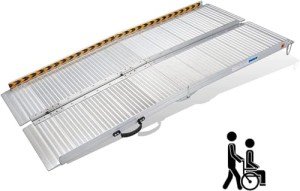
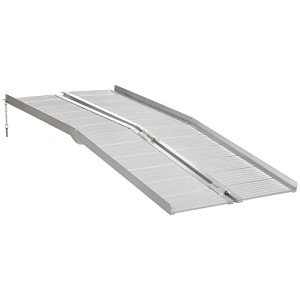
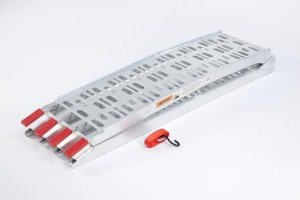
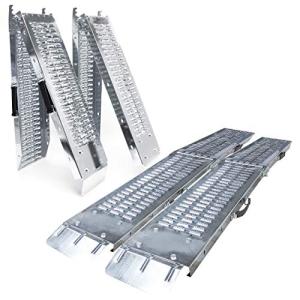
A high-quality 7ft folding aluminum ramp is engineered with several safety and convenience features. Most models are designed to fold in half—either lengthwise (bifold) or in four sections (multifold)—to mimic the shape of a suitcase.
Key Design Features:
- High Weight Capacity: Despite their light weight, these ramps are usually rated to support between 600 lbs and 800 lbs, accommodating the combined weight of the user and a heavy power wheelchair.
- Serrated or Grit Surface: To prevent slipping in rain or snow, the aluminum surface is often grooved or covered with a high-traction grit coating.
- Safety Side Rails: Raised edges (usually 2 inches high) prevent the wheels of a mobility device from accidentally veering off the side of the ramp.
- Transition Plates: Smooth plates at the top and bottom ensure a seamless transition from the ground to the ramp and from the ramp to the landing.
- Steel Security Pins: Most units include holes at the top lip for pins that lock the ramp into the porch or vehicle to prevent sliding during use.
Table 2: Typical Specifications for a 7FT Folding Aluminum Ramp
| Specification | Details |
|---|---|
| Total Length | 84 inches (7 Feet) |
| Unfolded Width | 28 to 31 inches |
| Folded Dimensions | 42" x 15" x 3" (approx. for suitcase fold) |
| Product Weight | 40 - 55 lbs |
| Maximum Load Capacity | 600 - 800 lbs |
| Material Grade | 6061-T6 or similar aircraft-grade aluminum |
Benefits of the Folding Design
The "folding" aspect of the 7ft aluminum ramp provides utility that a fixed ramp cannot match. This makes it an ideal tool for families who are often on the go or for businesses that do not need a permanent ramp installation.
1. Portability and Storage
Because the ramp folds down into a compact size, it can be stored in a closet, under a bed, or in the trunk of a vehicle. Integrated carrying handles make it easier to transport the ramp from the house to the car.
2. No Permanent Modification
Many homeowners prefer folding ramps because they do not require a building permit or permanent structural changes to the house. This is particularly beneficial for renters or for those who only need the ramp temporarily (e.g., while recovering from surgery).
3. Rapid Deployment
Setting up a 7ft folding ramp takes less than a minute. It involves unfolding the device, placing the top lip on the landing, and ensuring the surface is stable. This speed is essential during emergencies or in inclement weather.
Safety Guidelines for Implementation
While aluminum ramps are designed for safety, proper usage is paramount to prevent accidents.
Tips for Safe Installation:
- Check the Surface: Ensure the ground at the bottom and the landing at the top are level and free of debris.
- Verify the Rise: Measure the vertical height of the steps. If the rise exceeds 14 inches, a 7ft ramp may be too steep for manual wheelchair users without an assistant.
- Center the Load: Users should always stay in the center of the ramp to maintain balance and prevent the ramp from shifting.
- Secure the Ramp: Always use the provided safety pins or straps to anchor the ramp to the step or vehicle.
Maintenance List:
- Clean Regularly: Wipe down the surface to remove mud, leaves, or ice that can interfere with traction.
- Inspect Hinges: Periodically check the folding hinges and rivets for any signs of wear or loosening.
- Check Grit Tape: If the ramp uses adhesive grip tape, ensure it is not peeling. Replace it if it becomes smooth.
- Store in a Dry Place: While aluminum does not rust, storing it away from extreme elements helps preserve the integrity of the hinges and handles.
Frequently Asked Questions (FAQ)
1. Can a 7ft ramp be used for a power wheelchair?
Yes, most 7ft aluminum ramps have a weight capacity (600+ lbs) specifically designed to handle the weight of power wheelchairs and scooters. However, one should always check the manufacturer’s weight rating before use.
2. Is a 7ft ramp too heavy for one person to carry?
A 7ft aluminum ramp typically weighs between 40 and 55 pounds. While most active adults can move it using the built-in handle, individuals with limited strength may require assistance or a two-piece "multifold" design that splits the weight into two sections.
3. How do I know if a 7ft ramp is the right size for my steps?
Measure the total vertical rise from the ground to the top landing. For independent manual wheelchair use, a 1:12 ratio is best (14-inch rise needs a 14ft ramp). For assisted use or power chairs, a 7ft ramp is generally appropriate for a rise of 10 to 14 inches.
4. Can the ramp be left outside permanently?
Aluminum is weather-resistant and will not rust. However, leaving it out indefinitely can lead to a buildup of debris that reduces traction. For long-term outdoor use, ensure the ramp is securely anchored to prevent it from moving in high winds.
5. Does the ramp work for walking with a walker?
Yes. The high-traction surface and side rails make it much safer for individuals using walkers or canes to navigate steps compared to trying to lift the walker over each individual tread.
The Folding 7FT Aluminum Wheelchair Ramp represents a perfect intersection of engineering and accessibility. By offering a lightweight, rust-proof, and high-capacity solution, it empowers individuals with mobility challenges to navigate their environments with dignity and safety. Whether it is used for a residential porch, a vehicle, or as a temporary bridge for a community event, the 7ft ramp is an indispensable tool in the pursuit of a more accessible world. When selected and used correctly, it provides a reliable path forward, literally and figuratively, for those who need it most.