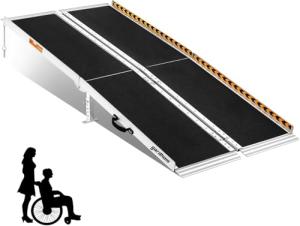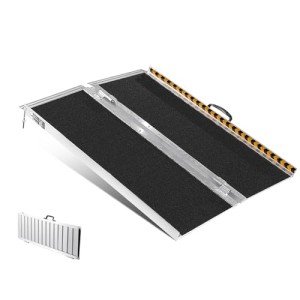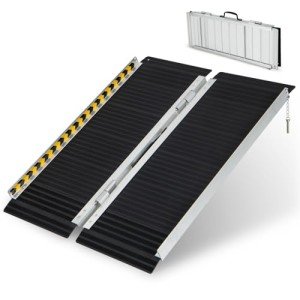





Accessibility is not merely a convenience; for millions of individuals with mobility challenges, it is a fundamental requirement for independence and quality of life. Whether navigating a residential entryway, a vehicle, or a public space with a single step, the right equipment can make the difference between isolation and engagement. Among the most versatile tools in the mobility industry is the folding aluminum wheelchair ramp with a non-skid surface.
This guide explores the engineering, safety benefits, and practical applications of these portable accessibility solutions, providing essential information for caregivers, facility managers, and individuals alike.
The Engineering Behind the Material: Why Aluminum?
When it comes to portable ramps, the choice of material is critical. Aluminum has become the industry standard for several high-performance reasons. Its primary advantage is its strength-to-weight ratio. Aluminum is significantly lighter than steel, making it manageable for a single person to lift and transport, yet it possesses the structural integrity to support weights often exceeding 600 to 800 pounds.
Furthermore, aluminum is naturally resistant to corrosion and rust. Unlike wooden ramps that may rot or steel ramps that require constant painting to prevent oxidation, aluminum maintains its structural integrity even when exposed to heavy rain, snow, or coastal salt air. This durability ensures that the ramp remains a long-term investment for both indoor and outdoor use.
The Importance of the Non-Skid Surface
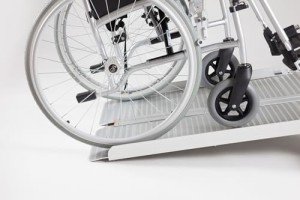
Safety is the paramount concern when moving a wheelchair or scooter up an incline. A smooth metal surface can become incredibly slippery, especially when damp or covered in dew. High-quality folding ramps feature a specialized non-skid surface—often a high-traction grit tape or a serrated "tread" punched directly into the metal.
This surface provides the necessary friction for rubber tires to grip the ramp, preventing backsliding or side-slipping. For manual wheelchair users, this traction allows for a more controlled ascent and descent, reducing the physical strain on the user or the caregiver pushing the chair.
Key Features of Folding Ramps
Folding aluminum ramps are designed with portability and storage in mind. Most models follow a "suitcase" design, incorporating several key features:
- Integrated Carrying Handles: Ergonomically designed handles allow the ramp to be carried like a piece of luggage once folded.
- High-Strength Hinges: Heavy-duty hinges allow the ramp to fold in half (single-fold) or quarters (multi-fold) without compromising the weight capacity when deployed.
- Transition Plates: These are the tapered flaps at the top and bottom of the ramp that ensure a smooth transition from the ground to the ramp and from the ramp to the landing.
- Side Curbs/Rails: Most safety-compliant ramps include raised edges (usually 2-3 inches high) to prevent the wheels of a mobility device from accidentally rolling off the side.
Technical Specifications and Comparison
Choosing the right ramp requires understanding the relationship between length, weight capacity, and the rise of the obstacle. Below is a comparison table for standard folding aluminum ramp sizes.
| Ramp Length | Maximum Rise (ADA 1:12) | Maximum Rise (Occupied/Portable) | Folded Dimensions (Approx.) | Unit Weight | Weight Capacity |
|---|---|---|---|---|---|
| 2 Feet | 2 Inches | 4 Inches | 24" x 15" | 12 lbs | 800 lbs |
| 3 Feet | 3 Inches | 6 Inches | 36" x 15" | 17 lbs | 800 lbs |
| 4 Feet | 4 Inches | 8 Inches | 48" x 15" | 22 lbs | 800 lbs |
| 6 Feet | 6 Inches | 12 Inches | 72" x 15" | 33 lbs | 800 lbs |
| 8 Feet | 8 Inches | 16 Inches | 96" x 15" | 45 lbs | 600 lbs |
| 10 Feet | 10 Inches | 20 Inches | 60" x 15" (Multi-fold) | 65 lbs | 600 lbs |
Note: The ADA (Americans with Disabilities Act) recommends a 1:12 slope for permanent residential ramps (1 foot of ramp for every 1 inch of rise). For portable use with an attendant, a steeper 2:12 ratio is often acceptable.
How to Choose the Right Size: A Step-by-Step Guide
Selecting a ramp that is too short can result in a dangerously steep incline, while one that is too long may be unnecessarily heavy and difficult to store. Follow these steps to ensure the correct fit:
- Measure the Total Vertical Rise: Use a tape measure to determine the vertical distance from the ground to the highest point where the ramp will rest (e.g., the top of the porch step or the van floor).
- Determine the Available Space: Ensure there is enough clear "runway" at the bottom of the step for the ramp to extend fully without hitting a wall or a parked car.
- Consult the Weight Requirements: Calculate the combined weight of the wheelchair/scooter and the person using it. Most folding aluminum ramps handle 600–800 lbs, which is sufficient for most power chairs, but it is always vital to verify.
- Identify the User's Strength: If a caregiver will be transporting the ramp frequently, consider a multi-fold design which distributes the weight into smaller, more manageable sections.
Maintenance and Care
To ensure the longevity of a folding aluminum ramp and the safety of its users, regular maintenance is required:
- Debris Removal: Clear the non-skid surface of leaves, dirt, or gravel. For grit-style surfaces, a stiff-bristled broom is effective.
- Cleaning: Use mild soap and water to wash the aluminum. Avoid harsh chemicals that could degrade the adhesive on non-skid tapes.
- Hinge Inspection: Periodically check the hinges for tightness. A drop of silicone-based lubricant can keep the folding mechanism smooth.
- Surface Check: If the non-skid grit tape begins to peel or wear down in high-traffic areas, it should be replaced immediately with furniture-grade anti-slip tape.
Frequently Asked Questions (FAQ)
Q: Can these ramps be left outside permanently?
A: Yes, because they are made of aircraft-grade aluminum, they are weather-resistant. However, if the ramp features grit tape for its non-skid surface, prolonged exposure to extreme ice and snow may eventually cause the adhesive to loosen. For permanent outdoor installations, a ramp with an integrated "punched" serrated surface is often preferred.
Q: Are folding ramps suitable for power wheelchairs?
A: Generally, yes. Most are rated for 600-800 lbs. However, power wheelchairs are much heavier than manual ones and have a lower center of gravity. It is crucial to use a longer ramp to ensure the incline is shallow enough that the power chair doesn't "bottom out" at the top of the ramp.
Q: How do I secure the ramp so it doesn't slip off the step?
A: High-quality ramps come with pre-drilled holes in the top transition plate. These allow the user to use "safety pins" or bolts to temporarily or permanently anchor the ramp to the landing surface.
Q: Is a 1:12 slope always necessary?
A: For commercial buildings, the ADA 1:12 ratio is a legal requirement. For private residential use, the slope is often dictated by the available space. While 1:12 is the safest, many portable ramp users operate on a 2:12 or 3:12 slope if an able-bodied attendant is assisting.
Summary of Benefits
For those seeking to improve accessibility, the folding aluminum ramp offers a unique combination of safety and convenience. Using a list of its core benefits helps highlight why it remains a top choice for mobility solutions:
- Portability: Folds in half for transport in a trunk or backseat.
- Ease of Setup: Most models require no assembly; they simply unfold and are ready for use.
- Weather Resistance: Aluminum does not rust, ensuring a long lifespan.
- Enhanced Safety: Non-skid surfaces and side curbs protect the user from accidents.
- Cost-Effective: Significantly cheaper than installing a permanent concrete ramp or a mechanical porch lift.
The folding aluminum wheelchair ramp with a non-skid surface is a vital tool in the pursuit of an accessible world. By combining the lightweight durability of aluminum with advanced traction technology and portable design, these ramps provide a reliable bridge over physical barriers.
When choosing a ramp, prioritizing the correct length for a safe slope and ensuring a high weight capacity will guarantee a safer experience for both the user and the caregiver. Whether for temporary travel or permanent home access, this equipment stands as a testament to how smart engineering can foster independence and mobility for everyone.