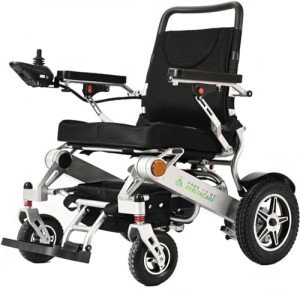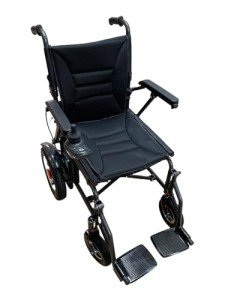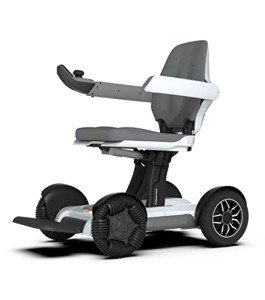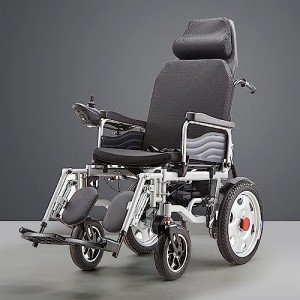

For individuals with limited mobility and their caregivers, stairs have historically represented one of the most significant architectural barriers in both private homes and public spaces. While elevators and ramps are the gold standard for accessibility, they are not always present or feasible to install. This is where the folding electric stair climber wheelchair trolley emerges as a literal life-changer.
Combining the functionality of a traditional wheelchair with advanced crawler-track technology, these devices provide a safe, efficient, and portable solution for navigating vertical obstacles. This guide explores the design, functionality, and benefits of these innovative mobility aids.
What is a Folding Electric Stair Climber Wheelchair Trolley?
A folding electric stair climber is a specialized mobility device equipped with motorized tracks—similar to those found on tanks—that grip the edges of stairs to move the chair upward or downward. Unlike manual transport chairs that require significant physical strength from a caregiver, the electric version utilizes a high-torque motor and a rechargeable battery system to do the heavy lifting.
The "trolley" aspect refers to its dual-purpose design; many models can function as a standard transit wheelchair on flat ground and a rugged climber on staircases. The "folding" feature ensures that the device can be stowed in a car trunk or a small closet, making it an ideal companion for travel and emergency evacuations.
Key Features and Components
Modern electric stair climbers are masterpieces of ergonomic engineering. To understand their value, one must look at the specific components that ensure safety and ease of use.
1. Motorized Crawler Tracks
The heart of the machine is the track system. Made from high-durability, anti-skid rubber, these tracks provide the friction necessary to maintain a grip on various stair materials, including wood, carpet, and stone.
2. Intelligent Control Panel
Most devices feature a simple joystick or button interface located on the push handle. This allows the caregiver to control the speed and direction (up or down) with minimal effort.
3. Foldable Lightweight Frame
Constructed typically from aerospace-grade aluminum alloy, the frame is designed to be both lightweight for transport and sturdy enough to support significant weight capacities (often up to 160kg or 350lbs).
4. Safety Harnesses and Supports
Safety is paramount. These chairs include adjustable lap belts, shoulder harnesses, and often a headrest to ensure the passenger remains secure and comfortable during the tilt required for stair climbing.
Technical Specifications: At a Glance
The following table provides a general overview of the technical specifications found in a high-quality folding electric stair climber.
| Feature | Specification (Average Range) |
|---|---|
| Material | High-strength Aluminum Alloy |
| Weight Capacity | 120kg – 160kg (265lbs – 350lbs) |
| Battery Type | Lithium-ion (24V / 13Ah or 26Ah) |
| Motor Power | 120W – 200W Brushless Motor |
| Climbing Speed | 20 – 30 steps per minute |
| Battery Range | 40 – 60 floors per charge |
| Folded Dimensions | ~100cm x 50cm x 30cm |
| Net Weight | 25kg – 35kg (55lbs – 77lbs) |
The Benefits of Using an Electric Stair Climber
Enhanced Safety for Caregivers
One of the most common causes of injury for caregivers is musculoskeletal strain from lifting patients or maneuvering manual chairs on stairs. The electric trolley removes the physical burden, allowing the motor to handle the weight while the caregiver simply guides the direction.
True Portability
Because these units fold down into a compact shape, they enable families to visit friends, go to doctor appointments in older buildings, or travel to locations that were previously inaccessible.
Emergency Preparedness
In the event of a fire or power outage where elevators are disabled, a folding stair climber is an essential tool for high-rise evacuation. It ensures that those with mobility issues are not left behind during critical moments.
Versatile Use Cases
- Residential Homes: For multi-story houses without space for a permanent stairlift.
- Hospitals & Nursing Homes: For efficient patient transport between wards.
- Ambulance Services: To assist in retrieving patients from difficult terrains or narrow stairwells.
Comparative Analysis: Manual vs. Electric Stair Climbers
When choosing a device, it is important to understand why the electric model is often preferred over the manual version.
| Feature | Manual Stair Climber | Electric Stair Climber Trolley |
|---|---|---|
| Physical Effort | High (Requires caregiver strength) | Minimal (Motor-driven) |
| Stair Type | Limited to specific widths | Versatile for various gradients |
| Passenger Comfort | Can be jolting | Smooth, continuous motion |
| Cost | Lower | Higher investment |
| Speed Control | Dependent on human pace | Adjustable via control panel |
| Safety Features | Basic | Advanced (Electromagnetic brakes) |
Essential Safety Precautions
While these machines are designed for safety, proper operation is vital. Users should adhere to the following guidelines:
- Check the Battery: Always ensure the battery is fully charged before planning a trip involving stairs.
- Verify Stair Dimensions: Most climbers require a minimum landing width to turn. Ensure the staircase meets the manufacturer's requirements.
- Secure the Passenger: Use all provided safety belts (lap and chest) to prevent the passenger from shifting during the climb.
- Surface Inspection: Ensure the stairs are dry and free of debris (like loose rugs or toys) that could interfere with the track grip.
- Operator Training: The caregiver should practice with the chair while it is empty to get a feel for the balance and controls.
Maintenance and Longevity
To ensure the device remains reliable over several years, a regular maintenance routine is recommended:
- Track Cleaning: Wipe the rubber tracks after outdoor use to remove mud or salt, which can degrade the rubber over time.
- Battery Care: Lithium-ion batteries should not be left at 0% for long periods. Charge the battery at least once a month if the device is not being used frequently.
- Hinges and Joints: Periodically check the folding mechanisms and lubricate them if they become stiff.
- Bolt Inspection: Ensure all safety bolts and screws are tight, especially after heavy use.
The folding electric stair climber wheelchair trolley represents a significant leap forward in assistive technology. By removing the physical barrier of stairs, it restores dignity and independence to users while protecting the health and safety of caregivers. Whether used for daily transit in a multi-story home or as a vital piece of emergency equipment, its combination of power, portability, and safety makes it an indispensable tool for modern accessibility.
Investing in such a device is an investment in freedom—the freedom to move without limits and to experience the world beyond the ground floor.
Frequently Asked Questions (FAQ)
1. Does the folding electric stair climber work on spiral staircases?
Most crawler-track models are designed for straight flights of stairs or those with wide landings. They are generally not recommended for narrow spiral staircases because the tracks require a flat surface area to grip effectively and enough space to pivot.
2. Is it difficult for one person to operate?
No. These devices are designed for single-caregiver operation. The motor provides the force needed to move the chair; the operator simply holds the handles to maintain the angle and guide the direction.
3. Can it be used on commercial airplanes?
Yes, most models use lithium batteries that are compliant with international air travel regulations, but the battery must usually be removed and carried into the cabin. It is always best to check with the specific airline 48 hours before departure.
4. What happens if the battery dies while on the stairs?
Top-tier electric stair climbers are equipped with electromagnetic brakes. If the power fails or the "down" button is released, the tracks lock automatically, preventing the chair from sliding down the stairs.
5. Can the device be used on outdoor stairs?
Yes, as long as the stairs are made of a solid material (concrete, metal, wood) and are not covered in ice, heavy mud, or thick moss that could cause the tracks to lose traction.
6. What is the average lifespan of the rubber tracks?
With regular indoor and light outdoor use, the tracks can last 3–5 years. They are usually replaceable parts that can be ordered directly from the manufacturer.