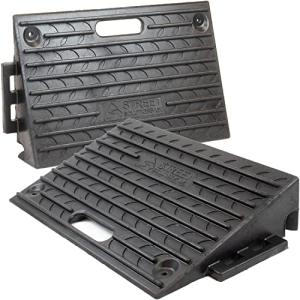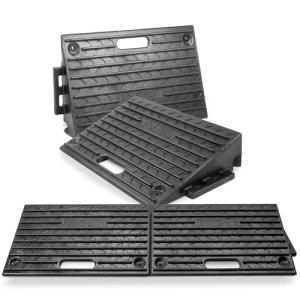

In the world of logistics, home maintenance, and urban infrastructure, the transition between varying elevations often presents a significant challenge. Whether it is a driveway with a steep curb, a warehouse loading dock, or a temporary construction site, the “lip” of a curb can cause structural damage to vehicles and pose a tripping hazard to pedestrians. The non-slip heavy-duty rubber curb ramp has emerged as the premier solution to these challenges, offering a blend of durability, safety, and versatility that alternative materials struggle to match.
This guide explores the technical specifications, benefits, and applications of industrial-grade rubber curb ramps, providing an in-depth analysis of why they are an essential investment for both residential and commercial properties.
The Engineering Behind Heavy-Duty Rubber Ramps
Unlike temporary wooden planks or permanent concrete alterations, heavy-duty rubber ramps are engineered from high-density, often recycled, rubber compounds. This material is chosen for its unique physical properties: compression resistance, high friction coefficients, and resilience against environmental stressors.
Material Composition and Durability
Most industrial curb ramps are manufactured using a cold-press or injection molding process. By utilizing recycled tire crumb, manufacturers create a product that is environmentally sustainable while maintaining immense structural integrity. Rubber possesses a natural elasticity that allows it to absorb the shock of a heavy vehicle without cracking, a common failure point in concrete or rigid plastic alternatives.
The Importance of the Non-Slip Surface
The "non-slip" designation is not merely a marketing term; it refers to the specialized traction patterns molded into the upper surface of the ramp. These patterns—often consisting of raised diamond plates, cross-grip textures, or ribbed grooves—are designed to maximize tire grip in adverse weather conditions. When rain, snow, or oil covers the ramp, these channels direct fluids away from the contact point, preventing wheels from spinning and reducing the risk of pedestrian slips.
Technical Specifications and Load Capacities
When selecting a curb ramp, understanding the relationship between dimensions and weight capacity is vital. Ramps are categorized based on the maximum weight they can support per axle.
Table 1: Standard Load Capacities and Dimensions
| Ramp Class | Height | Width | Weight Capacity (Per Pair) | Primary Use Case |
|---|---|---|---|---|
| Light Duty | 2 - 4 inches | 18 - 20 inches | 5,000 lbs | Hand trucks, bicycles, skateboards |
| Standard Duty | 4 - 6 inches | 19 - 24 inches | 10,000 - 20,000 lbs | Passenger cars, SUVs, small vans |
| Heavy Duty | 6 - 8 inches | 20 - 32 inches | 40,000 - 60,000 lbs | Delivery trucks, forklifts, RVs |
| Extra Heavy Duty | 8+ inches | Custom | 80,000+ lbs | Industrial machinery, tractor-trailers |
Key Features of Industrial Rubber Curb Ramps
High-quality rubber curb ramps are distinguished by several design features that enhance their utility and longevity:
- Water Drainage Grooves: The underside of a professional-grade ramp typically features an arched tunnel or a series of longitudinal channels. These allow rainwater to flow freely along the gutter beneath the ramp, preventing localized flooding and the buildup of debris.
- Pre-Drilled Mounting Holes: While the weight of the rubber ramp itself often keeps it in place, heavy-duty models include reinforced holes. These allow for permanent installation using expansion bolts on concrete or asphalt surfaces.
- Modular Design: Many rubber ramps are designed with interlocking ends. This allows users to connect multiple sections horizontally to create a wider transition area for larger vehicles or entire storefronts.
- Integrated Reflectors: Some models feature high-visibility yellow or white reflective strips or "E-cat eyes." These are essential for nighttime safety, ensuring drivers and pedestrians can easily identify the ramp's location in low-light conditions.
Applications Across Different Sectors
The versatility of the non-slip rubber curb ramp makes it applicable in a wide variety of scenarios, ranging from private residences to high-traffic industrial zones.
Residential Use
For homeowners with "rolled curbs" or standard vertical curbs at the end of their driveways, vehicles with low ground clearance—such as sports cars or sedans—often suffer from undercarriage scraping. A rubber ramp provides a smooth gradient that protects the front bumper, exhaust system, and suspension components.
Commercial and Industrial Use
In warehouses, rubber ramps are used to bridge the gap between building floors and parking lots. They are particularly useful for:
- Forklift Operations: Ensuring internal transit is smooth to prevent cargo shifting.
- Delivery Hubs: Facilitating the movement of pallet jacks and hand trucks over door thresholds.
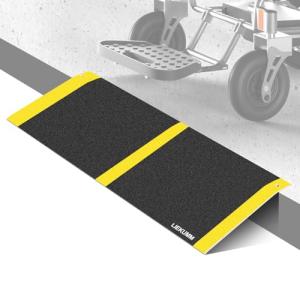
- Disabled Access: Serving as temporary or permanent ADA-compliant ramps for wheelchair access in public spaces.
Construction and Emergency Services
Construction sites often use heavy-duty ramps to protect hoses and cables from being crushed by passing vehicles. Emergency services, including fire departments, utilize portable versions of these ramps to ensure their heavy apparatus can jump curbs without damaging the vehicle's specialized tires.
Performance in Various Environments
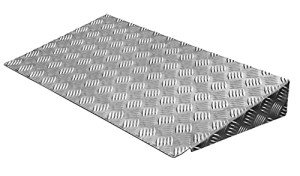
One of the secondary benefits of rubber over other materials is its weather resistance. Unlike metal ramps, rubber does not rust or corrode when exposed to road salt or ocean spray. Unlike plastic, it does not become brittle in extreme sub-zero temperatures.
Table 2: Material Comparison Matrix
| Feature | Rubber Ramps | Plastic Ramps | Concrete Ramps | Metal Ramps |
|---|---|---|---|---|
| Durability | High (Shock Absorbent) | Moderate (May Crack) | High (But Brittle) | High |
| Portability | Moderate | High | None | Moderate |
| Traction | Excellent (Natural Grip) | Poor when wet | Moderate | Poor without coating |
| Noise Level | Silent/Low | Loud (Hollow) | Silent | High (Clanking) |
| Installation | Immediate | Immediate | Days (Curing time) | Intermediate |
Installation and Maintenance Best Practices
While heavy-duty rubber curb ramps are largely "set and forget" products, following proper installation and maintenance protocols can extend their lifespan significantly.
Installation Steps:
- Surface Preparation: Ensure the area where the ramp will sit is free of large rocks or thick mud to ensure a flush fit.
- Alignment: If using multiple sections, interlock them before securing them to the ground.
- Anchoring: For permanent sites, use a masonry drill bit to create pilot holes through the pre-drilled ramp holes. Insert expansion bolts to prevent the ramp from shifting or being stolen.
Maintenance Tips:
- Debris Removal: Periodically lift the ramp (if not anchored) or use a pressure washer to clear the drainage channels underneath.
- Inspection: Check for any signs of rubber degradation or loosening of anchor bolts every six months, especially in high-traffic commercial zones.
- Cleaning: Use mild soap and water. Harsh petroleum-based cleaners should be avoided as they can break down the rubber compound over time.
Frequently Asked Questions (FAQ)
Are rubber curb ramps legal to use on public streets?
The legality varies by municipality. While many cities permit them for residential driveways, others have specific bylaws regarding the blockage of street gutters. It is recommended to check local ordinances before permanent installation.
Will the ramp damage my tires?
No. Rubber curb ramps are designed specifically to protect tires. By providing a gradual incline, they reduce the impact force that would otherwise be absorbed by the tire sidewalls and the vehicle's suspension.
How much weight can a heavy-duty rubber ramp actually hold?
Most heavy-duty models are rated for 20 to 30 tons (40,000 - 60,000 lbs). This is more than sufficient for standard semi-trucks, motorhomes, and heavy-duty pickup trucks.
Does the rubber smell?
Newly manufactured rubber products may have a distinct "new tire" smell. However, because these ramps are used outdoors, the odor usually dissipates within a few days of exposure to the elements.
Can these be used for wheelchairs?
Yes, provided the slope gradient is appropriate. For ADA compliance, the ramp must follow specific "rise over run" ratios, which usually means selecting a longer ramp for higher curbs to ensure the incline is not too steep for manual wheelchair users.
The non-slip heavy-duty rubber curb ramp represents a confluence of safety, engineering, and practicality. By choosing rubber over less resilient materials, users benefit from a product that thrives in harsh weather, suppresses noise, and provides unmatched traction. Whether the goal is to protect a high-performance vehicle from driveway damage or to ensure an industrial site remains accessible for heavy machinery, these ramps provide a reliable, cost-effective, and long-lasting solution. In the landscape of modern infrastructure, small adjustments—like a well-placed rubber ramp—often make the biggest difference in operational efficiency and safety.