
Accessibility is a cornerstone of modern infrastructure, yet many environments still present significant physical barriers to individuals with mobility challenges. One of the most common obstacles is the humble kerb or threshold. For wheelchair users, mobility scooter riders, and those using walking frames, a standard six-inch kerb can represent an insurmountable wall.
Portable rubber kerb ramp sets have emerged as a critical solution to these architectural challenges. Designed to provide a smooth transition between different elevations, these tools offer a blend of durability, safety, and convenience. This guide explores the technical specifications, benefits, and practical applications of portable rubber kerb ramps.
Understanding Portable Rubber Kerb Ramps
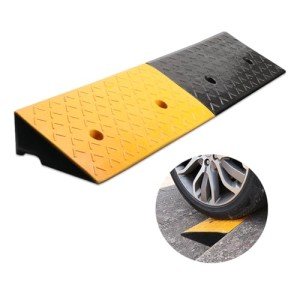
A rubber kerb ramp is a sloped wedge made from high-density, often recycled, rubber. These ramps are engineered to bridge the gap between a road and a pavement or to smooth over doorway thresholds. Unlike permanent concrete structures, portable sets are designed to be moved as needed, though many include features for semi-permanent installation.
Why Rubber?
Rubber is the preferred material for these ramps for several reasons:
- Durability: High-density rubber can withstand thousands of kilograms of weight without deforming.
- Traction: The natural "grip" of rubber, often enhanced with molded patterns, provides a non-slip surface essential for safety in wet or icy conditions.
- Shock Absorption: Unlike metal or concrete, rubber absorbs impact, providing a smoother ride for the wheelchair user.
- Weather Resistance: Rubber does not rust like steel or rot like wood, making it ideal for long-term outdoor use.
Technical Specifications and Variations
When selecting a ramp set, it is crucial to understand the dimensions and weight capacities available. Most sets are designed to accommodate standard kerb heights, but variations exist for industrial or specialized residential use.
Comparison Table: Standard vs. Heavy-Duty Kerb Ramps
| Feature | Standard Portable Ramp | Heavy-Duty Industrial Ramp |
|---|---|---|
| Material | Recycled High-Density Rubber | Reinforced Synthetic Rubber |
| Weight Capacity | Up to 500 kg (per pair) | Up to 20,000 kg (per pair) |
| Common Gradient | 1:12 or 1:10 | Variable (often steeper) |
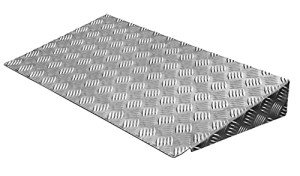
| Surface Texture | Ribbed or Grooved | Deep Diamond Plate Pattern |
| Reflective Strips | Optional | Usually Included |
| Weight per Ramp | 4 kg – 8 kg | 10 kg – 25 kg |
Key Features of Quality Kerb Ramp Sets
Modern manufacturing has introduced several features that enhance the utility of these portable devices.
1. Slip-Resistant Surfaces
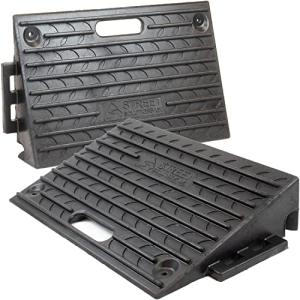
Safety is the primary concern for any mobility aid. Quality ramps feature molded-in tread patterns. These channels serve a dual purpose: they increase friction for the wheelchair wheels and allow water to drain away, preventing puddles from forming on the ramp surface.
2. Built-in Drainage Channels
Standard kerbs often double as gutters for rainwater. A solid ramp blocking the kerb would lead to localized flooding. Therefore, portable rubber ramps usually feature "tunnels" or hollowed-out sections underneath to allow water to flow freely along the kerb line.
3. High-Visibility Markings
To prevent tripping hazards for pedestrians and to aid users in low-light conditions, many sets include yellow reflective strips or high-visibility paint. This ensures the ramp is clearly delineated from the surrounding pavement.
4. Modular Design and Portability
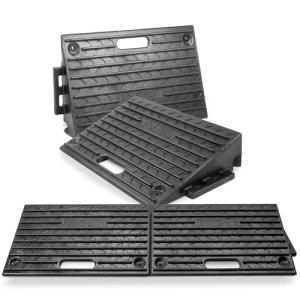
Many sets are designed to be used in pairs. This allows them to be spaced according to the specific wheelbase of the wheelchair or scooter. Furthermore, many models include integrated carrying handles, making it easier for a caregiver or vehicle operator to deploy and retract them quickly.
Common Applications
The versatility of portable rubber kerb ramps makes them suitable for a wide range of environments:
- Residential Use: Homeowners can use them to bypass door thresholds or steps in the garage without the need for expensive structural renovations.
- Commercial Entrances: Small businesses located in older buildings with single-step entries can use these ramps to become ADA (Americans with Disabilities Act) or Equality Act compliant.
- Vehicle Access: These ramps are frequently used to help load wheelchairs or power chairs into the side or rear of a modified van.
- Construction Sites: Temporary ramps allow for the movement of heavy equipment and mobility aids through areas where permanent paths are blocked or under construction.
Factors to Consider Before Purchasing
Selecting the right ramp requires more than just picking a size. One must consider the environment and the specific needs of the user.
Gradient and Slope
The slope must be gentle enough for the user or their caregiver to navigate safely. In most regulatory frameworks, a 1:12 slope (one inch of rise for every 12 inches of length) is the gold standard for independent wheelchair use. If the ramp is too short for the height of the kerb, the incline will be too steep, risking a tip-over.
Height Measurement
It is essential to measure the exact height of the obstacle. A ramp that is even half an inch too short can leave a "lip" that catches small front caster wheels, which are common on manual wheelchairs.
Connection Options
Some sets feature a "tongue and groove" system, allowing multiple units to be linked together to create one wide ramp. This is particularly useful for public spaces or for users with wide-base electric wheelchairs.
Installation and Maintenance
While these units are "portable," they still require a level of care to ensure longevity.
Maintenance Checklist:
- Regular Cleaning: Sweep away dirt, leaves, and debris that can compromise the grip.
- Inspection: Periodically check for cracks or signs of wear, especially if the ramp is used by heavy delivery vehicles.
- Hardware Check: If the ramp is bolted down (using the pre-drilled holes provided in most models), ensure the bolts remain tight and flush with the surface.
Safety Guidelines for Caregivers and Users
- Approach Squarely: Always approach the ramp straight on. Approaching at an angle can cause the wheelchair to tip or slide off the side.
- Check Ground Stability: Ensure the ground where the ramp sits is level and firm. A ramp placed on soft mud or uneven gravel may shift under weight.
- Heed Weight Limits: Always include the weight of the wheelchair, the user, and any oxygen tanks or bags when calculating whether the ramp can handle the load.
Frequently Asked Questions (FAQ)
1. Can rubber kerb ramps be used for cars as well as wheelchairs?
Yes, many heavy-duty rubber ramps are designed to support the weight of cars and light trucks. However, users should check the specific weight rating of their set. If a ramp is designed strictly for wheelchairs, the weight of a car may compress or damage the material over time.
2. Is there a strong smell associated with rubber ramps?
Because they are often made from recycled tires, new rubber ramps can have a distinct "new tire" smell. If used outdoors, this dissipates rapidly. For indoor use, it is recommended to let the ramps air out in a garage or ventilated area for a few days before permanent placement.
3. How do I stop the ramps from moving when in use?
The weight of the rubber ramp usually keeps it in place. However, for added security, most ramps come with pre-drilled holes. These can be used to bolt the ramp to concrete or asphalt for a semi-permanent installation. If portability is required, some users apply heavy-duty outdoor adhesive grip tape to the bottom.
4. Are these ramps suitable for all weather conditions?
Rubber is highly resistant to extreme temperatures, both hot and cold. Unlike metal, it won't become dangerously hot in the sun, and unlike plastic, it is less likely to become brittle in freezing temperatures. The surface texture remains effective in rain, though extra caution is always advised during ice or snow.
5. What is the difference between a threshold ramp and a kerb ramp?
Threshold ramps are typically smaller and designed for door frames (under 2 inches), whereas kerb ramps are larger, designed for outdoor elevation changes between 4 to 6 inches. Kerb ramps also usually include the drainage channels mentioned earlier.
Portable rubber kerb ramp sets represent a simple yet transformative investment in accessibility. By providing a rugged, non-slip, and durable bridge over physical barriers, they empower individuals with limited mobility to navigate their communities with greater independence. Whether for a private residence, a retail shop, or temporary event use, these ramps are an essential tool in the ongoing effort to create a more inclusive world. When choosing a set, prioritizing high-density materials, appropriate gradients, and safety features like reflective strips will ensure that the transition remains smooth and safe for years to come.