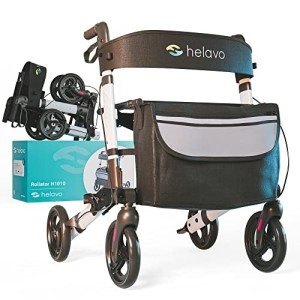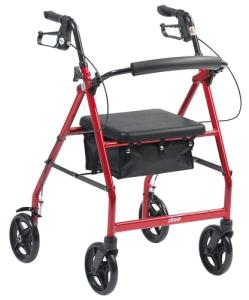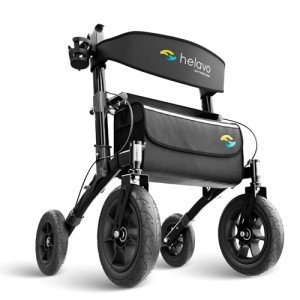

Mobility is a fundamental aspect of independence and quality of life. For many seniors and individuals recovering from injury or managing chronic conditions, the right mobility aid can make the difference between isolation and active participation in daily life. Among the various tools available, the ultra-lightweight folding walker—often referred to as a rollator—stands out as one of the most versatile and user-friendly options.
By combining a durable frame, a convenient resting seat, and reliable braking systems, these devices offer safety and convenience in a single package. This guide explores the design, benefits, and selection criteria for ultra-lightweight folding walkers to help users and caregivers make an informed decision.
Understanding the Ultra Lightweight Folding Walker
A rollator differs from a traditional walker primarily by the addition of wheels and a braking system. The "ultra-lightweight" designation typically refers to units constructed from high-grade aluminum or carbon fiber, often weighing between 11 and 16 pounds. Unlike heavy-duty steel models, these devices are designed for easy transport and maneuverability without sacrificing structural integrity.
Key Components of the Design
- Transportable Frame: The use of lightweight alloys allows for a frame that is easy to lift into a car trunk or onto public transportation.
- Integrated Seat: Most models feature a padded or nylon seat that provides an immediate resting place for the user when they experience fatigue.
- Braking System: Hand-operated loop brakes allow the user to control speed while walking and lock the wheels in place when seated.
- Folding Mechanism: Modern designs often feature a "side-to-side" or "cross-fold" mechanism, allowing the walker to stand upright even when folded.
Comparison: Standard vs. Ultra Lightweight Walkers
To understand the value of these devices, it is helpful to compare them to traditional models.
| Feature | Standard Walker | Heavy-Duty Rollator | Ultra Lightweight Rollator |
|---|---|---|---|
| Weight | 6–8 lbs | 20–25 lbs | 11–16 lbs |
| Mobility | Lift and move | Fluid rolling | Effortless rolling |
| Seat Included | No | Yes | Yes |
| Portability | High (but no wheels) | Low (heavy to lift) | Excellent |
| Typical Material | Aluminum | Steel | Aerospace-grade Aluminum |
The Benefits of Using an Ultra Lightweight Walker
The transition to a mobility aid is often a significant life change. Choosing an ultra-lightweight model offers several practical and psychological advantages.
1. Reduced Physical Strain
Heavy mobility aids can cause fatigue in the arms and shoulders. Because ultra-lightweight models require less force to push and steer, the user can walk further distances with less exertion. For caregivers, the lighter weight makes it much easier to load the device into a vehicle.
2. Safety and Stability
The inclusion of hand brakes is a critical safety feature. Users can apply slight pressure to the brakes when navigating downward slopes to prevent the walker from "running away" from them. Additionally, the locking mechanism ensures that the walker serves as a stable chair that will not roll away while the user is sitting down.
3. Promoting an Active Lifestyle
Knowing that a seat is always available encourages users to walk longer distances. Whether in a grocery store, a park, or a museum, the ability to take a "micro-break" reduces the anxiety associated with limited stamina.
Technical Specifications to Consider
When evaluating different models, several technical specs influence performance and comfort.
| Specification | Ideal Range for Ultra Lightweight | Why it Matters |
|---|---|---|
| Weight Capacity | 250 lbs – 300 lbs | Ensures the frame can safely support the user. |
| Handle Height | 31" – 38" (Adjustable) | Proper height prevents slouching and back pain. |
| Wheel Size | 6" (Indoor) to 8" (Outdoor) | Larger wheels handle uneven terrain better. |
| Seat Width | 12" – 18" | Determines the comfort level while resting. |
| Folded Width | 8" – 11" | Crucial for storage in tight spaces. |
How to Choose the Right Model
Selecting the perfect walker requires balancing the user's physical needs with their lifestyle.
Determine the Primary Environment
If the walker is primarily used indoors, a model with smaller 6-inch wheels and a narrower frame is ideal for navigating hallways and bathroom doors. However, for those who enjoy walks in the park or on gravel paths, 8-inch "all-terrain" wheels are necessary to provide a smooth ride and prevent the wheels from getting stuck.
Focus on Brake Ergonomics
For individuals with arthritis or limited hand strength, the "loop brake" design is generally preferred. These allow the user to pull up to slow down or push down to lock the unit with minimal pressure from the palms rather than a tight finger grip.
Check the Folding Orientation
There are two main ways these walkers fold:
- Front-to-Back: The rear wheels move toward the front wheels. This often results in a flatter shape but the walker may not stand on its own.
- Side-to-Side: The two sides pull inward. This "cross-fold" design is increasingly popular because it allows the walker to remain standing and takes up less floor space in a restaurant or hallway.
Maintenance for Longevity
To ensure the safety and longevity of an ultra-lightweight walker, regular maintenance is required.
- Tighten Hardware: Monthly checks should be performed to ensure all screws and bolts, especially around the wheels and handles, are tight.
- Brake Calibration: Over time, the brake cables may stretch. It is important to adjust the tension so that the brakes engage fully when the levers are pressed.
- Wheel Inspection: Check for debris or hair tangled in the axles, which can impede movement and cause the walker to veer to one side.
- Clean the Seat: Most seats are made of nylon or vinyl; a simple wipe-down with mild soap and water prevents the buildup of bacteria and odors.
Frequently Asked Questions (FAQ)
Can an ultra-lightweight walker be used as a transport chair?
No. Standard rollators are designed to support weight only when the user is stationary. Using a walker as a wheelchair while someone pushes the user can result in the frame bending or the unit tipping over. If this functionality is needed, a "hybrid" rollator-transport chair should be purchased.
Will the walker fit through standard household doors?
Most ultra-lightweight models have a width of 22 to 26 inches. Since standard interior doors are usually 30 to 32 inches, they generally fit easily. However, in older homes with 24-inch doors, a "compact" or "narrow" model may be required.
Are these walkers height-adjustable?
Yes, almost all modern models feature adjustable handles. Some also offer adjustable seat heights. It is vital to set the handle height at the level of the user's wrists when their arms are hanging naturally at their sides.
Is carbon fiber better than aluminum?
Carbon fiber is lighter and provides excellent vibration dampening, making it more comfortable on uneven surfaces. However, it is significantly more expensive than aluminum. Aluminum remains the most popular choice for balancing weight and cost-effectiveness.
The ultra-lightweight folding walker with a seat and brakes represents a peak in mobility aid engineering. By offering a solution that is easy to transport, safe to operate, and comfortable to use, it empowers individuals to maintain their freedom. Whether it is a trip to the local pharmacy or a stroll through a botanical garden, these devices provide the necessary support to ensure that mobility challenges do not result in a sedentary lifestyle. When selecting a model, prioritizing weight, wheel size, and ease of folding will ensure that the user finds a companion that perfectly matches their daily needs.