
For millions of individuals worldwide, mobility scooters represent more than just a piece of medical equipment; they are a vital tool for independence, providing the freedom to navigate the world without physical limitations. However, the reliability of these devices depends entirely on one crucial component: the battery charger.
A universal 24V 2AMP charger is often considered the industry standard for portable and mid-sized mobility scooters. This guide provides an in-depth look at how these chargers work, why they are essential, and how to choose the best one to ensure a scooter remains ready for the road.
What is a Universal 24V 2AMP Charger?
Most mobility scooters operate on a 24-volt system, typically powered by two 12-volt Lead-Acid (SLA) or Absorbent Glass Mat (AGM) batteries connected in a series. A 24V 2AMP charger is specifically designed to replenish these batteries at a controlled rate of 2 amperes per hour.
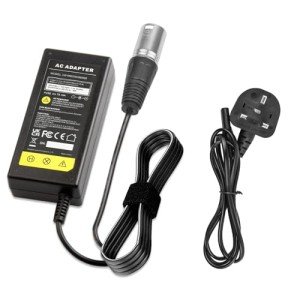
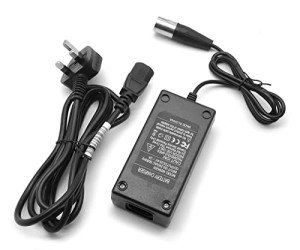
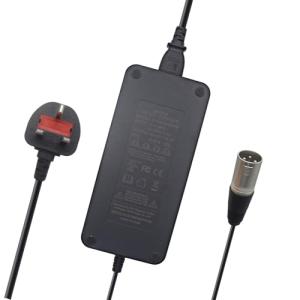
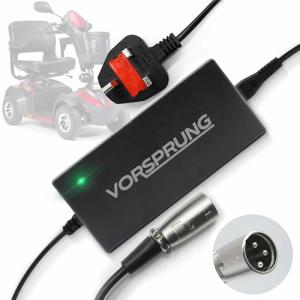
The term "universal" refers to the charger’s ability to work across various brands and models, provided they share the same voltage requirements and connector types. The most common connector for this type of charger is the 3-pin XLR plug, which resembles a small circular microphone jack with three distinct prongs.
Why 2 Amps?
Chargers are rated by their output current (Amperage). A 2AMP charger is generally optimized for smaller, portable scooters (often called "travel scooters" or "boot scooters") that utilize batteries ranging from 7Ah to 20Ah. Charging a small battery with too much amperage can cause overheating and shorten the battery's lifespan, while too little amperage will result in excessively long wait times.
Technical Specifications at a Glance
When purchasing or replacing a charger, it is vital to understand the technical parameters to ensure safety and efficiency.
Table 1: Technical Specifications for Standard 24V 2AMP Chargers
| Feature | Specification |
|---|---|
| Input Voltage | AC 100-240V (Global Compatibility) |
| Output Voltage | DC 24V (28.8V peak during charging) |
| Charging Current | 2.0 Amperes |
| Connector Type | 3-Pin XLR (Male) |
| Battery Compatibility | AGM, Gel, Lead-Acid (SLA) |
| Safety Certifications | UL, CE, RoHS, FCC |
| Indicator Light | LED (Red: Charging / Green: Full/Standby) |
Key Features of High-Quality Universal Chargers
Modern 24V 2AMP chargers are far more advanced than the bulky transformers of the past. They now incorporate "smart" technology to protect the user and the equipment.
1. Multi-Stage Charging Technology
Quality chargers use a three-stage charging process:
- Bulk Charge: The charger provides a constant current until the battery reaches approximately 80% capacity.
- Absorption Charge: The voltage remains constant while the current gradually decreases, ensuring the battery is topped off without overheating.
- Float/Maintenance Mode: Once fully charged, the charger drops to a "trickle" to maintain the battery at 100% without overcharging.
2. LED Status Indicators
There is no guesswork involved with modern chargers. They typically feature a bi-color LED system. A solid red light indicates the battery is currently drawing power, while a solid green light signifies that the battery is fully charged and the unit has entered maintenance mode.
3. Integrated Safety Mechanisms
To prevent accidents, universal chargers include:
- Short-Circuit Protection: Prevents sparks or damage if the pins are accidentally crossed.
- Over-Voltage Protection: Ensures the battery is never subjected to more voltage than it can handle.
- Reverse Polarity Protection: Protects the internal circuitry if the battery leads are incorrectly configured.
Compatibility: Will it Work With Your Scooter?
The "universal" nature of these chargers makes them compatible with a wide array of brands. However, owners should always verify the plug type and battery chemistry before use.
Supported Mobility Brands
A standard 24V 2AMP XLR charger is typically compatible with:
- Pride Mobility: (Go-Go, Victory, Celebrity lines)
- Drive Medical: (Spitfire, Scout, Phoenix lines)
- Golden Technologies: (Buzzaround, LiteRider series)
- Invacare: (Lynx, Leo models)
- Shoprider: (Echo, Start, Dasher models)
- Razor: (Several electric scooter models)
Table 2: Amperage Comparison Guide
| Battery Size (Ah) | Recommended Charger Amperage | Charging Time (Approx. from empty) |
|---|---|---|
| 7Ah - 12Ah | 2.0A | 4 - 7 Hours |
| 15Ah - 20Ah | 2.0A - 3.0A | 8 - 10 Hours |
| 30Ah - 50Ah | 5.0A | 6 - 10 Hours |
| 70Ah+ | 8.0A | 8 - 12 Hours |
Best Practices for Battery and Charger Maintenance
To get the most value out of a 24V 2AMP charger and the scooter's batteries, users should follow a strict maintenance regimen.
Maintenance Checklist:
- Charge Nightly: Lead-acid batteries do not have a "memory effect." It is best to charge the scooter after every use, even if it was only driven a short distance.
- Ventilation is Key: Always charge the scooter in a well-ventilated area. Chargers generate heat during the bulk phase and need airflow to stay cool.
- Check the Pins: Periodically inspect the 3-pin XLR port on the scooter. Dust or debris inside the port can cause a poor connection or arcing.
- Avoid Extreme Temperatures: Charging in freezing or excessively hot environments (over 100°F) can significantly degrade the chemical components of the battery.
- Plug Sequence: It is often recommended to plug the charger into the scooter first, and then into the wall outlet, to minimize the risk of a power surge.
Frequently Asked Questions (FAQ)
Can I leave the charger plugged in overnight?
Yes. Most modern 24V 2AMP chargers feature an automatic shut-off or "float mode." Once the battery reaches 100%, the charger reduces its output to a very low level to maintain the charge without damaging the battery cells.
Can I use a 2AMP charger on a scooter that originally came with a 5AMP charger?
While it is technically possible and safe (as long as the voltage is 24V), it will take significantly longer to charge. If the battery is large (e.g., 50Ah), a 2AMP charger may struggle to reach the "absorption" phase efficiently. It is always best to stick to the amperage recommended by the manufacturer.
My charger light is blinking green. What does that mean?
A blinking green light often indicates that the charger is in standby mode or that it does not detect a battery connection. This could mean the fuse in the scooter has blown, the wiring is loose, or the battery voltage has dropped too low for the charger to recognize it.
Is the 24V 2AMP charger compatible with Lithium batteries?
Usually, no. Standard mobility scooter chargers are designed for Lead-Acid, AGM, or Gel batteries. Lithium batteries require a different charging profile. Using a standard 24V charger on a lithium battery can be dangerous and may lead to fire or battery failure. Always check the battery chemistry before use.
Why does my charger feel hot to the touch?
It is normal for a charger to feel warm during the first few hours of a charging cycle. However, if it is too hot to touch or smells of burning plastic, it should be unplugged immediately and replaced.
The universal 24V 2AMP charger is a cornerstone of mobility scooter ownership. Its specialized three-stage charging process and built-in safety features ensure that users can rely on their scooters for daily transport. By understanding the compatibility requirements and following proper charging etiquette, scooter owners can significantly extend the life of their batteries and ensure their freedom of movement is never compromised.
When looking for a replacement, always prioritize chargers with safety certifications like UL or CE to guarantee the highest standards of electrical protection for the home and the device.