Heavy duty mobility scooters are designed for those who need a little extra support and stability. These sturdy scooters can handle rough terrain and higher weight capacities, making them perfect for outdoor adventures or running errands. If you're looking for a dependable ride that offers comfort and strength, you’ve come to the right place!
Heavy Duty Mobility Scooters
Built to support your adventures with strength and stability
Product List
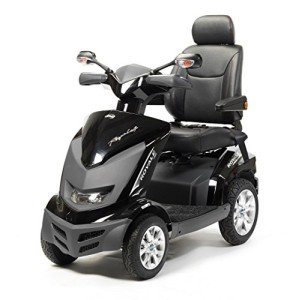
Drive Medical Royale Scooter
Drive Medical
Product Review Score
4.75 out of 5 stars
103 reviews$5,841.07
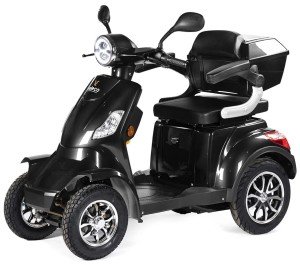
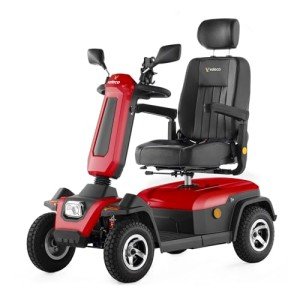
Veleco SHARPY Scooter - Swivel Seat
Veleco
Product Review Score
4.31 out of 5 stars
155 reviews$2,364.14
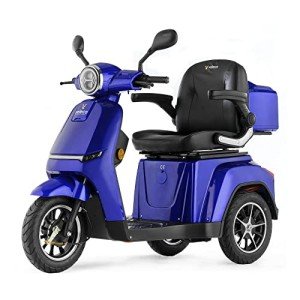
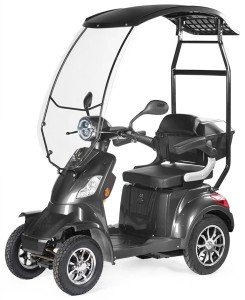
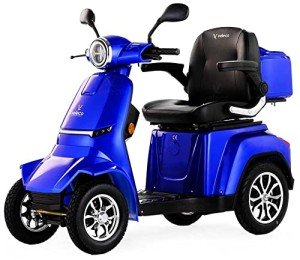
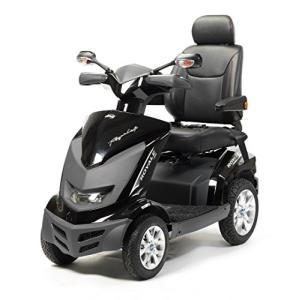
Drive Medical Royale Heavy Scooter
Drive Medical
Product Review Score
4.55 out of 5 stars
221 reviews$4,488.04
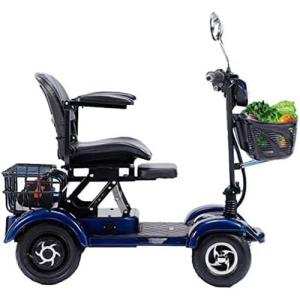
For individuals facing mobility challenges, the right equipment is not merely a convenience—it is a gateway to independence, social engagement, and an active lifestyle. While standard mobility scooters serve a broad range of users, they often fall short for those requiring higher weight capacities, enhanced stability, or the ability to traverse rugged outdoor terrain. This is where heavy-duty mobility scooters, also known as bariatric or high-capacity scooters, become essential.
This guide explores the intricate details of heavy-duty mobility scooters, examining their features, benefits, and technical specifications to provide a thorough understanding for prospective users and caregivers.
Understanding Heavy-Duty Mobility Scooters
Heavy-duty mobility scooters are engineered with reinforced frames, powerful motors, and heavy-duty suspension systems. Unlike their lightweight or portable counterparts, these machines are designed to withstand significant daily wear and tear while supporting higher weight loads, typically ranging from 400 to over 600 pounds.
The primary distinction of a heavy-duty model lies in its structural integrity. The chassis is often constructed from high-grade steel or reinforced aluminum, ensuring that the scooter does not flex or degrade under pressure. Furthermore, these scooters are equipped with larger transaxles and high-torque motors, allowing them to maintain speed and power even when ascending inclines or navigating soft surfaces like grass and gravel.
Key Features of Heavy-Duty Models
To be classified as heavy-duty, a mobility scooter must possess several specific physical and mechanical attributes. These features ensure both the safety and the comfort of the operator.
1. Enhanced Weight Capacity
Standard scooters usually cap out at 250 to 300 pounds. Heavy-duty models are specifically built for the bariatric market or for users who need to carry additional cargo. This increased capacity ensures that the motor and braking systems are not overstressed.
2. Advanced Suspension Systems
To manage the weight and provide a smooth ride, these scooters utilize full-frame suspension. This often includes front and rear shock absorbers that dampen the impact of bumps, cracks in the sidewalk, or uneven park trails.
3. Larger Tires and Higher Ground Clearance
Heavy-duty scooters typically feature 10-inch to 13-inch pneumatic (air-filled) or foam-filled tires. These larger wheels, combined with a higher ground clearance (usually 4 to 5 inches), allow the vehicle to clear obstacles that would bottom out a standard travel scooter.
4. Captain’s Seating
Comfort is paramount for long-duration use. Heavy-duty models feature "Captain’s Chairs," which are high-backed, heavily padded, and offer adjustable headrests, armrests, and reclining functions. The seats are also wider to accommodate different body types comfortably.
Comparing Scooter Configurations
When selecting a heavy-duty scooter, the choice usually falls between a three-wheel or a four-wheel configuration. Each has distinct advantages depending on the primary environment of use.
Table 1: 3-Wheel vs. 4-Wheel Heavy-Duty Scooters
| Feature | 3-Wheel Heavy-Duty Scooters | 4-Wheel Heavy-Duty Scooters |
|---|---|---|
| Maneuverability | Superior; tighter turning radius. | Moderate; requires more space to turn. |
| Stability | Good, but less stable on sharp turns. | Maximum stability on all terrains. |
| Legroom | More spacious for taller users. | Fixed wheel housings limit "stretch" room. |
| Primary Use | Indoor/Outdoor hybrid use. | Primarily rugged outdoor use. |
| Terrain | Flat surfaces, paved paths. | Grass, gravel, and uneven surfaces. |
Technical Specifications and Performance
The performance of a heavy-duty scooter is dictated by its internal components. Because they are heavier and carry more weight, the battery and motor requirements are significantly higher than those of standard models.
Battery Life and Range
Heavy-duty scooters utilize large deep-cycle batteries, often in the 55Ah to 75Ah range. This allows the scooter to travel significant distances—often between 15 and 30 miles on a single charge—despite the heavy load.
Table 2: Typical Performance Specifications
| Specification | Standard Scooter | Heavy-Duty Scooter |
|---|---|---|
| Weight Capacity | 250 - 300 lbs | 400 - 600+ lbs |
| Max Speed | 4 - 5 mph | 5 - 10 mph |
| Drive Range | 10 - 15 miles | 15 - 30 miles |
| Ground Clearance | 1.5 - 2.5 inches | 4 - 5+ inches |
| Turning Radius | 30 - 45 inches | 50 - 70 inches |
Benefits of Choosing a Heavy-Duty Scooter
The transition to a heavy-duty model offers several life-changing benefits for individuals with limited mobility.
- Increased Independence: The ability to travel longer distances and handle varied terrains means users are not restricted to their homes or paved sidewalks.
- Safety and Security: The wider wheelbase and anti-tip wheels provide a sense of security, reducing the fear of the scooter tipping over on inclines.
- Durability and Longevity: Investing in a heavy-duty model often results in a longer product lifespan. These machines are built to endure heavy use, meaning fewer repairs and replacements over time.
- All-Day Comfort: The ergonomic design of the seating and the smoothness of the suspension allow users to remain in the scooter for extended periods without experiencing the fatigue or discomfort associated with smaller models.
Essential Maintenance for Heavy-Duty Scooters
To ensure the longevity and safety of a high-capacity scooter, a consistent maintenance routine is required. These machines are complex mechanical systems that work under high stress.
- Battery Care: Batteries should be charged after every trip, regardless of the distance. Avoid letting the battery drain completely, as this can shorten its overall lifespan.
- Tire Inspection: For pneumatic tires, maintaining the correct air pressure is vital for battery efficiency and ride quality. Foam-filled tires should be checked for cracks or excessive wear.
- Cleansing: Mud, dust, and debris can interfere with the motor and the steering column. Wiping the scooter down with a damp cloth prevents buildup.
- Brake Checks: Given the weight of these scooters, the electromagnetic braking system must be in perfect working order. Any signs of "drifting" when stopping should be addressed by a professional immediately.
Frequently Asked Questions (FAQ)
1. Are heavy-duty mobility scooters portable?
Generally, no. Heavy-duty scooters are designed for stability and strength rather than portability. They rarely disassemble easily and usually require a specialized vehicle lift or a ramp-equipped van for transport.
2. Can heavy-duty scooters be used indoors?
While they can be used indoors, their larger size and wider turning radius make them difficult to navigate in tight spaces, such as standard hallways or small apartments. They are best suited for large public buildings, malls, and outdoor environments.
3. Will insurance or Medicare cover a heavy-duty scooter?
In many regions, Medicare or private insurance may cover a portion of the cost if a doctor deems it "medically necessary." Specifically, if a user's weight exceeds the limits of a standard scooter, a heavy-duty model may be approved.
4. Do these scooters require a driver’s license?
In most jurisdictions, mobility scooters are classified as medical devices rather than motor vehicles. Therefore, a driver’s license is not required, and they are permitted on sidewalks and in pedestrian areas.
5. How fast do heavy-duty mobility scooters go?
While some models are limited to 5 mph for safety, high-performance heavy-duty scooters can reach speeds of up to 10 mph. However, speed should always be adjusted based on the surrounding environment.
Heavy-duty mobility scooters represent a vital segment of assistive technology. By prioritizing structural strength, motor power, and user comfort, these vehicles provide a reliable solution for those who find standard scooters inadequate. Whether it is navigating a local park, visiting a shopping center, or simply reclaiming the ability to move freely around a neighborhood, a heavy-duty scooter offers the power and stability necessary to move through the world with confidence. In the pursuit of mobility, these robust machines prove that physical limitations do not have to define the boundaries of one's life.