If you’re looking for a mobility scooter that can really keep up with your lifestyle, the 6-8 mph road scooters are perfect for you. These scooters are built for both comfort and speed, letting you navigate streets and larger sidewalks with ease. Say goodbye to feeling limited—these models give you the freedom to get where you want to go, quickly and efficiently!
6-8 Mph Road Mobility Scooters
Experience freedom and independence with our range of road mobility scooters designed for speed and comfort
Product List
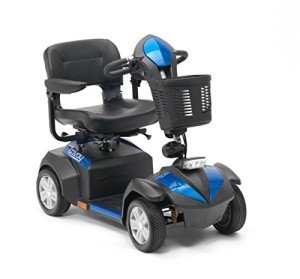
Drive Medical Envoy Scooter
Drive Medical
Product Review Score
4.42 out of 5 stars
122 reviews£1,995.00
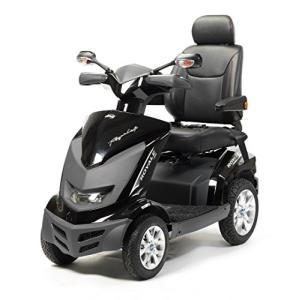
Drive Medical Royale Heavy Scooter
Drive Medical
Product Review Score
4.55 out of 5 stars
221 reviews£3,299.00
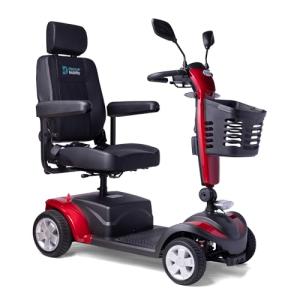
Atlas Class 3 Mobility Scooter
Discover Mobility
Product Review Score
4.36 out of 5 stars
136 reviews£699.99
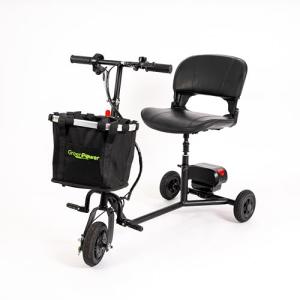
Green Power Super LIGHTY Scooter
Green Power
Product Review Score
4.37 out of 5 stars
199 reviews£349.00
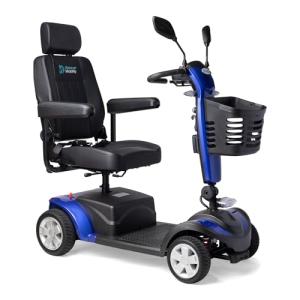
Blue 6 MPH Mobility Scooter
Discover Mobility
Product Review Score
4.63 out of 5 stars
114 reviews£699.99

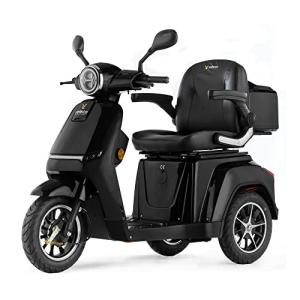
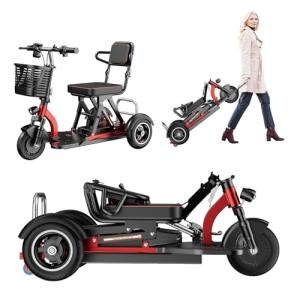
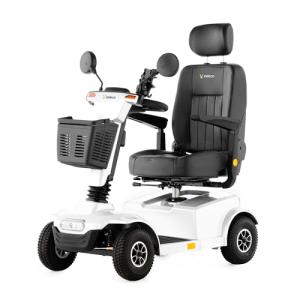
Veleco Jumpy Scooter, Swivel Seat
Veleco
Product Review Score
4.11 out of 5 stars
56 reviews£1,450.99
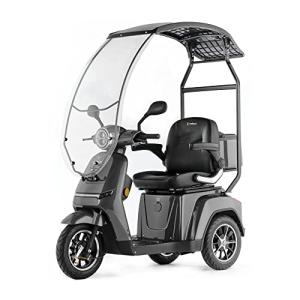
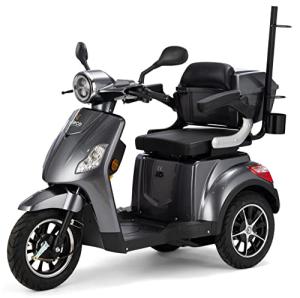
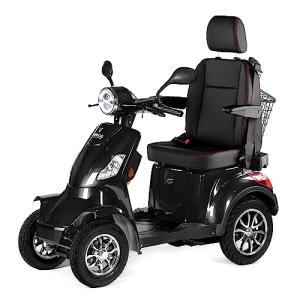
VELECO Adjustable Speed Scooter
Veleco
Product Review Score
4.18 out of 5 stars
113 reviews£1,922.40
For many individuals with limited mobility, the ability to navigate the world independently is a cornerstone of a high-quality life. While pavement-based scooters are excellent for short trips to the local shop, they often lack the speed and durability required for longer journeys or road travel. This is where Class 3 mobility scooters, capable of speeds between 6 and 8 mph, provide a vital solution.
These robust machines are designed to bridge the gap between a walking aid and a motor vehicle, offering enhanced power, superior comfort, and the legal capability to be driven on public highways. This guide explores the features, legalities, and considerations involved in choosing a 6-8 mph road-legal mobility scooter.
Understanding Scooter Classifications
Mobility scooters are generally categorized into two main classes based on their speed and where they are permitted to be used. Understanding these distinctions is crucial for any potential owner.
Class 2 Mobility Scooters
These are designed primarily for use on pavements (sidewalks). They have a maximum speed of 4 mph (6.4 kph). They are usually smaller, lighter, and often foldable or transportable in a car boot.
Class 3 Mobility Scooters
These are larger, more powerful machines designed for road use. They have a maximum speed of 8 mph (12.8 kph) on the road and must have a setting to limit the speed to 4 mph when used on pavements. Because they are driven among traffic, they must meet specific safety requirements.
Comparison Table: Class 2 vs. Class 3 Scooters
| Feature | Class 2 Scooters | Class 3 Scooters |
|---|---|---|
| Max Speed (Pavement) | 4 mph | 4 mph |
| Max Speed (Road) | Not Permitted | 8 mph |
| Legal Status | Non-road legal | Road legal |
| Dimensions | Compact / Lightweight | Large / Heavy-duty |
| Lights & Indicators | Optional | Mandatory |
| Typical Range | 10–15 miles | 20–35 miles |
| Registration Required | No | Yes (e.g., DVLA in the UK) |
Technical Features of 8 Mph Road Scooters
To handle the demands of road travel, 8 mph scooters are equipped with advanced engineering that sets them apart from their pavement-bound counterparts.
1. Robust Suspension Systems
Road surfaces are rarely perfectly smooth. To ensure driver comfort and prevent fatigue, 6-8 mph scooters are fitted with full suspension systems—often including adjustable coil springs or hydraulic shock absorbers. This allows the scooter to navigate potholes, uneven tarmac, and dropped kerbs with minimal jarring.
2. High-Capacity Batteries and Motors
Covering 8 mph requires more torque and energy. These scooters typically utilize two 12V lead-acid or lithium-ion batteries, often ranging from 50Ah to 100Ah. This extra capacity allows for significant travel distances, with some high-end models offering a range of over 30 miles on a single charge.
3. Safety and Visibility Kits
Safety is paramount when sharing the road with cars and cyclists. To be road-legal, a Class 3 scooter must include:
- Headlights and Rear Lights: To ensure the driver can see and be seen.
- Indicators: For signaling turns.
- Hazard Lights: For use if the vehicle breaks down.
- Rear-view Mirrors: To monitor traffic from behind.
- Audible Horn: To alert other road users.
- Reflectors: To enhance side visibility.
4. Braking Systems
While pavement scooters rely heavily on electromagnetic brakes (which engage when the throttle is released), 8 mph scooters often feature a secondary manual handbrake (emergency brake) for additional security when stopping on inclines or in high-speed situations.
Legal Requirements for Road Use
Owning a 6-8 mph scooter comes with specific legal responsibilities. While rules vary slightly by region, the general standards for road-legal mobility vehicles are consistent.
Registration
In many jurisdictions, such as the United Kingdom, Class 3 scooters must be registered with the national transport authority (e.g., the DVLA). While there is generally no "road tax" or "licence plate" in the traditional sense, the vehicle must be on the registry.
Essential Rules for the Road
- The 4 Mph Limit: When driving on a pavement or in a pedestrian area, the operator must engage the speed limiter to ensure the scooter does not exceed 4 mph.
- No Motorways: Mobility scooters are strictly prohibited from motorways, cycle lanes, or "bus only" lanes.
- Dual Carriageways: Use on dual carriageways is generally discouraged, and if used, the scooter must be equipped with a flashing amber beacon.
- Insurance: While not always a legal requirement, insurance is highly recommended to cover third-party liability and theft.
Benefits of Choosing a 6-8 Mph Scooter
For those debating between a 4 mph and an 8 mph model, the advantages of the faster, larger machine often outweigh the higher price point.
- Efficiency: Journeys that would take 40 minutes on a pavement scooter can be completed in 20 minutes on an 8 mph model.
- Terrain Versatility: Thanks to larger wheels and higher ground clearance, these scooters can handle steeper hills and rural paths that would stall a smaller model.
- Superior Comfort: Deluxe captain’s seats with headrests, armrests, and sliding mechanisms come as standard, making them suitable for users with chronic pain or back issues.
- Higher Weight Capacity: These machines are built with reinforced frames, often accommodating users up to 25 or 30 stone (approx. 160-190kg).
Considerations Before Purchasing
Before investing in a road-legal scooter, potential owners should evaluate several practical factors.
Storage and Size
8 mph scooters are significantly larger than portable models. They cannot be easily dismantled and require a dedicated garage or shed with a power source for charging. Potential buyers should measure their storage space and Any narrow gateways or hallways the scooter must pass through.
Portability
Because of their weight (often exceeding 100kg), these scooters are not "boot scooters." If the user intends to travel long distances by car and then use the scooter, a vehicle with a ramp or a specialized hoist will be necessary.
Cost
Road-legal scooters represent a significant investment. Prices typically range from £1,500 to over £5,000 for top-tier models with specialized terrain capabilities or cabin enclosures.
Key Maintenance Tips for Longevity
To ensure an 8 mph scooter remains reliable, a regular maintenance schedule should be followed:
- Battery Care: Charge the batteries after every significant use. Avoid letting the charge drop to zero.
- Tire Pressure: Check pneumatic tires weekly. Under-inflated tires reduce battery range and affect handling.
- Cleanliness: Wipe down the bodywork and ensure the lights and reflectors are free of mud or dust.
- Annual Service: Have a professional technician check the motor brushes, brake pads, and electrical connections once a year.
Summary of Specifications
| Specification | Standard 8 Mph Scooter Expectations |
|---|---|
| Max Speed | 8 mph (12.8 kph) |
| Average Range | 20–30 miles (32–48 km) |
| Ground Clearance | 3–5 inches |
| Max Incline | 10–12 degrees |
| Turning Radius | 50–70 inches |
| Seating | Fully adjustable Captain's seat |
Frequently Asked Questions (FAQ)
Q: Do I need a driver’s license to operate an 8 mph mobility scooter?
A: No. You do not need a driver’s license, nor do you need to pass a test. However, you should have a good understanding of the Highway Code.
Q: Can I take an 8 mph scooter on a bus or train?
A: It is difficult. Most bus and train operators have size and weight limits that 8 mph scooters exceed. Class 2 scooters are generally better suited for public transport.
Q: Are these scooters allowed on the road at night?
A: Yes, provided they have functioning front and rear lights and reflectors, as required for all Class 3 vehicles.
Q: Can I use an 8 mph scooter if I am under 14?
A: In many regions, the legal age to operate a Class 3 mobility scooter on the road is 14 years or older.
Q: Do 8 mph scooters have "gears"?
A: They don't have gears like a car, but they do have a high/low switch. The "Low" setting caps the speed at 4 mph for pavements, while the "High" setting allows for the full 8 mph.
The transition to a 6-8 mph road mobility scooter can be life-changing. These vehicles offer a level of freedom that allows users to keep pace with traffic, tackle more challenging terrain, and travel further than ever before. While they requires a greater commitment in terms of storage, registration, and initial cost, the trade-off is a robust, comfortable, and highly capable mode of transport. For the individual looking to reclaim their independence on the open road, the Class 3 scooter is an unmatched tool for modern mobility.