4-wheeled mobility scooters are a fantastic choice if you want stability and a smooth ride. They offer a sturdy build that’s perfect for navigating various terrains, whether you're cruising down the sidewalk or exploring the park. Plus, with plenty of room for comfort and storage, you can enjoy your outings without worrying about space for your belongings.
4 Wheeled Mobility Scooters
Stable and comfortable rides for enhanced independence and mobility
Product List
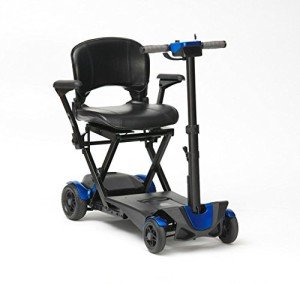
DeVilbiss Flex Folding Scooter
Devilbiss Healthcare
Product Review Score
4.12 out of 5 stars
18 reviews£1,149.00
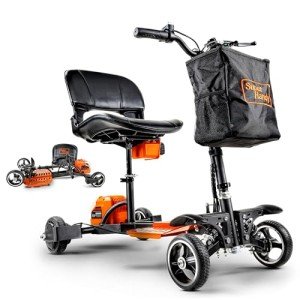
SuperHandy Foldable Mobility Scooter
Superhandy
Product Review Score
4.23 out of 5 stars
153 reviews
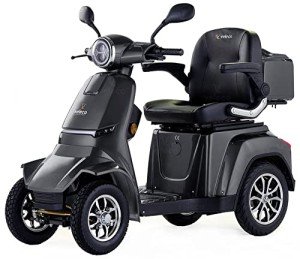
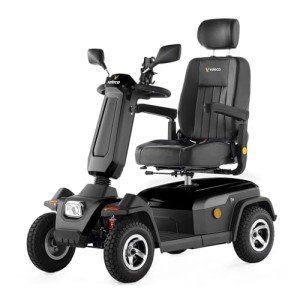
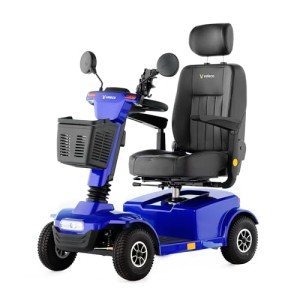
Veleco Jumpy Scooter - Speed Control
Veleco
Product Review Score
4.18 out of 5 stars
87 reviews£1,450.99
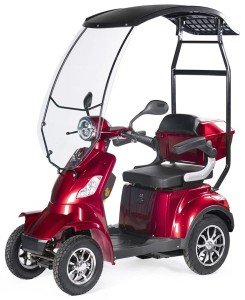
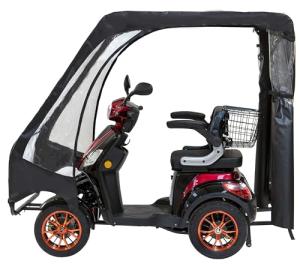
JH500 4-Wheel Scooter with Canopy
Green Power
Product Review Score
4.39 out of 5 stars
71 reviews£1,690.00
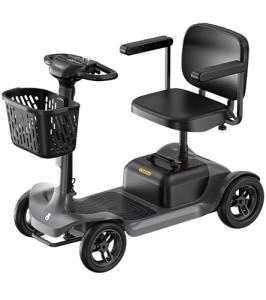
PAISEEC S1 All-Terrain Scooter
Paiseec
Product Review Score
4.66 out of 5 stars
140 reviews£1,199.00
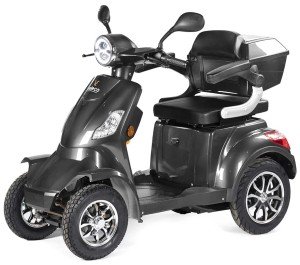
VELECO 4-Wheel Mobility Scooter
Veleco
Product Review Score
4.8 out of 5 stars
198 reviews£1,890.99
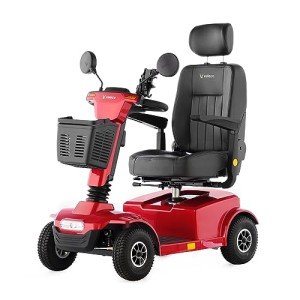
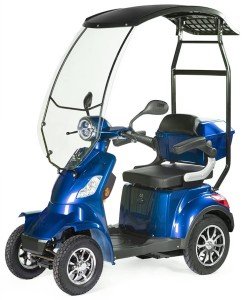
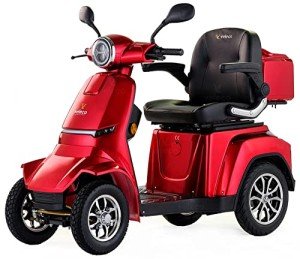
For many individuals, maintaining independence while managing mobility challenges is a top priority. As technology advances, mobility solutions have become more sophisticated, durable, and user-friendly. Among the various options available, the 4-wheeled mobility scooter stands out as a premier choice for those seeking a balance of safety, power, and versatility.
This guide provides an in-depth look at 4-wheeled mobility scooters, exploring their benefits, key features, and how to choose the right model for specific lifestyle needs.
The fundamental Appeal of 4-Wheeled Scooters
The primary advantage of a 4-wheeled mobility scooter lies in its configuration. Unlike 3-wheeled models, which feature a single wheel at the front, 4-wheeled scooters provide a rectangular wheelbase similar to an automobile. This design prioritizes stability and weight distribution, making these vehicles ideal for users who plan to spend a significant amount of time outdoors or on uneven terrain.
Key Benefits of the Four-Wheel Configuration
- Superior Stability: The broader base significantly reduces the risk of tipping, especially when navigating curbs, slopes, or sharp turns.
- Increased Weight Capacity: Due to their robust frame design, 4-wheeled scooters often support higher weight capacities than their 3-wheeled counterparts.
- Outdoor Performance: These scooters are engineered to handle various surfaces, including grass, gravel, and cracked pavement, with greater ease.
- Enhanced Comfort: The larger frame usually allows for more generous seating options, including high-back captains' chairs and increased legroom.
Comparing 3-Wheeled and 4-Wheeled Scooters
To understand if a 4-wheeled model is the right choice, it is helpful to compare it directly to the 3-wheeled alternative.
Table 1: Comparative Features
| Feature | 3-Wheeled Scooters | 4-Wheeled Scooters |
|---|---|---|
| Primary Use | Indoor / Smooth surfaces | Outdoor / Diverse terrain |
| Turning Radius | Tight; excellent for small spaces | Wider; requires more room to turn |
| Stability | Moderate; higher tip risk on turns | High; very stable on slopes/bumps |
| Legroom | Often more space for the feet | Standard; sometimes limited by wheel wells |
| Maneuverability | High | Moderate |
| Durability | Light to Moderate | High / Heavy Duty |
Essential Features to Consider
When evaluating 4-wheeled mobility scooters, prospective buyers and caregivers should focus on specific technical specifications that impact performance and daily utility.
Drive Range and Battery Life
The distance a scooter can travel on a single charge is crucial for users who wish to remain active throughout the day. Travel models may offer a range of 8–12 miles, while heavy-duty "all-terrain" models can travel up to 25–30 miles per charge.
Suspension Systems
Top-tier 4-wheeled scooters feature full suspension systems (front and rear). This is vital for absorbing shocks from uneven sidewalks or trails, protecting the user from jolts that could aggravate joint pain or back issues.
Speed Settings
Most mobility scooters have a top speed ranging from 4 mph to 10 mph. While 4 mph is standard for pedestrian areas and indoor use, higher speeds are beneficial for users who need to cover longer distances on public paths.
Portability and Storage
While 4-wheeled scooters are generally heavier, many models are designed with "feather-touch" disassembly. This allows the scooter to be broken down into five or six manageable pieces that can fit into the trunk of a standard vehicle.
Types of 4-Wheeled Mobility Scooters
The market offers a spectrum of 4-wheeled scooters tailored to different requirements. Understanding these categories is essential for making an informed purchase.
1. Travel/Portable Scooters
These are lightweight and designed for frequent transport. They prioritize a small footprint and ease of disassembly over long-range battery life or high-end suspension.
2. Mid-Size General Purpose Scooters
These serve as the "SUV" of the mobility world. They offer a balance of comfort, decent speed, and battery life, making them suitable for trips to the grocery store or local parks.
3. Heavy-Duty and All-Terrain Scooters
Built with reinforced frames and large, air-filled (pneumatic) tires, these models are designed for users with higher weight requirements or those who live in rural areas with unpaved roads.
Table 2: 4-Wheeled Scooter Model Comparison
| Category | Best For | Max Speed | Avg. Weight Capacity |
|---|---|---|---|
| Travel | Malls, paved paths, vacations | 4 mph | 250 - 300 lbs |
| Mid-Size | Daily errands, neighborhood use | 5 - 7 mph | 300 - 350 lbs |
| Heavy-Duty | Rugged terrain, clinical needs | 8 - 10 mph | 400 - 500+ lbs |
Tips for Safe Operation
Operating a 4-wheeled mobility scooter requires awareness and basic safety precautions to ensure the longevity of the device and the safety of the user.
- Mind the Center of Gravity: While 4-wheeled models are stable, users should avoid reaching too far to the side while seated.
- Speed Control on Slopes: Always reduce speed when descending ramps or hills to maintain full control of the braking system.
- Visibility Matters: If the scooter is used near traffic or in the evening, it should be equipped with front and rear lights, reflectors, and a safety flag.
- Weather Awareness: While many scooters are moisture-resistant, they are not waterproof. Electronic components can be damaged by heavy rain or snow.
Maintenance Recommendations
To keep a 4-wheeled scooter in peak condition, a regular maintenance routine is necessary.
- Battery Care: Charge the battery after every use. Avoid letting the battery drain completely, as this can shorten its overall lifespan.
- Tire Inspection: Check for wear and tear. If the scooter has pneumatic tires, ensure they are inflated to the manufacturer’s recommended PSI.
- Cleaning: Wipe down the frame with a damp cloth to remove dirt and debris. Avoid using high-pressure hoses near the motor or control tiller.
- Professional Servicing: It is advisable to have the motor and transaxle inspected by a professional technician once a year.
Frequently Asked Questions (FAQ)
1. Can a 4-wheeled mobility scooter be used indoors?
Yes, but it depends on the environment. While they are very stable, 4-wheeled scooters have a larger turning radius than 3-wheeled models. They are perfectly suitable for large stores or spacious homes, but they may struggle in tight hallways or small apartment kitchens.
2. Are 4-wheeled scooters allowed on airplanes?
Most portable and travel-sized 4-wheeled scooters are airline-approved. However, the battery type is the most critical factor. Lithium-ion batteries have specific Watt-hour limits for air travel, while Sealed Lead Acid (SLA) batteries are generally accepted if handled correctly. Always check with the airline 48 hours before departure.
3. Do I need a driver's license to operate a mobility scooter?
In most jurisdictions, mobility scooters are classified as medical devices rather than motor vehicles. Therefore, a driver's license is not required. However, users are expected to follow pedestrian rules when using sidewalks and public paths.
4. Which is better for grass and gravel: 3 wheels or 4 wheels?
The 4-wheeled configuration is significantly better for grass and gravel. The four contact points provide better traction and keep the scooter level on uneven surfaces, whereas a 3-wheeled scooter may feel "shaky" or lose traction more easily on loose terrain.
5. How long do the batteries typically last?
On average, mobility scooter batteries last between 12 and 18 months with regular use. With meticulous charging habits, some users can extend battery life to two years.
4-wheeled mobility scooters represent a vital tool for regaining freedom of movement. By prioritizing stability and durability, these vehicles empower users to navigate both the indoors and the great outdoors with confidence. Whether one requires a lightweight model for travel or a heavy-duty powerhouse for rugged trails, the 4-wheeled market offers a solution tailored to almost every need. Investing in the right model, combined with regular maintenance and safe operating habits, can lead to a significantly higher quality of life and continued engagement with the world.