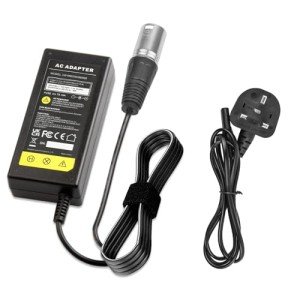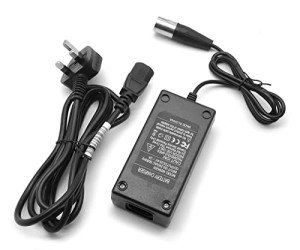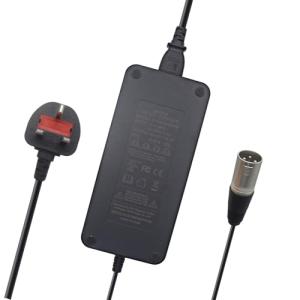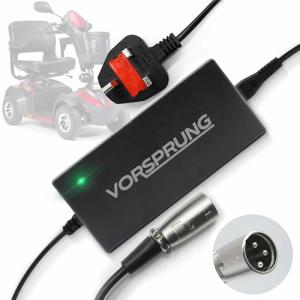


For individuals who rely on mobility scooters or power wheelchairs, the equipment represents much more than a vehicle; it is a gateway to independence, social interaction, and daily functionality. At the heart of this mobility is the battery system, and by extension, the battery charger. Among the most common and essential accessories in this industry is the 24V 2A Mobility Scooter Battery Charger with an XLR connector.
This guide provides an in-depth look at how these chargers work, why the 2A specification is critical for certain battery types, and how to maintain both the charger and the scooter batteries for maximum longevity.
Understanding the 24V 2A Specification
When selecting a charger, the numbers "24V" and "2A" are the most critical pieces of data.
- 24 Volts (24V): Most mobility scooters operate on a 24-volt system, typically achieved by connecting two 12-volt Lead-Acid (SLA) or Gel batteries in a series. The charger must match this voltage to push energy into the batteries effectively.
- 2 Amperes (2A): This represents the current or the "speed" at which the charger delivers power. A 2A charger is considered a "standard" or "trickle" charger for small to medium-sized scooters. While a 5A charger might charge a battery faster, it can also generate more heat, which may shorten the lifespan of smaller battery packs (such as 12Ah or 18Ah batteries).
Technical Specifications At-A-Glance
The following table summarizes the typical technical parameters found in a high-quality 24V 2A mobility charger.
| Feature | Specification |
|---|---|
| Input Voltage | 100-240V AC, 50/60Hz (Universal) |
| Output Voltage | 24V DC |
| Output Current | 2.0A |
| Connector Type | 3-Pin XLR (Male) |
| Compatibility | Lead-Acid, AGM, and Gel Batteries |
| Charging Stages | 3-Stage (Bulk, Absorption, Float) |
| Safety Certifications | UL, CE, RoHS, FCC |
| Operating Temp | 0°C to 40°C (32°F to 104°F) |
The XLR Connector: The Industry Standard
The 3-pin XLR connector is the most widely used interface for mobility scooter charging ports. Its circular design and notched guide ensure that the charger cannot be plugged in incorrectly, preventing accidental short circuits.
The typical pin configuration for a 24V XLR charger is:
- Pin 1: Positive (+)
- Pin 2: Negative (-)
- Pin 3: Ground/Inhibit (Often used to prevent the scooter from driving while plugged in)
It is vital to verify that the scooter’s charging port matches this configuration, though the 1-Positive/2-Negative setup is the global standard for the mobility industry.
Smart Charging Technology: The 3-Stage Cycle
Modern 24V 2A chargers are "smart" devices. They do not simply pump electricity into a battery until they are unplugged. Instead, they utilize a multi-stage charging process to protect the battery chemistry.
1. The Bulk Stage (Constant Current)
In this initial phase, the charger delivers its full 2-amp current to the battery. This stage usually brings the battery up to about 80% capacity. The charger monitors the voltage until it reaches a specific threshold.
2. The Absorption Stage (Constant Voltage)
Once the batteries reach the 80% mark, the charger maintains a constant voltage while gradually reducing the current (amperage). This allows the battery cells to "soak up" the remaining charge without overheating.
3. The Float/Maintenance Stage
Once the battery is fully charged, the charger drops to a very low voltage. This "trickle" prevents the battery from discharging naturally while it sits idle. High-quality 24V 2A chargers can be left plugged in during this stage safely, ensuring the scooter is ready for use at a moment's notice.
Compatibility with Leading Brands
The 24V 2A XLR charger is compatible with a vast array of travel-sized and mid-sized mobility scooters. Because these scooters often use smaller 12Ah, 15Ah, or 18Ah batteries, the 2-amp output is the ideal charging rate.
Compatible brands often include:
- Pride Mobility: (Go-Go Series, Victory models)
- Drive Medical: (Scout, Spitfire, Phoenix)
- Golden Technologies: (Buzzaround, LiteRider)
- Invacare: (Various power wheelchairs and scooters)
- Shoprider: (Echo, Dasher types)
Note: Always check the specific wattage and voltage requirements on the manufacturer's label located on the bottom or back of the original charger.
Essential Safety Features
A reliable charger is more than just a power brick; it is a safety device. Look for chargers that include the following integrated Protections:
- Short Circuit Protection: Prevents the charger from drawing too much current if there is a fault.
- Over-Voltage Protection: Ensures the charger doesn't exceed the safe voltage limit for the batteries.
- Over-Current Protection: Limits the output to 2 amps to prevent overheating the battery plates.
- Reverse Polarity Protection: Protects the internal electronics if the battery is wired incorrectly.
- LED Indicators: Most chargers use a simple light system to communicate status.
Understanding LED Status Lights
| LED Light Color | Meaning |
|---|---|
| Solid Red | Power is connected, and the battery is currently charging. |
| Solid Green | The battery is fully charged and is in "Float/Pulse" mode. |
| Flashing Red | Potential error (e.g., battery won't accept charge, or reversed polarity). |
| No Light | No power from the wall outlet or internal fuse has blown. |
Best Practices for Battery Longevity
To get the most out of a 24V 2A charger and the scooter's batteries, users should follow specific maintenance protocols.
- Charge Daily: Even if the scooter was only used for a short distance, it is best to plug it in overnight. Lead-acid batteries prefer to stay as close to 100% as possible.
- Avoid Deep Discharge: Do not wait until the "Low Battery" light flashes to charge the scooter. Repeatedly draining the battery to 0% significantly reduces its lifecycle.
- Charge in a Ventilated Area: While charging, batteries can emit a small amount of heat and gas. Ensure the charger is on a hard, flat surface (not carpet) to allow air to circulate.
- Disconnect the Charger Before Use: While modern scooters have "inhibitors" to prevent driving while plugged in, it is good practice to turn the charger off at the wall and disconnect it from the scooter before turning the ignition key.
- Temperature Matters: Avoid charging in extreme cold (below freezing) or extreme heat (above 100°F). Ideal charging occurs at room temperature.
FAQ: Frequently Asked Questions
Q: Can I use a 24V 2A charger if my original charger was 24V 1.5A?A: Yes. The 2A charger will charge the battery slightly faster, but it is still within a safe range for most mobility batteries.
Q: Can I use a 24V 2A charger if my original was 24V 5A?A: You can, but it will take more than twice as long to charge. If you have large batteries (35Ah or higher), a 2A charger may struggle to bring them to a full charge in a single night.
Q: Is this charger compatible with Lithium-ion batteries?A: Generally, no. Standard mobility chargers are designed for Lead-Acid, AGM, or Gel batteries. Lithium batteries require a specific charging profile. Using an SLA charger on a Lithium battery can be dangerous.
Q: Why does my charger get warm during use?A: It is normal for the charger to feel warm to the touch during the "Bulk" stage. However, it should never be hot enough to smell like burning plastic or be uncomfortable to hold.
Q: Is the XLR connector the same as an audio XLR plug?A: Physically, they look identical. However, audio cables are not designed to carry the current (amperage) required for battery charging. Only use chargers specifically manufactured for power delivery.
The 24V 2A Mobility Scooter Battery Charger with XLR Connector is an indispensable tool for mobility users. Its intelligent 3-stage charging cycle ensures that batteries stay healthy, and its universal XLR design makes it a versatile solution for a wide range of manufacturers. By choosing a high-quality charger with built-in safety features and following a consistent charging schedule, users can ensure their mobility scooter is always ready to take them wherever they need to go.
Investing in a reliable charger is not just an equipment upgrade; it is an investment in your continued freedom of movement.