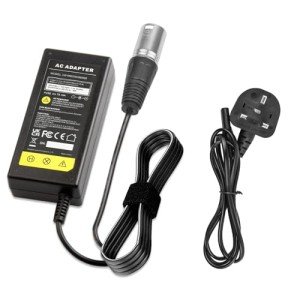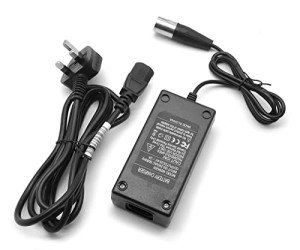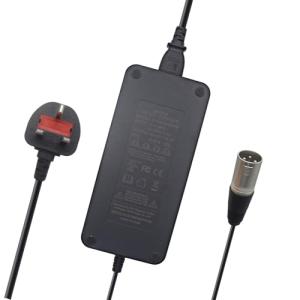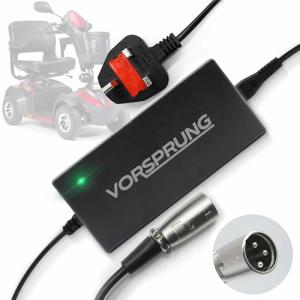

For individuals relying on mobility scooters or power wheelchairs, the equipment represents more than just a vehicle; it is a gateway to independence, social engagement, and daily autonomy. Central to the reliability of these devices is the battery system, and by extension, the charging unit. Among the most common and essential configurations in the industry is the 24V 2A mobility scooter battery charger featuring an XLR connector.
This guide explores the technical specifications, safety features, compatibility requirements, and maintenance best practices associated with this specific charging standard.
Understanding the Technical Specifications
The 24V 2A charger is an industry-standard power supply designed primarily for lead-acid batteries, including Absorbed Glass Mat (AGM) and Gel Cell varieties. To understand why this specific configuration is so prevalent, one must examine the metrics of voltage and amperage.
Voltage (24V)
Most mid-sized and portable mobility scooters operate on a 24-volt system. This is typically achieved by connecting two 12-volt batteries in a series. Therefore, the charger must provide a slightly higher voltage than the nominal 24V to "push" energy into the batteries, usually peaking around 28.8V during the high-charge phase.
Amperage (2A)
The 2-ampere (2A) rating refers to the speed of the current flow. A 2A charger is often referred to as a "compact" or "trickle" charger. While 5A or 8A chargers exist for larger, heavy-duty batteries, the 2A variant is ideal for smaller travel scooters (commonly those with 12Ah to 20Ah batteries). It provides a steady, cool charge that minimizes internal heat, thereby extending the overall lifespan of the battery cells.
The XLR Connector
The XLR connector is the physical interface between the charger and the scooter. It is a circular, three-pin plug originally derived from professional audio equipment. In the mobility industry, it has become the standard "universal" port.
Table 1: Technical Specifications Overview
| Feature | Specification |
|---|---|
| Input Voltage | 100-240V AC (Automatic Sensing) |
| Output Voltage | 24V DC (Nominal) |
| Charging Amperage | 2.0 Amperes |
| Connector Type | 3-Pin XLR (Male) |
| Battery Compatibility | AGM, Gel, Lead-Acid |
| Full Charge Voltage | ~28.8V |
| Float Voltage | ~27.6V |
| Indicator Lights | LED (Red: Charging, Green: Full) |
Compatibility and Brand Integration
One of the primary advantages of the 24V 2A XLR charger is its cross-brand compatibility. Because the XLR pin configuration is standardized, a single high-quality charger can often support multiple devices within a household or facility.
Common Compatible Brands
Many of the world’s leading mobility manufacturers utilize the 24V 2A system for their portable and folding models. These include, but are not limited to:
- Pride Mobility: Most Go-Go Travel Mobility series.
- Drive Medical: Scout, Spitfire, and Bobcat models.
- Golden Technologies: Buzzaround and LiteRider series.
- Invacare: Various portable power wheelchairs and scooters.
- Merits Health: Lightweight travel models.
- Shoprider: Echo and Dasher models.
Note: Owners should always verify the battery capacity (Ah) before selecting a 2A charger. While it will charge larger batteries, the process will take significantly longer.
The Three-Stage Smart Charging Process
Modern 24V 2A chargers are not "dumb" power supplies; they utilize microprocessor technology to manage the "Smart Charging" cycle. This process ensures the battery is charged efficiently without the risk of overcharging or "cooking" the electrolyte.
- Stage 1: Bulk Charge (Constant Current): The charger delivers its full 2A current to the battery. This stage typically brings the battery up to about 80% capacity.
- Stage 2: Absorption Charge (Constant Voltage): As the battery nears full capacity, the charger maintains a constant voltage while slowly tapering off the amperage. This ensures the internal chemistry is fully saturated without overheating.
- Stage 3: Float/Maintenance Mode: Once 100% capacity is reached, the charger drops to a lower "float" voltage. This compensates for the natural self-discharge of the lead-acid batteries, keeping them ready for use indefinitely without damage.
Safety Features to Look For
When purchasing a replacement or spare charger, specific safety certifications and internal protections are non-negotiable. Because these devices are often left plugged in overnight, they must be equipped to handle electrical fluctuations.
Essential Protection Mechanisms:
- Short Circuit Protection: Prevents the charger from drawing excessive current if the output wires are crossed or damaged.
- Over-Voltage Protection: Ensures the charger does not deliver a voltage spike that could melt battery casings.
- Reverse Polarity Protection: Prevents damage if the battery is wired incorrectly (though the XLR connector design largely prevents this physically).
- Auto-Shutoff: The ability to transition to float mode is critical for preventing "thermal runaway," a condition where batteries overheat and swell.
Maintenance and Best Practices
To maximize the lifespan of both the 24V 2A charger and the scooter’s batteries, users should follow a disciplined maintenance routine. Lead-acid batteries thrive on being kept "topped off" rather than being deep-discharged.
Table 2: Battery and Charger Dos and Don’ts
| Do | Don’t |
|---|---|
| Charge the scooter after every use, regardless of distance. | Don’t let the batteries sit in a discharged state for days. |
| Use the charger in a well-ventilated, dry area. | Don’t cover the charger with blankets or clothing while in use. |
| Plug the charger into the scooter before plugging into the wall. | Don’t drop or impact the charger, as internal circuits are fragile. |
| Verify the XLR pins are clean and free of debris. | Don’t use a charger with a frayed or kinked power cord. |
Optimizing Battery Life
A common misconception is that charging a battery too often will "wear it out." In reality, the 24V 2A charger is designed to prevent this. For mobility batteries, the "Depth of Discharge" (DoD) is the primary factor in lifespan. A battery that is only discharged 25% and then recharged will last significantly more cycles than one discharged 80% before recharging.
Troubleshooting Common Issues
If a 24V 2A charger fails to charge the scooter, the issue may not always be the charger itself.
- The LED stays Green when plugged in: This often indicates that the charger does not "see" the battery. This can be caused by a blown fuse on the scooter, a disconnected battery wire, or batteries that have dropped below a voltage threshold (usually 16-18V) where the smart charger can no longer detect them.
- The LED flashes Red/Green: This typically signifies a fault. It could mean the battery is defective and cannot hold a charge, or the charger’s internal safety circuit has been tripped.
- The charger gets very hot: While some warmth is normal, it should never be too hot to touch. Excessive heat may indicate an internal component failure or that the charger is being forced to work too hard on a battery bank that is too large (over 20Ah).
Frequently Asked Questions (FAQ)
1. Can a 24V 2A charger be used on Lithium batteries?
Generally, no. A standard charger for AGM or Gel batteries follows a charging profile that is incompatible with Lithium-Ion (LiFePO4) chemistry. Using a lead-acid charger on lithium batteries can lead to incomplete charging or, in extreme cases, fire hazards. Always match the charger to the battery chemistry.
2. How long does it take to charge a scooter with a 2A charger?
The duration depends on the battery size. For a standard travel scooter with 12Ah batteries, a full charge from "empty" (approx. 20% remaining) takes about 6 to 8 hours. Larger 20Ah batteries may take 10 to 12 hours.
3. Does the orientation of the 3 pins in the XLR connector matter?
Yes, though the XLR connector is keyed so it can only be inserted one way. Typically, Pin 1 is Positive (+), Pin 2 is Negative (-), and Pin 3 is an inhibit/ground pin that prevents the scooter from driving away while plugged in.
4. Can a 24V 5A charger be used instead of a 2A?
A 5A charger will charge the batteries faster. However, if the batteries are very small (e.g., 7Ah or 10Ah), a 5A current may be too aggressive and could shorten the battery life. Conversely, using a 2A charger on very large batteries is safe but will be very slow.
The 24V 2A mobility scooter battery charger with an XLR connector is a vital tool for maintaining the mobility and freedom of thousands of users. By providing a controlled, multi-stage charge, it ensures that AGM and Gel batteries remain healthy and ready for use.
When choosing a charger, prioritizing safety certifications and ensuring compatibility with the specific battery capacity of the scooter is paramount. By following proper charging etiquette—such as avoiding deep discharges and ensuring adequate ventilation—scooter owners can enjoy years of reliable service from their equipment, ensuring that their path to independence remains powered and clear.