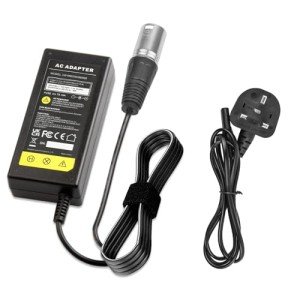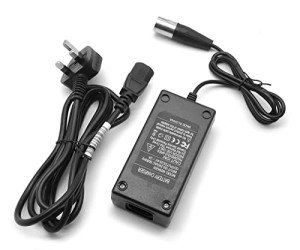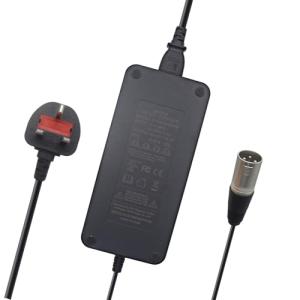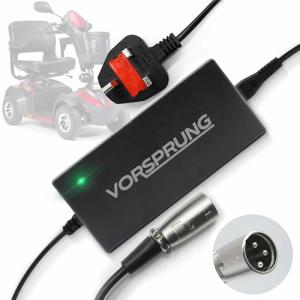

For individuals who rely on mobility scooters for their daily independence, the battery charger is perhaps the most critical accessory in their arsenal. Without a reliable power source, a mobility aid becomes a stationary object. Among the various power solutions available, the 28V 2A mobility scooter battery charger with an XLR connector has emerged as an industry standard for many mid-sized and compact scooters.
This guide provides an in-depth look at this specific charging unit, exploring its technical specifications, the importance of the XLR interface, safety features, and best practices for battery maintenance.
Understanding the Technical Specifications
The designation "28V 2A" describes the electrical output of the charger. To understand why these numbers matter, one must look at the electrical requirements of the lead-acid (SLA) or Gel batteries typically found in mobility scooters.
Voltage (28V)
Most mobility scooters operate on a 24V system, which usually consists of two 12-volt batteries connected in series. However, to push energy into a 24V battery system, the charger must provide a higher voltage. A 28V output is the standard charging voltage required to overcome the battery's internal resistance and ensure a full charge.
Amperage (2A)
The 2-ampere (2A) rating refers to the speed at which the current flows. While larger scooters might use 5A or 8A chargers, 2A is the "sweet spot" for many portable and travel-sized scooters. A lower amperage is often gentler on the batteries, reducing heat buildup and extending the overall lifespan of the power cells.
The XLR Connector
The XLR connector is a circular 3-pin plug. In the mobility industry, it is the most common interface for charging.
| Feature | Specification |
|---|---|
| Output Voltage | 28V DC (Nominal 24V) |
| Output Current | 2.0 Amperes (2A) |
| Connector Type | 3-Pin XLR (Male) |
| Input Voltage | 100-240V AC (Global Compatibility) |
| Compatibility | Lead-Acid, AGM, and Gel Batteries |
| Cooling | Passive or Active (Fan-based) |
Why the XLR Connector is the Industry Standard
The 3-pin XLR connector was originally designed for professional audio equipment, but its durability and secure locking mechanism made it ideal for mobility devices. The pin configuration is standardized to ensure safety:
- Pin 1: Positive (+)
- Pin 2: Negative (-)
- Pin 3: Often used for the "Inhibit" function.
The "Inhibit" function is a safety feature built into most mobility scooters. When the charger is plugged into the tiller (the steering column) or the battery box via the XLR port, it sends a signal to the scooter’s controller to disable the motor. This prevents the user from accidentally driving away while the scooter is still plugged into the wall, which could damage the charging port or the cable.
Compatibility and Usage
The 28V 2A XLR charger is compatible with a wide range of brands. However, users should always verify their scooter's requirements before purchasing a replacement.
Shared Compatibility List
Many major brands utilize this specific power profile for their travel and mid-range models:
- Pride Mobility: Many Go-Go models and Celebrity series.
- Golden Technologies: Buzzaround and LiteRider series.
- Drive Medical: Scout, Spitfire, and Phoenix models.
- Invacare: Various portable power wheelchairs and scooters.
- Rascal: Smaller portable models.
Compatibility Checklist
Before using a 28V 2A charger, ensure the following conditions are met:
- Battery Chemistry: The charger is designed for Lead-Acid (SLA), AGM, or Gel batteries. It should not be used for Lithium-ion batteries unless specifically rated for them.
- Voltage Match: The scooter must be a 24V system.
- Pin Polarities: While Pin 1 is almost always Positive in the mobility world, always check the manual to ensure the polarity matches.
The Three-Stage Charging Process
A high-quality 28V 2A charger does more than just blast electricity into a battery. It typically follows a "Three-Stage" smart charging cycle to preserve battery health:
- Bulk Charge Stage: The charger provides a constant maximum current (2A). This stage brings the battery up to about 80% capacity quickly.
- Absorption Stage: The charger maintains a constant voltage while the current (amps) gradually tapers off. This ensures the battery is saturated deeply and reached 100% capacity without overheating.
- Float (Maintenance) Stage: Once the battery is full, the charger drops to a lower voltage. This "trickle" keeps the battery topped up and counteracts self-discharge, allowing the user to leave the charger plugged in for short periods (like overnight) without risk of overcharging.
Key Safety and Performance Features
Modern chargers are equipped with several internal safeguards to protect both the user and the equipment:
- Short-Circuit Protection: Prevents the charger from operating if the output pins are accidentally bridged.
- Over-Voltage Protection: Ensures the charger never exceeds a safe voltage limit that could cause the battery to swell or leak.
- Reverse Polarity Protection: Protects the internal circuitry if the battery is connected incorrectly.
- LED Indicator Lights:
- Solid Red: Charging in progress.
- Solid Green: Fully charged/Standby mode.
- Flashing Lights: Typically indicates a fault with the battery or the charger itself.
Battery Maintenance Tips for Mobility Scooter Users
To get the most out of a 28V 2A charger and the batteries it services, following a strict maintenance routine is essential.
Best Practices for Longevity:
- Charge Every Night: Lead-acid batteries do not have a "memory effect." It is better to charge them after every use, even if they are only partially depleted.
- Avoid Total Depletion: Try not to let the battery gauge fall into the "red" zone. Deeply discharging a battery significantly shortens its life.
- Temperature Control: Charge the batteries in a cool, dry place. Extreme heat can lead to battery swelling, while extreme cold reduces the battery's ability to accept a charge.
- Unplug Once Charged: While float chargers are safe for overnight use, it is generally recommended to unplug the charger from the wall once the green light appears if the scooter will not be used for several days.
Frequently Asked Questions (FAQ)
1. Can I use a 2A charger if my original charger was 5A?
Yes, but it will take much longer to reach a full charge. A 2A charger is slower than a 5A charger. However, using a lower-amp charger is generally safer and can be better for the long-term health of the batteries.
2. Is it safe to leave the charger plugged in overnight?
Yes, most 28V 2A XLR chargers are "smart" chargers with an automatic shut-off or float mode. Once the green light is on, the charger reduces its output to prevent overcharging.
3. Why is my charger getting hot?
It is normal for a charger to feel warm to the touch during the "Bulk Charge" stage. However, it should never be too hot to touch, nor should it emit a burning smell. If it does, unplug it immediately.
4. Can this charger be used for Lithium batteries?
Usually, no. Lithium batteries require a specific charging profile and a BMS (Battery Management System) communication that standard 28V 2A lead-acid chargers do not provide. Always match the charger to the battery chemistry.
5. My charger light stays green, but the scooter won't move. What is wrong?
This often indicates that the batteries are "dried out" or have reached the end of their life. The charger sees a full voltage (green light), but the batteries no longer have the capacity to hold a load.
Comparison: 2A vs. Higher Amperage Chargers
| Feature | 2A Charger | 5A-8A Charger |
|---|---|---|
| Charging Speed | Slower (8-12 hours) | Faster (4-6 hours) |
| Battery Health | Excellent (Less heat) | Good (Higher heat potential) |
| Portability | Lightweight and compact | Heavier, often has a fan |
| Best For | Travel scooters / Portable units | Mid-to-Large sized scooters |
| Cost | Generally more affordable | More expensive |
The 28V 2A mobility scooter battery charger with an XLR connector is a vital component for maintaining the freedom and independence of scooter users. By understanding how the 3-pin system works and adhering to a consistent charging schedule, users can ensure their mobility devices remain reliable for years to come.
When purchasing a replacement, always prioritize safety features like automatic shut-off and short-circuit protection. A quality charger is not just an accessory; it is an investment in the longevity of the scooter's batteries and the reliability of the user's daily transportation.