
For many individuals living with limited mobility, the world can sometimes feel like it is shrinking. Simple tasks—such as navigating a grocery store, visiting a park, or traveling to see family—can become logistical challenges. However, the advent of the compact foldable electric mobility scooter has revolutionized personal transportation. These innovative devices combine cutting-edge battery technology with ergonomic design to provide users with a newfound sense of independence and adventure.
This guide explores the intricate details of compact foldable mobility scooters, examining their features, the technology behind their batteries, and why they have become the preferred choice for modern travelers and active seniors.
What is a Compact Foldable Electric Mobility Scooter?
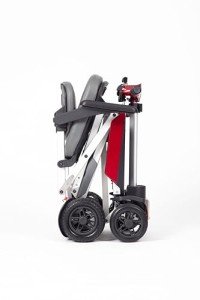
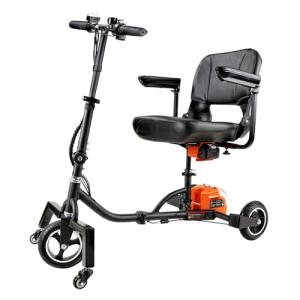
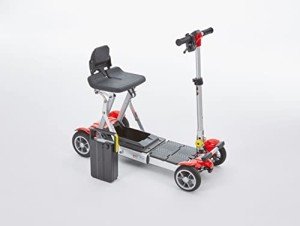
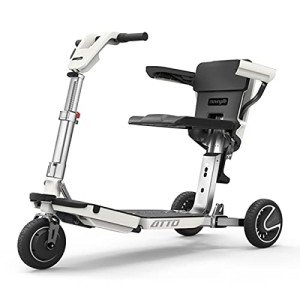
A compact foldable electric mobility scooter is a lightweight, battery-powered vehicle designed specifically for individuals who have difficulty walking long distances. Unlike traditional, bulkier mobility scooters, these models are engineered with portability as a priority. They feature a unique frame that can either be folded manually or at the touch of a button, transforming into a size comparable to a medium-sized suitcase.
The integration of high-energy-density batteries ensures that these scooters remain lightweight while offering a significant driving range. This makes them ideal for use in various environments, from indoor shopping malls to paved outdoor pathways.
Key Benefits of Foldable Mobility Scooters
The transition from traditional mobility aids to foldable electric models offers several lifestyle advantages:
- Unmatched Portability: These scooters are designed to fit into the trunks of most standard cars, eliminating the need for expensive vehicle lifts or specialized vans.
- Public Transport and Travel Compatibility: Many models are specifically built to be "airline friendly," meeting TSA and FAA regulations for lithium-ion battery transport.
- Space Efficiency: For those living in apartments or smaller homes, the ability to fold the scooter and tuck it into a closet or corner is a significant space-saving benefit.
- Operational Simplicity: Most foldable scooters feature intuitive "wig-wag" steering systems, making them easy to operate even for those with limited dexterity.
Understanding the Battery Technology
The "heart" of any electric scooter is its battery. In the realm of compact foldable scooters, the battery type determines the weight, range, and charging efficiency of the device.
Lithium-Ion vs. Lead Acid
Traditionally, mobility scooters used Lead Acid (SLA) batteries. While reliable, these batteries are heavy and require frequent replacement. Modern compact scooters almost exclusively use Lithium-ion (Li-ion) batteries.
- Weight: Lithium batteries are roughly one-third the weight of lead-acid equivalents.
- Lifespan: They can endure significantly more charge cycles (typically 500-1000) before capacity begins to degrade.
- Charging Speed: Lithium-ion batteries charge faster, often reaching full capacity in 4 to 6 hours compared to the 8 to 12 hours required for older technologies.
Range and Performance
The range of a mobility scooter refers to how far it can travel on a single charge. For compact models, this typically falls between 10 and 15 miles. Factors affecting this range include the user’s weight, the terrain (hills vs. flat ground), and the ambient temperature.
Technical Specifications Comparison
When selecting a compact foldable scooter, it is helpful to understand how different categories of scooters compare in terms of technical specifications.
Table 1: Comparative Features of Foldable Mobility Scooters
| Feature | Ultra-Lightweight Models | Premium Long-Range Models | Heavy-Duty Folding Models |
|---|---|---|---|
| Average Weight | 40 - 50 lbs | 55 - 65 lbs | 65 - 80 lbs |
| Weight Capacity | Up to 250 lbs | Up to 300 lbs | Up to 350 lbs |
| Top Speed | 3.5 - 4 mph | 4 - 5 mph | 4 - 6 mph |
| Battery Type | Lithium-ion | Lithium-ion | High-capacity Lithium |
| Max Range | 8 - 10 miles | 12 - 15 miles | 15 - 18 miles |
| Folding Mechanism | Manual | Automatic/Remote | Manual or Semi-Auto |
The Two Types of Folding Mechanisms
Prospective buyers often choose between two primary folding styles. Each has its own merits depending on the user’s physical strength and preference for convenience.
Table 2: Manual Folding vs. Automatic Folding
| Feature | Manual Folding Scooters | Automatic/Remote Folding Scooters |
|---|---|---|
| Ease of Use | Requires some bending and lifting. | Folds/unfolds at the touch of a button. |
| Weight | Generally lighter due to fewer motors. | Slightly heavier due to the folding motor. |
| Reliability | Very high; fewer electronic parts to fail. | High, but requires battery power to fold. |
| Price Point | Usually more affordable. | Generally more expensive. |
| Best For | Active users with good hand strength. | Users with limited mobility or back pain. |
Necessary Maintenance for Longevity
To ensure a compact mobility scooter remains reliable for years to come, a regular maintenance routine is essential. Users and caregivers should adhere to the following checklist:
- Battery Care: Never let the battery remain at 0% for long periods. Charge the battery at least once a month, even if the scooter is not in use.
- Tire Inspections: Most compact scooters use solid, puncture-proof tires. Check for uneven wear or debris lodged in the treads.
- Cleaning: Use a damp cloth to wipe down the tiller and seat. Avoid using high-pressure water hoses, as electronics are sensitive to moisture.
- Fastener Checks: Periodically ensure that all bolts and folding joints are tight and lubricated to prevent rattling or stiffness.
- Storage: Store the scooter in a cool, dry place. Extreme heat or cold can significantly reduce battery efficiency.
Safety Considerations
While foldable scooters are designed for convenience, safety remains paramount. These devices are intended for use on sidewalks, in stores, and on flat surfaces.
- Incline Ratings: users should be aware that compact scooters often have lower incline ratings (usually 6 to 8 degrees) compared to larger models. Attempting to climb steep hills can strain the motor and battery.
- Stability: Because these scooters have a smaller footprint, users should take corners at reduced speeds to prevent tipping.
- Visibility: If the scooter is used outdoors during dusk, adding reflective tape or clip-on LED lights is highly recommended, as compact models often have smaller built-in lighting systems.
How to Choose the Right Model
Before making a purchase, a thorough assessment of the user's needs is required. Consider the following questions:
- Where will it be used most? If the primary use is air travel, an airline-approved lithium battery is non-negotiable.
- What is the user’s weight? Always choose a scooter with a weight capacity at least 20-30 lbs higher than the user for optimal performance.
- Who will be lifting it? If the user needs to lift the scooter into a car themselves, they should focus on weights under 50 lbs.
- What is the terrain like? For uneven surfaces or gravel, a model with slightly larger wheels and adjustable suspension is preferable.
Frequently Asked Questions (FAQ)
1. Can I take a foldable mobility scooter on an airplane?
Yes, most compact foldable scooters are designed for air travel. However, the lithium-ion battery must typically be under 300Wh (Watt-hours) to comply with FAA regulations. Most manufacturers provide a "Travel Certificate" for this purpose. It is always best to contact the airline 48 hours before departure.
2. How long do the batteries actually last?
Under normal conditions, a lithium-ion battery in a mobility scooter will last between 2 and 4 years before it needs replacement. This depends heavily on how often the scooter is charged and the environmental conditions of storage.
3. Do I need a license to drive a mobility scooter?
In most regions, no license or registration is required to operate a mobility scooter, as they are classified as medical devices rather than motor vehicles. However, they are restricted for use on sidewalks and pedestrian areas, not on main roads.
4. Can the scooter be used in the rain?
It is generally advised to avoid rain. While many models are "water-resistant," they are not waterproof. Moisture can seep into the control panel (tiller) or the battery compartment, potentially causing electrical failure.
5. Is it easy to find replacement parts?
For major brands, replacement parts such as batteries, tires, and armrests are widely available through authorized medical equipment dealers and online retailers.
The compact foldable electric mobility scooter is more than just a piece of medical equipment; it is a gateway to a more active and fulfilling life. By prioritizing lightweight materials, advanced lithium-ion battery technology, and ease of transport, these scooters have removed the barriers that once kept many individuals confined to their homes. Whether it is for traveling the world or simply navigating the local mall, the right folding scooter offers the perfect balance of technology, comfort, and freedom.