
For millions of individuals worldwide, maintaining independence is intrinsically linked to the ability to move freely. As technology advances, the tools used to provide that freedom have evolved significantly. One of the most impactful innovations in the assistive technology sector is the folding 3-wheel electric mobility scooter with a seat. These devices represent a perfect marriage of engineering and practical design, offering a solution for those who require assistance with walking but refuse to be tethered to their homes.
This guide explores the intricate details, benefits, and considerations surrounding these modern mobility solutions, providing an informative overview for prospective users and caregivers.
Understanding the Concept: Stability Meets Portability
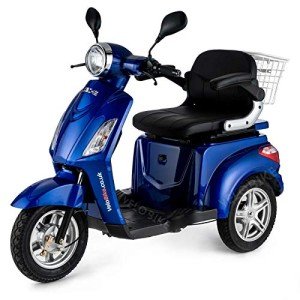
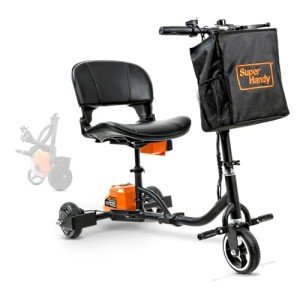
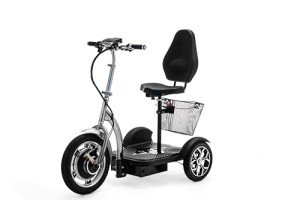
A folding 3-wheel electric mobility scooter is a motorized transport device designed for individuals with limited mobility. Unlike traditional wheelchairs, these scooters are often steered via a tiller (handlebar) and powered by rechargeable lithium-ion or lead-acid batteries. The "3-wheel" configuration typically features one wheel in the front for steering and two in the rear for drive and stability.
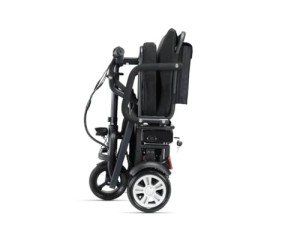
The defining characteristic of these specific models is their ability to collapse or fold. This mechanism allows the scooter to be reduced to the size of a large suitcase, making it compatible with car trunks, closets, and even airplane overhead compartments or cargo holds.
Key Components of the Design
- The Tiller: The control center where the throttle, speed dial, and battery indicator are located.
- The Seat: Usually padded and ergonomic, often featuring flip-up armrests for easier side-entry.
- The Folding Mechanism: A series of hinges or a remote-controlled motor that collapses the frame.
- The Drive System: A rear-mounted motor that provides the push needed for various terrains.
Why Choose 3 Wheels Over 4?
When selecting a mobility scooter, the choice between three and four wheels is a primary consideration. While 4-wheel models offer increased stability for rugged outdoor use, the 3-wheel variant is the gold standard for indoor maneuverability.
Comparison Table: 3-Wheel vs. 4-Wheel Scooters
| Feature | 3-Wheel Scooter | 4-Wheel Scooter |
|---|---|---|
| Turning Radius | Extremely tight; ideal for narrow aisles. | Wider; requires more space for turns. |
| Legroom | Spacious; better for taller individuals. | Resticted by the front wheel wells. |
| Weight | Generally lighter and easier to fold. | Heavier due to the extra wheel/axle. |
| Stability | Best on flat, paved surfaces. | Best for uneven terrain and hills. |
| Portability | High; often designed for travel. | Moderate; often requires a vehicle lift. |
The Advantages of the Folding Mechanism
The "folding" aspect of these scooters is what truly unlocks a world of possibilities for the user. Historically, mobility scooters required expensive van lifts or specialized trailers. A folding model removes these barriers.
- Travel Ease: Most folding 3-wheel scooters are TSA and airline-approved. This allows users to navigate airports and then gate-check their device, ensuring they have their mobility aid immediately upon arrival at their destination.
- Compact Storage: For those living in apartments or assisted living facilities, space is at a premium. A folding scooter can be tucked under a bed or placed in a corner when not in use.
- Versatile Transport: These devices can fit into the trunk of a standard sedan, eliminating the need for a dedicated mobility vehicle.
Technical Specifications to Consider
When evaluating different models, certain technical metrics dictate the performance and reliability of the scooter. Understanding these specifications ensures the chosen model matches the user's lifestyle.
Table: Typical Specifications for Folding 3-Wheel Scooters
| Specification | Standard Range | Premium/Heavy Duty Range |
|---|---|---|
| Weight Capacity | 220 lbs – 265 lbs | 300 lbs – 400 lbs |
| Top Speed | 3.5 mph – 4.5 mph | 5 mph – 8 mph |
| Travel Range | 8 – 12 miles | 15 – 25 miles |
| Charging Time | 4 – 6 hours | 6 – 10 hours |
| Total Weight | 45 lbs – 60 lbs | 65 lbs – 90 lbs |
| Ground Clearance | 1.5 – 2.5 inches | 3 – 4 inches |
Essential Features for Comfort and Safety
A mobility scooter is not just a tool for transportation; it is an extension of the user's body. Therefore, comfort and safety features are paramount.
Ergonomic Seating
Modern folding scooters prioritize lumbar support and cushioning. Since many users may spend extended periods in the seat, breathable fabrics and adjustable heights are essential for preventing fatigue.
Intelligence and Safety Controls
- Automatic Braking: Most electric scooters utilize electromagnetic brakes that engage the moment the throttle is released, preventing "rolling" on inclines.
- Anti-Tip Wheels: Small auxiliary wheels at the rear prevent the scooter from tipping backward when navigating small bumps or ramps.
- Variable Speed Control: A dial that allows the user to set a maximum speed, which is particularly useful in crowded areas like shopping malls.
Battery Technology
Lithium-ion batteries have revolutionized this industry. They are significantly lighter than traditional lead-acid batteries and offer a longer lifespan (more charge cycles). Furthermore, they maintain a consistent power output even as the charge begins to deplete.
Factors to Evaluate Before Purchase
Prospective buyers should conduct a thorough assessment of their specific needs. It is rarely a "one-size-fits-all" scenario.
- Intended Environment: Will the scooter be used primarily in grocery stores and homes, or on gravel paths and parks?
- Weight Sensitivity: Can the user or a caregiver lift 50 pounds into a car trunk? If not, a model that disassembles into smaller pieces might be better than a single folding unit.
- Height of the User: 3-wheel models offer more legroom, but the tiller height must be adjustable to ensure a comfortable reach for the arms.
- Budget: While folding models are an investment, they often pay for themselves by reducing the need for specialized transportation services.
Maintenance Tips for Longevity
To ensure the scooter remains reliable, a basic maintenance routine should be followed:
- Battery Care: Never let the battery sit at 0% for long periods. Charge it after each significant use.
- Tire Inspection: Check for wear and tear. Even solid, non-flat tires can develop "flat spots" if the scooter sits unused for months.
- Cleaning: Use a damp cloth to wipe down the frame. Avoid spraying water directly into the tiller or battery compartment, as electronics are sensitive to moisture.
- Hinge Lubrication: Occasionally apply a silicone-based lubricant to the folding joints to ensure the mechanism remains smooth.
Frequently Asked Questions (FAQ)
1. Are 3-wheel folding scooters safe on hills?
While they are designed with safety in mind, 3-wheel scooters are most stable on flat surfaces. They can handle gentle ADA-compliant ramps, but steep inclines or uneven sideways slopes should be navigated with extreme caution to avoid tipping.
2. Can I take a folding electric scooter on an airplane?
Yes, most models are designed for air travel. However, users must ensure the battery is "Dry Cell" or Lithium-ion and falls within the Watt-hour (Wh) limits set by the FAA or relevant aviation authority. It is always recommended to notify the airline in advance.
3. Do I need a driver's license to operate one?
In most jurisdictions, mobility scooters are classified as medical devices rather than motor vehicles. Therefore, a driver's license, insurance, or registration is typically not required for sidewalk or indoor use.
4. How long does the battery typically last?
On average, a well-maintained battery will last between 1 to 3 years depending on the frequency of use and charging habits.
5. Is a folding scooter comfortable for someone who is tall?
Generally, yes. Because 3-wheel scooters do not have two front wheels occupying the floorboard space, users can extend their legs on either side of the steering tiller, providing more comfort than many 4-wheel compact models.
The folding 3-wheel electric mobility scooter with a seat stands as a testament to modern inclusive design. By prioritizing portability without sacrificing the power and comfort needed for daily life, these devices have become essential tools for maintaining an active lifestyle. Whether it is a trip to the local library, a family vacation abroad, or simply navigating the halls of home, these scooters provide the reliable, efficient, and dignified mobility that every individual deserves. When chosen wisely and maintained with care, a folding scooter is more than just a purchase—it is a gateway to continued independence.