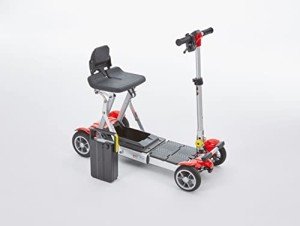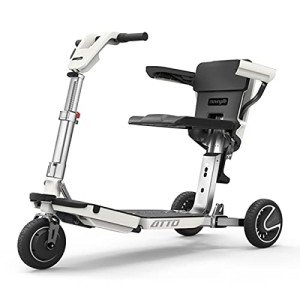

For many adults facing mobility challenges, the world can sometimes feel like it is shrinking. Whether due to age, injury, or chronic health conditions, the ability to navigate through grocery stores, parks, or airports can become a daunting task. However, the evolution of assistive technology has birthed a solution that balances stability with extreme convenience: the folding 4-wheel electric mobility scooter.
This guide explores the intricate details, benefits, and considerations of these innovative devices, providing a comprehensive overview for those seeking to regain their autonomy.
The Evolution of Personal Mobility
In the past, mobility scooters were often bulky, heavy, and required specialized vehicle lifts for transport. The introduction of folding mechanisms—both manual and automatic—has fundamentally changed the landscape. By combining the stability of a four-wheel wheelbase with the ability to collapse into a compact form, these scooters offer a middle ground that previous generations of mobility aids lacked.
Why Choose Four Wheels Over Three?
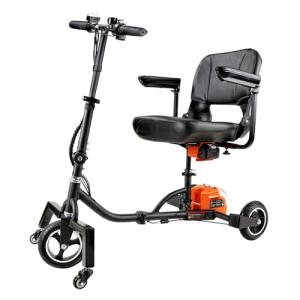
When selecting a mobility scooter, one of the first decisions is the wheel configuration. While 3-wheel scooters offer a tighter turning radius, 4-wheel models are generally preferred for adult users seeking maximum security.
- Enhanced Stability: The rectangular footprint of a 4-wheel scooter provides a lower center of gravity, significantly reducing the risk of tipping during turns or on uneven surfaces.
- Outdoor Versatility: These models handle varied terrain—such as gravel, grass, or cracked pavement—more effectively than their 3-wheel counterparts.
- Weight Distribution: For adults with higher body weights, four wheels distribute the load more evenly, reducing wear on the tires and motor.
Key Features of Folding 4-Wheel Mobility Scooters
Understanding the technical specifications is crucial for identifying the right model. Below is a breakdown of the primary features found in modern folding scooters.
1. Folding Mechanisms
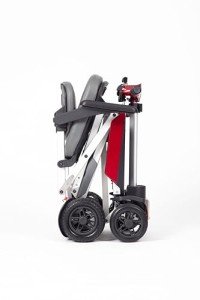
Folding scooters generally fall into two categories:
- Manual Folding: The user pulls a lever or releases a pin to collapse the unit. These are often lighter and more budget-friendly.
- Automatic/Remote Folding: These scooters use an internal motor to fold at the touch of a button or a remote key fob. This is ideal for individuals with limited manual dexterity or back pain.
2. Battery Technology
Most modern folding scooters utilize Lithium-Ion batteries. These are significantly lighter than traditional lead-acid batteries and offer a longer lifespan. Crucially, many are "Airline Approved," though it is always necessary to verify the Watt-hour (Wh) rating with specific airlines.
3. Weight Capacity and Unit Weight
The "holy grail" of folding scooters is a high weight capacity paired with a low unit weight. Manufacturers use aircraft-grade aluminum or magnesium alloys to achieve this balance.
Technical Comparison Table: Standard vs. Folding Models
| Feature | Standard 4-Wheel Scooter | Folding 4-Wheel Scooter |
|---|---|---|
| Average Weight | 150 - 250 lbs | 45 - 65 lbs |
| Portability | Requires vehicle lift/ramp | Fits in most car trunks |
| Max Speed | 5 - 8 mph | 3.5 - 5 mph |
| Turning Radius | Wide | Moderate |
| Primary Use | Heavy outdoor/Neighborhood | Travel, shopping, indoors |
| Storage | Requires significant space | Can be stored in a closet |
The Benefits of Portability for Adults
The primary advantage of a folding 4-wheel electric scooter is the lack of boundaries it imposes. For an active adult, the ability to store a scooter in the trunk of a sedan means that visits to family, trips to the mall, or vacations are back on the table.
Travel and Tourism
Folding scooters are designed with travel in mind. Many models are designed to be "trolleyed"—folded up and pulled behind the user like a piece of luggage. This makes navigating through airport terminals or cruise ship corridors significantly easier.
Space-Saving for Urban Living
For those living in apartments or assisted living facilities, space is at a premium. A folding scooter can be tucked under a bed or placed in the corner of a room, keeping pathways clear and maintaining the aesthetic of the living space.
Must-Have Features for Comfort and Safety
When browsing for a folding 4-wheel mobility scooter, certain "extras" should be considered essential for long-term satisfaction.
- Adjustable Tiller: Allows the user to move the controls closer or further away, preventing strain on the arms and back.
- Padded Armrests: Many folding models omit these to save weight, but for longer trips, they are vital for comfort.
- LED Lighting: Front headlights and rear reflectors are necessary for visibility during evening use.
- Electromagnetic Brakes: These automatically engage when the user releases the throttle, preventing the scooter from rolling on inclines.
- Solid Tires: Flat-free tires ensure that the user is never stranded with a puncture.
Recommended Accessories List
- Under-seat storage bags for personal items.
- Cup holders for hydration on the go.
- Phone mounts for GPS navigation.
- Travel covers to protect the scooter during flights or in storage.
- Extra battery packs for extended day trips.
Performance and Specifications
To provide a clearer picture of what a high-quality folding 4-wheel scooter offers, consider the following performance averages.
Performance Statistics Table
| Specification | Average Range |
|---|---|
| Top Speed | 4 mph |
| Drive Range | 10 - 15 miles per charge |
| Ground Clearance | 1.5 - 3 inches |
| Max Incline Rating | 6 - 8 degrees |
| Weight Capacity | 250 - 300 lbs |
| Charging Time | 4 - 6 hours |
Maintenance and Care
To ensure the longevity of a folding electric scooter, consistent maintenance is required. Because these devices have moving parts related to the folding mechanism, they require slightly more attention than rigid models.
- Battery Health: Never let the battery sit at 0% for extended periods. Charge the scooter after every use, and if storing it for the winter, ensure the battery is charged at least once a month.
- Joint Inspection: Periodically check the folding joints and pins. Ensure they are free of debris and lightly lubricated if the manufacturer recommends it.
- Tire Check: Even solid tires can wear down. Check the tread depth annually to maintain adequate traction.
- Cleaning: Use a damp cloth to wipe down the chassis. Avoid high-pressure water, as it can damage the electronic components and the motor.
Frequently Asked Questions (FAQ)
Can a folding 4-wheel scooter be taken on an airplane?
Yes, most folding scooters are designed for air travel. However, users must ensure the lithium battery is FAA-approved (typically under 300Wh for a single battery or 160Wh each for two batteries). It is recommended to notify the airline at least 48 hours in advance.
Is a 4-wheel scooter difficult to fold?
Manual folding models are designed with simple pull-levers and usually take less than 20 seconds to collapse. Automatic models fold in about 10-15 seconds via a remote control or a button on the tiller.
How do 4-wheel folding scooters handle hills?
These scooters are designed for ADA-compliant ramps and slight inclines. They are not intended for steep hiking trails or very high curbs. Most have a maximum incline rating of 6 to 8 degrees.
Can the battery be charged "off-board"?
Many high-quality folding scooters allow the battery to be removed and charged independently of the scooter. This is particularly useful if the scooter is stored in a car trunk or a garage without a power outlet.
Does insurance cover these scooters?
In many cases, Medicare or private insurance may cover a portion of the cost if the device is deemed a "medical necessity" for use inside the home. However, many "travel" or "folding" scooters are classified as luxury or convenience items, so it is vital to check with the provider first.
The folding 4-wheel electric mobility scooter represents a significant leap forward in assistive technology. By prioritizing both safety and portability, these devices empower adults to maintain an active, social, and independent lifestyle. While the initial investment may be higher than traditional models, the return in the form of freedom and ease of travel is often considered priceless. When choosing a model, individuals should weigh the importance of weight capacity, folding ease, and battery range to find the perfect companion for their daily adventures.