




Transporting powersports vehicles like motorcycles, dirt bikes, and All-Terrain Vehicles (ATVs) requires more than just a powerful truck or a spacious trailer. One of the most critical, yet often overlooked, components of the transport process is the loading ramp. Among the various options available on the market, the folding aluminum ramp has emerged as the industry standard for enthusiasts and professionals alike.
This guide provides an in-depth look at why folding aluminum ramps are the preferred choice, how to select the right one, and the best practices for safe loading.
Why Choose Aluminum Over Other Materials?
When selecting a loading ramp, the primary choice usually lies between aluminum and steel. While steel is known for its extreme rigidity, aluminum offers a unique set of benefits that make it far more practical for mobile applications.
Aluminum is naturally resistant to corrosion and rust. Since ramps are frequently exposed to rain, mud, and road salt, an aluminum ramp will maintain its structural integrity far longer than a steel counterpart, which may require painting or galvanization to prevent degradation. Furthermore, the strength-to-weight ratio of aluminum allows for a ramp that is heavy-duty enough to support a 1,000-pound ATV while still being light enough for a single person to lift and position.
Table 1: Comparative Analysis: Aluminum vs. Steel Ramps
| Feature | Aluminum Ramps | Steel Ramps |
|---|---|---|
| Weight | Lightweight (Easy for one person) | Heavy (Requires more effort) |
| Corrosion Resistance | Excellent (Naturally rust-proof) | Poor (Requires coating/maintenance) |
| Weight Capacity | High (Varies by grade) | Very High |
| Portability | High (Especially folding models) | Low |
| Price Point | Mid to High | Low to Mid |
The Advantages of the Folding Design
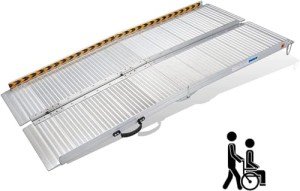
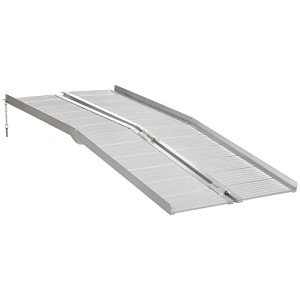
The "folding" aspect of these ramps is a game-changer for space management. Most modern folding ramps utilize a heavy-duty hinge system in the center, allowing the ramp to reduce its length by half for storage.
1. Compact Storage
A standard 7-foot ramp can be cumbersome to store in a short-bed truck. A folding ramp, however, can easily fit behind the seats of a cab or tucked alongside the vehicle in the truck bed without obstructing the view or requiring a tailgate to remain open.
2. Ease of Transport
Because the center of gravity is more concentrated when folded, these ramps are easier to carry. Many models include integrated handles, making the transition from the garage to the vehicle effortless.
Key Features to Look For
Not all folding aluminum ramps are created equal. Depending on whether a user is loading a narrow-tired dirt bike or a wide-axle ATV, specific features become vital.
Necessary Features Checklist:
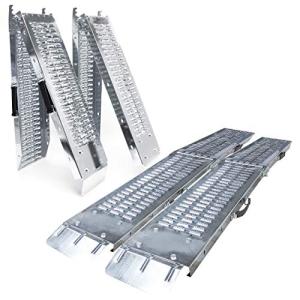
- Arched Design: An arched ramp provides a slight curve at the top. This is essential for low-clearance vehicles (like sportbikes or certain ATVs) to prevent the undercarriage from "high-centering" or bottoming out at the top of the incline.
- Safety Straps: Every quality ramp should include heavy-duty cam-buckle or ratchet straps to secure the ramp to the vehicle bumper or hitch. This prevents the ramp from "kicking out" during the loading process.
- Rubber-Coated Fingers: The points where the ramp touches the truck tailgate should be rubber-coated to prevent scratching the vehicle’s paint and to provide extra grip.
- Traction Surface: Look for punched holes, raised serrations, or a "ladder-style" rung design to ensure tires don't slip, especially in wet or muddy conditions.
Understanding Load Capacities and Incline
Before purchasing, one must understand the weight requirements of their vehicle. For motorbikes, a single ramp is usually sufficient, provided the user is comfortable balancing the bike. For ATVs, a pair of ramps (or a wide single-fold ramp) is required.
Table 2: Recommended Ramp Length Based on Loading Height
The angle of the ramp is determined by the height of the truck bed or trailer. A steeper angle makes loading more dangerous.
| Loading Height (Ground to Bed) | Recommended Ramp Length | Resulting Incline Angle |
|---|---|---|
| 15" - 20" (Low Trailer) | 6 Feet | Gentle |
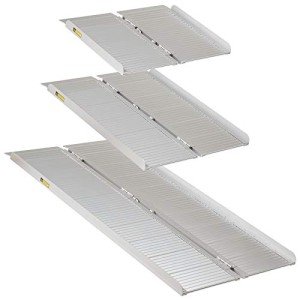
| 21" - 30" (Standard Pickup) | 7 - 7.5 Feet | Moderate |
| 31" - 40" (4WD/Lifted Truck) | 8 - 9 Feet | Necessary for Safety |
Safety Best Practices for Loading
Loading a 600-pound motorcycle or an 800-pound ATV is a high-risk activity if done incorrectly. Following a strict safety protocol can prevent vehicle damage and personal injury.
The Safe Loading Checklist:
- Level Ground: Always park the transport vehicle on flat, level ground. Loading on an incline increases the risk of the ramp slipping.
- Affix Safety Straps: Never load a vehicle without securing the ramp to the truck. This is the most common cause of loading accidents.
- Check Weight Limits: Always confirm that the combined weight of the vehicle, fuel, and the rider (if riding up) does not exceed the ramp's rated capacity.
- Use a Spotter: Especially when loading ATVs or heavy cruisers, having a second person to watch the wheel alignment and stability is highly recommended.
- Steady Momentum: If riding the vehicle up, maintain a slow, steady momentum. Abrupt braking or sudden acceleration can cause loss of traction or "flipping" on the incline.
Maintenance and Long-Term Care
While aluminum is low-maintenance, it is not "no-maintenance." To ensure the folding mechanism and the structural welds remain safe, users should perform periodic checks.
- Inspect Welds: Periodically look for hairline cracks in the welding joints, especially near the hinges and the "fingers" that rest on the tailgate.
- Clean the Hinges: Dirt and grit can get into the folding joints, causing wear. Rinse the hinges after use in muddy conditions and apply a dry lubricant if they become stiff.
- Check Straps: Safety straps are prone to fraying over time. Replace any straps that show signs of wear or UV damage.
Frequently Asked Questions (FAQ)
Q1: Can I use a single ramp to load an ATV?
No. An ATV requires two points of contact for its four wheels. Using a single narrow ramp is impossible, and even a single wide ramp must be rated for the full width and weight of the ATV. It is best to use a pair of folding ramps or a specific extra-wide folding ATV ramp.
Q2: Are aluminum ramps safe for heavy Harley-Davidson or touring bikes?
Yes, provided the ramp is rated for the weight. Many aluminum ramps have capacities of 1,200 to 1,500 lbs. For heavy street bikes, an arched, extra-wide folding ramp is recommended so the rider can put their feet down for stability while walking the bike up.
Q3: What is the "High-Centering" problem?
High-centering occurs when the middle of a vehicle (the undercarriage) hits the point where the ramp meets the truck bed. This usually happens with low-profile bikes or long-wheelbase ATVs. Using an arched folding ramp solves this by creating a gradual transition at the peak.
Q4: Can I leave aluminum ramps outside?
While aluminum won't rust, prolonged exposure to the elements can cause oxidation (a white powdery residue) and can degrade the rubber coating on the attachment fingers or the safety straps. It is always better to fold and store them in the truck cab or a garage.
Q5: Is it better to ride the vehicle up or walk it up?
For motorcycles, it is generally safer to walk the bike up using the engine's power while standing beside it, provided the ramp is wide enough or you have a second ramp to walk on. For ATVs, riding is common, but it should be done in low gear with extreme caution.
A folding aluminum ramp is a vital investment for any powersports enthusiast. By combining the lightweight and rust-resistant properties of aluminum with a space-saving folding design, these tools bridge the gap between your garage and the great outdoors. By selecting a ramp with the appropriate weight capacity, opting for an arched design for clearance, and always utilizing safety straps, users can ensure that their vehicles are loaded safely and efficiently for years to come. Whether it’s a weekend at the motocross track or a utility trip with an ATV, the right ramp makes all the difference.