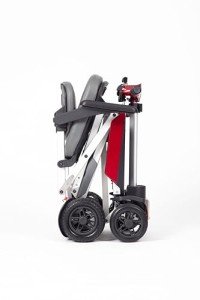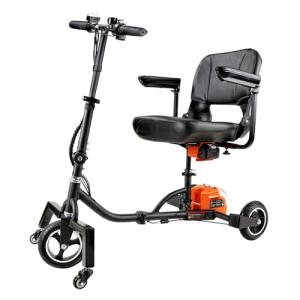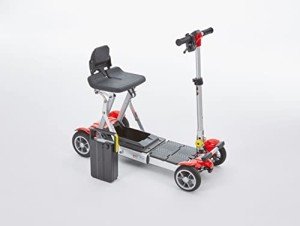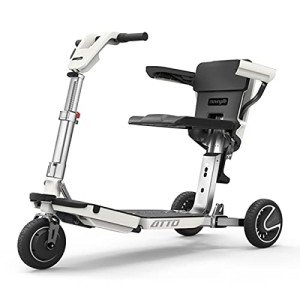

The landscape of personal urban mobility and accessibility has undergone a radical transformation over the last decade. As cities become more congested and the demand for portable, efficient transportation rises, the lightweight folding 3-wheel electric scooter has emerged as a frontrunner. Specifically, models equipped with dual motors are setting new benchmarks for performance, stability, and versatility.
This guide explores the intricate details of these machines, examining why the combination of a three-wheel tripod design, a folding frame, and dual-motor power is becoming the preferred choice for commuters, travelers, and individuals with limited mobility.
The Innovation of Dual-Motor Systems
Traditionally, lightweight electric scooters relied on a single hub motor, usually located in the front or rear wheel. While sufficient for flat surfaces, single motors often struggle with steep inclines or heavier payloads. The integration of dual motors—one in each of the rear wheels or one in the front and one in the rear—changes the dynamic entirely.
Increased Torque and Hill Climbing
Dual motors provide significantly more torque. In a three-wheel configuration, having power delivered to multiple points ensures that the scooter can maintain speed while ascending hills. For users living in hilly urban environments, this is not just a luxury but a necessity for consistent travel.
Enhanced Traction and Safety
By distributing power across two motors, the scooter achieves better traction. On wet or slightly gravelly surfaces, a dual-motor system reduces the likelihood of wheel spin. If one wheel loses grip, the other continues to provide propulsion, offering a level of redundancy that enhances rider safety.
Stability Meets Maneuverability: The 3-Wheel Advantage
The three-wheel design offers a unique "middle ground" in the mobility world. It captures the stability of a four-wheel mobility aid while retaining the slim profile and agility of a two-wheel kick scooter.
The Physics of the Tripod
A three-wheel layout creates a stable base that allows the scooter to remain upright without a kickstand in many cases. For riders who may have balance concerns or those who frequently need to stop and start (such as in heavy pedestrian traffic), the three-wheel configuration provides a sense of security that two-wheelers cannot match.
Turning Radius
One of the primary advantages of a 3-wheel scooter over its 4-wheel counterparts is the turning radius. Most 3-wheel models allow for "pivot-like" turns, making them ideal for navigating narrow hallways, crowded elevators, or busy grocery store aisles.
Portability: The Folding Mechanism and Material Science
The "lightweight" and "folding" aspects of these scooters are perhaps their most attractive features. Modern engineering has allowed manufacturers to use materials that were once reserved for the aerospace industry.
Lightweight Materials
Most high-end folding scooters utilize aircraft-grade aluminum alloys or magnesium frames. These materials offer an exceptional strength-to-weight ratio.
- Aluminum Alloy: Durable, rust-resistant, and relatively inexpensive.
- Magnesium Alloy: Even lighter than aluminum, providing excellent vibration dampening for a smoother ride.
The Folding Logic
A "folding" scooter typically collapses in one of two ways:
- The Tiller Fold: The steering column collapses down toward the deck.
- The Mid-Frame Fold: The entire chassis folds in half, significantly reducing the footprint for storage in a car trunk or under a desk.
| Feature | Aluminum Frame | Magnesium Frame |
|---|---|---|
| Weight | Moderate (approx. 45-60 lbs) | Ultra-Light (approx. 35-45 lbs) |
| Durability | High | Medium-High |
| Cost | More Affordable | Premium Price Point |
| Vibration Absorption | Standard | Superior |
Key Technical Specifications to Consider
When evaluating a lightweight 3-wheel dual-motor scooter, several technical factors determine the quality of the experience.
Battery Technology and Range
Most modern scooters utilize Lithium-ion (Li-ion) batteries. These are preferred for their energy density and longevity.
- Capacity: Measured in Watt-hours (Wh).
- Range: While manufacturers often claim ranges of 15–25 miles, real-world range depends on rider weight, terrain, and motor usage.
Braking Systems
Safety is paramount when dual motors are involved, as they often reach higher speeds.
- Electronic Braking: Uses the motor to slow the wheels, often regenerating a small amount of power back into the battery.
- Mechanical Disc Brakes: Provides reliable stopping power in all weather conditions.
- Parking Brakes: Essential for 3-wheelers to prevent the scooter from rolling when parked on an incline.
Benefits of Dual Motors in 3-Wheel Scooters
The following list highlights why the dual-motor configuration is superior for modern users:
- Redundancy: If one motor experiences a technical failure, the second motor can often provide enough power to get the rider home safely.
- Payload Capacity: Dual motors can handle higher weight capacities (often up to 300 lbs) without significant drops in performance.
- Acceleration: They offer a punchier, more responsive start, which is helpful when crossing busy intersections.
- Heat Management: Two motors sharing the load generate less heat than a single motor working at maximum capacity, potentially extending the lifespan of the components.
Comparison: Dual Motor vs. Single Motor 3-Wheel Scooters
| Specification | Single Motor Scooter | Dual Motor Scooter |
|---|---|---|
| Max Incline | 8 - 10 degrees | 15 - 20 degrees |
| Acceleration | Gradual | Rapid/Responsive |
| Weight of Scooter | Generally lighter | Slightly heavier due to 2nd motor |
| Ideal Use Case | Flat pavements, indoor use | Hilly terrain, outdoor commuting |
| Battery Drain | Moderate | Higher (if both motors used constantly) |
Who Should Choose This Type of Scooter?
The Modern Commuter
For the "last-mile" traveler, these scooters are revolutionary. They can be ridden from a parking garage to the office and then folded down to sit discreetly under a desk. The dual motors ensure that the commute isn't slowed down by small hills or ramps.
The Travel Enthusiast
Travelers, especially those who enjoy cruises or road trips, benefit from the compact folding nature. Many lightweight models are FAA-compliant (provided the battery size meets regulations), allowing for mobility assistance in airports and foreign cities.
Seniors and Individuals with Limited Mobility
Unlike traditional, heavy mobility power chairs, these scooters look modern and sporty. They provide the necessary stability for those who find balancing on two wheels difficult, without the "medical" aesthetic of traditional aids.
Maintenance and Care Tips
To ensure the longevity of a folding electric scooter, owners should follow a consistent maintenance schedule:
- Tire Pressure: If the scooter uses pneumatic (air-filled) tires, maintaining the correct PSI is crucial for range and comfort.
- Hinge Lubrication: The folding mechanism involves moving parts that should be kept clean and occasionally lubricated to prevent squeaking or sticking.
- Battery Hygiene: Avoid letting the battery drop to 0%. Charging it when it reaches 20-30% can prolong the overall life of the lithium cells.
- Bolt Tightening: Vibrations from riding can loosen bolts over time. A monthly check of the main fasteners is recommended.
Frequently Asked Questions (FAQ)
Q: Can I take a folding 3-wheel scooter on an airplane?A: It depends on the battery capacity. Most airlines allow Lithium batteries up to 100Wh or 160Wh with prior approval. Many "travel-specific" scooters offer smaller, airline-approved battery packs for this purpose. Always check with your airline beforehand.
Q: Are 3-wheel scooters safe on uneven sidewalks?A: While 3-wheel scooters are stable on flat surfaces, they require care when navigating side-slopes or large cracks. High-quality models with dual motors and independent suspension handle uneven terrain much better than basic models.
Q: How long does it take to charge?A: On average, a full charge takes between 4 and 6 hours. Some models support dual charging ports to cut this time in half.
Q: Does a dual-motor scooter use twice the battery?A: Not necessarily. While two motors draw more peak power, they often work more efficiently than one overworked motor. However, riding in "Dual Motor Mode" constantly will generally deplete the battery faster than "Eco" or "Single Motor" modes.
Q: Is a license required to ride one?A: In most jurisdictions, these are classified as personal mobility devices or e-scooters and do not require a license, but riders should always check local municipal bylaws regarding sidewalk and bike lane use.
The lightweight folding 3-wheel electric scooter with dual motors represents the pinnacle of personal mobility convenience. By blending the stability of three wheels with the raw power of dual-motor technology, manufacturers have created a vehicle that is as functional as it is portable. Whether it is for overcoming the challenges of a hilly city, providing independence to those with mobility issues, or simply making the daily commute more enjoyable, this specific configuration offers a robust solution for the modern world. When selecting a model, users should prioritize frame material and battery capacity to ensure the scooter fits their specific lifestyle needs.