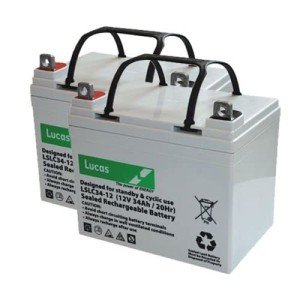





For many individuals, a mobility scooter is more than just a piece of equipment; it is a gateway to independence, social interaction, and daily freedom. However, the reliability of these devices depends almost entirely on the quality of their power source. Among the various options available on the market, the SLK Platinum Gel Battery Pair has established itself as a gold standard for performance, safety, and longevity.
This guide provides an in-depth exploration of why the SLK Platinum Gel series is a preferred choice for mobility scooter users, how gel technology differs from traditional alternatives, and practical advice for maintaining peak battery health.
Understanding Gel Battery Technology
To appreciate the value of the SLK Platinum series, one must first understand the underlying technology. Gel batteries belong to the broader family of Valve Regulated Lead Acid (VRLA) batteries. Unlike traditional "wet cell" batteries that use liquid sulfuric acid, gel batteries feature a thickened, jelly-like electrolyte.
This gel is created by adding silica to the electrolyte mixture. The result is a battery that is completely sealed, spill-proof, and exceptionally resistant to the physical stresses often encountered during scooter operation, such as vibrations, bumps, and varying inclinations.
Gel vs. AGM: What Is the Difference?
While both Gel and Absorbent Glass Mat (AGM) batteries are sealed and maintenance-free, Gel batteries typically offer a superior cycle life. This means they can be discharged and recharged more times than an AGM battery before their capacity begins to significantly degrade. This characteristic makes the SLK Platinum Gel Pair particularly suitable for "heavy users" who rely on their scooters daily for long distances.
Technical Specifications of SLK Platinum Gel Batteries
When selecting a battery pair, technical compatibility is paramount. Mobility scooters usually operate on a 24V system, achieved by connecting two 12V batteries in a series.
Table 1: Typical Specifications for SLK Platinum Gel Battery Series
| Feature | Specification (Standard 35Ah - 55Ah Models) |
|---|---|
| Battery Type | Deep Cycle Gel (VRLA) |
| Voltage | 12V per unit (24V per pair) |
| Terminal Type | Insert or Bolt-on (F3/F4/M6) |
| Casing Material | Reinforced ABS Plastic |
| Recovery | Excellent Deep Discharge Recovery |
| Maintenance | Zero Maintenance Required |
| Design Life | 3 to 5 years (depending on usage) |
Note: Always check the specific dimensions of your scooter's battery compartment before purchasing, as SLK Platinum Gel batteries come in various sizes (e.g., 20Ah, 35Ah, 50Ah, 75Ah).
Key Benefits of the SLK Platinum Gel Pair
The SLK Platinum line is engineered specifically for the demands of the mobility industry. Listed below are the primary advantages of choosing this specific battery pair:
- Enhanced Deep Cycle Capability: These batteries are designed to be discharged down to 50% or lower on a regular basis without sustaining structural damage to the internal plates.
- Vibration and Shock Resistance: Mobility scooters often traverse uneven pavements, gravel, or grass. The gelified electrolyte protects the internal components from mechanical shock better than liquid-based or AGM batteries.
- Temperature Stability: Gel batteries are less prone to "thermal runaway" (a condition where the battery overheats during charging). They perform consistently well in both colder winter months and heatwaves.
- Maintenance-Free Convenience: There is no need to check water levels or top up acid. Once installed, the batteries only require regular charging to remain functional.
- Safety for Transport: Because they are non-spillable and classified as non-hazardous, these batteries are generally approved for air travel and public transportation (though users should always verify with specific airlines).
Installation and Compatibility
Most mid-to-large-size mobility scooters use a pair of batteries housed within a specific chassis compartment. Transitioning to the SLK Platinum Gel system is usually a straightforward "plug-and-play" process, provided the physical dimensions and Amp-hour (Ah) ratings match the manufacturer's recommendations.
Factors to Consider Before Installation:
- Matching Pairs: It is critical to replace both batteries at the same time. Installing one new SLK Platinum battery with an old battery will lead to the new battery being prematurely degraded by the underperforming older unit.
- Cable Integrity: During installation, it is recommended to inspect the wiring harness and connectors for signs of corrosion or fraying.
- Secure Fitment: Ensure the batteries are strapped or bracketed tightly. Any movement within the compartment can lead to cable strain.
Maximizing Battery Lifespan: Best Practices
While SLK Platinum Gel batteries are built for durability, their lifespan is heavily influenced by how they are treated. Following a strict charging regimen can extend the life of a battery pair by several months or even years.
Table 2: Maintenance and Charging Checklist
| Action | Frequency | Why It Matters |
|---|---|---|
| Full Initial Charge | Once (Brand New) | Conditions the gel for future cycles. |
| Nightly Charging | Every use | Prevents the battery from sitting in a discharged state. |
| Avoid "Short" Charges | Daily | Charging for 10 minutes here and there can damage the chemical balance. |
| Winter Top-ups | Monthly (if stored) | Prevents self-discharge from killing the battery during disuse. |
| Clean Terminals | Every 6 months | Prevents resistance and power loss at the connection point. |
Important "Don'ts" for Gel Batteries:
- Do Not use a charger designed for automotive (car) batteries. These chargers are too aggressive and may cause the gel to dry out or the casing to swell.
- Do Not let the battery run completely flat. If the scooter's indicator is in the red, charge it immediately.
- Do Not store the batteries in freezing temperatures, as a discharged gel battery can freeze and crack its casing.
Frequently Asked Questions (FAQ)
1. How long will a pair of SLK Platinum Gel batteries last on a single charge?
The range depends on the Amp-hour (Ah) rating of the batteries, the weight of the user, the terrain, and the temperature. Generally, a 35Ah pair can cover between 10 to 15 miles, while higher capacity 75Ah batteries can exceed 25 miles under optimal conditions.
2. Are Gel batteries better than lithium batteries?
Lithium batteries are lighter and charge faster, but they are significantly more expensive and often require a total replacement of the scooter's charging system. SLK Platinum Gel batteries offer the best balance of cost-effectiveness and performance for standard mobility scooter hardware.
3. Can I use these batteries on a power wheelchair?
Yes. The SLK Platinum Gel series is highly recommended for power wheelchairs as they offer the same deep-cycle benefits and safety features required for all types of electric mobility aids.
4. Why does my scooter feel slower even though the batteries are charged?
This could be a sign that the batteries are reaching the end of their life cycle. As gel batteries age, their internal resistance increases, meaning they can no longer provide the high current needed for inclines or high-speed settings.
5. How do I dispose of my old batteries?
Lead-acid and gel batteries are nearly 100% recyclable. They should never be thrown in regular trash. Most local recycling centers or retailers that sell mobility scooter batteries will accept old pairs for proper recycling.
Final Thoughts
Investing in a high-quality battery is the most effective way to ensure the reliability of a mobility scooter. The SLK Platinum Gel Battery Pair stands out as a robust, safe, and long-lasting energy solution that caters to the specific rigors of daily mobility use. By opting for gel technology over standard AGM, users benefit from a more resilient power source that can handle deep discharges and heavy daily use without faltering.
Whether navigating city pavements or exploring suburban parks, the SLK Platinum series provides the peace of mind that comes from knowing your scooter is powered by industry-leading technology. Proper care, consistent charging, and choosing the right capacity will ensure that your mobility scooter remains ready to go whenever you are.