
For millions of individuals worldwide, a mobility scooter represents more than just a piece of equipment; it is a gateway to independence, social interaction, and daily autonomy. However, the reliability of these vehicles is entirely dependent on the health and maintenance of their power systems. Central to this system is the charger. Among the various options available on the market, the Universal 24V 2AMP Charger has emerged as the industry standard for a wide range of portable and mid-sized mobility scooters.
This comprehensive guide examines the technical specifications, benefits, and safety considerations of the 24V 2AMP charger, providing users and caregivers with the information necessary to maintain peak performance.
Understanding the Technical Specifications
To understand why the 24V 2AMP configuration is so prevalent, one must first look at the electrical requirements of mobility scooter batteries. Most compact and "travel-style" scooters utilize two 12-volt Sealed Lead Acid (SLA) or Gel batteries connected in series, resulting in a 24-volt system.
Why 2 Amps?
The amperage (AMP) of a charger dictates the speed at which energy is delivered to the battery. While higher amperage chargers (5A or 8A) exist for large, heavy-duty scooters with massive batteries, the 2AMP charger is specifically designed for batteries typically ranging from 10Ah to 22Ah.
Charging at a 2-amp rate is often referred to as "smart charging" or "maintenance charging." It provides a steady flow of energy that minimizes heat buildup, which is the primary enemy of battery longevity. By charging at a moderate pace, the chemical reactions within the battery cells occur more stably, preventing the "gassing" or warping of internal plates.
Table 1: Technical Specifications at a Glance
| Feature | Specification |
|---|---|
| Input Voltage | 100-240V AC (Global Compatibility) |
| Output Voltage | 24V DC |
| Charging Current | 2.0 Amps |
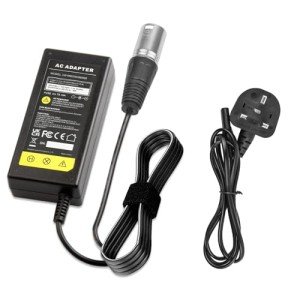
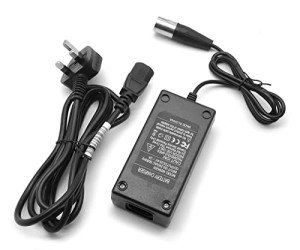
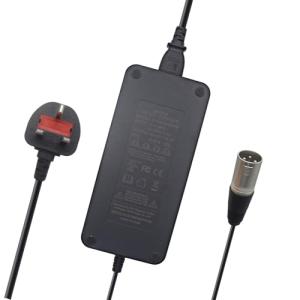
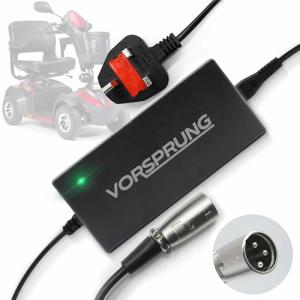
| Connector Type | 3-Pin XLR (Male) |
| Battery Compatibility | SLA, AGM, and Gel Cell |
| Safety Certifications | UL, CE, RoHS |
| Indicator | Dual-color LED (Red/Green) |
Compatibility: The Meaning of "Universal"
The term "Universal" in the context of mobility chargers generally refers to the 3-Pin XLR connector. This circular plug, featuring three small pins arranged in a triangular pattern, is the standardized interface used by the vast majority of mobility brands.
Brands Commonly Supported
A universal 24V 2AMP charger is typically compatible with the following manufacturers:
- Pride Mobility: (Go-Go Series, Victory models)
- Drive Medical: (Scout, Spitfire, Phoenix)
- Golden Technologies: (Buzzaround, LiteRider)
- Invacare: (Colibri, Lynx)
- Shoprider: (Echo, Start)
- Merits Health: (Yoga, Roadster)
Note: While the plug is universal, it is imperative to ensure the scooter’s battery system is indeed 24 volts before connection.
Benefits of the Universal 24V 2AMP Charger
Investing in a high-quality universal charger offers several advantages over cheap, non-regulated alternatives.
1. Multi-Stage Smart Charging
Modern universal chargers are equipped with microprocessors that facilitate multi-stage charging. Instead of delivering a constant flow of electricity, the charger adjusts based on the battery’s state:
- Bulk Charge: Delivers maximum current until the battery reaches approximately 80% capacity.
- Absorption Mode: The voltage stays constant while the current tapers off to finish the last 20%.
- Float/Maintenance Mode: Once fully charged, the charger drops to a very low voltage to keep the battery topped off without overcharging.
2. Portability and Convenience
Because 2-amp chargers do not require heavy internal transformers or massive cooling fans, they are lightweight and compact. This makes them ideal for users who travel, as the charger can easily fit into a backpack or the scooter’s onboard basket.
3. Safety Protections
Regulated universal chargers include built-in safeguards, such as:
- Short Circuit Protection: Prevents damage if the pins are accidentally bridged.
- Over-Voltage Protection: Ensures the battery is never exposed to more voltage than it can handle.
- Reverse Polarity Protection: Protects the internal circuitry if the battery leads are incorrectly configured.
How to Correctly Charge a Mobility Scooter
Proper charging habits can double the lifespan of scooter batteries. Following a standardized procedure ensures safety and efficiency.
Step-by-Step Charging Process:
- Turn Off the Scooter: Ensure the ignition is off and the key is removed.
- Inspect the Port: Check the 3-pin charging port on the tiller or battery pack for debris or bent pins.
- Connect to Scooter First: Plug the 3-pin XLR end of the charger into the scooter.
- Connect to Power: Plug the AC power cord into a standard wall outlet.
- Monitor the LED Lights:
- Solid Red: The battery is currently charging.
- Solid Green: The battery is fully charged and in float mode.
- Disconnect: Unplug the charger from the wall first, then from the scooter.
Comparison: 2AMP vs. Higher Amperage Chargers
It is a common misconception that "more power is always better." Using a charger with too much amperage for small batteries can cause them to swell and fail prematurely.
Table 2: Choosing the Right Amperage for Battery Size
| Battery Capacity (Ah) | Recommended Charger Amperage | Result of Using 2A Charger |
|---|---|---|
| 7Ah - 12Ah | 1A - 2A | Ideal; safe and efficient. |
| 15Ah - 22Ah | 2A - 3A | Best for longevity; slightly slower. |
| 30Ah - 50Ah | 5A | Will work, but will take 15+ hours. |
| 70Ah+ | 8A | Not recommended; charger may overheat. |
Signs Your Charger Needs Replacement
Like any electronic device, a mobility scooter charger has a finite lifespan. Users should be vigilant for the following red flags:
- The LED never turns green: If the charger stays on "Red" for more than 14 hours, either the battery is failing or the charger’s cut-off sensor is broken.
- Excessive Heat: While chargers get warm, they should never be too hot to touch or emit a burning plastic smell.
- No LED activity: If no lights appear when plugged into the wall, the internal fuse or circuit has likely blown.
- Frayed Wires: Any exposed copper on the DC or AC cords represents a significant fire and shock hazard.
Frequently Asked Questions (FAQ)
1. Can I leave my 24V 2AMP charger plugged in overnight?
Yes, most modern 24V 2AMP chargers feature "Smart" or "Automatic" shut-off technology. Once the battery reaches full capacity, the charger switches to a float mode, preventing overcharge. However, it is generally recommended not to leave it connected for more than 24 consecutive hours.
2. Will this charger work with Lithium batteries?
Usually, no. Standard universal chargers are designed for Lead Acid (SLA), AGM, or Gel batteries. Lithium batteries require a different charging profile and voltage cutoff. Always check the battery chemistry before use.
3. How long does it take to fully charge the batteries?
This depends on the depth of discharge. For standard 12Ah batteries (found in travel scooters), a full charge usually takes between 6 to 10 hours with a 2-amp charger.
4. Can I use a 2AMP charger if my original charger was 5AMP?
It is safe to use a lower amperage charger, but it will take significantly longer to reach a full charge. However, you should never use a higher amperage charger (like an 8A) on a system designed for 2AMPs, as this can damage the batteries.
5. Why does my charger make a clicking sound?
A rhythmic clicking often indicates that the battery voltage has dropped too low for the charger to recognize the battery (a safety lockout). It may also indicate a short circuit in the output cable.
The Universal 24V 2AMP Charger is an indispensable tool for mobility scooter owners. By providing a controlled, multi-stage charge, it protects the expensive battery packs that power a user's freedom. Understanding the compatibility of the 3-pin XLR connector and adhering to proper charging protocols ensures that the scooter remains a reliable companion for years to come. When selecting a replacement, always prioritize chargers with the necessary safety certifications and the intelligent "float mode" to guarantee the best possible care for your mobility equipment.