
In the realm of mobility solutions, the ability to navigate environmental barriers is paramount for maintaining independence and quality of life. For users of mobility scooters and wheelchairs, structural obstacles such as door thresholds, curbs, and vehicle entries can often pose significant challenges. One of the most effective solutions to these hurdles is the implementation of portable ramp systems. Among the market-leading options, the Aidapt Telescopic Channel Ramp stands out as a versatile, durable, and highly portable mobility aid designed to facilitate easier access for a variety of wheeled devices.
This guide provides a detailed exploration of the Aidapt Telescopic Channel Ramp, examining its design features, technical specifications, safety protocols, and the practical benefits it offers to both users and caregivers.
Understanding the Telescopic Channel Design
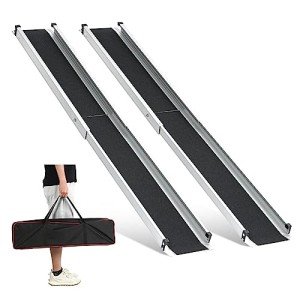
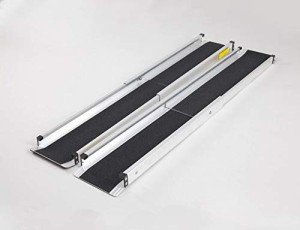
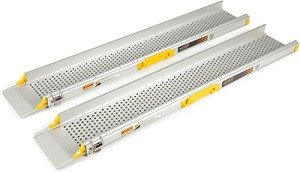
The Aidapt Telescopic Channel Ramp is engineered specifically to address the need for versatility in different environments. Unlike fixed, single-surface ramps, this system consists of two separate "channels" or tracks. This dual-track design allows the user to adjust the width between the ramps to match the specific wheelbase of a mobility scooter or wheelchair.
The "telescopic" aspect refers to the ramp’s ability to extend and retract. This functionality is crucial for achieving the correct gradient depending on the height of the obstacle. By extending to its full length, the ramp can provide a shallower incline, which is safer and requires less power from the scooter’s motor or less effort from a manual wheelchair attendant.
Key Materials and Construction
The construction of these ramps focuses on balancing strength with portability. Manufactured from high-quality, lightweight aluminum, the Aidapt ramps offer a high load-bearing capacity without being excessively heavy to transport. Aluminum is also naturally resistant to corrosion, making the ramps suitable for use in various weather conditions, whether raining or snowing.
Technical Specifications
When selecting a mobility ramp, it is essential to understand the technical parameters to ensure the product meets the user’s specific requirements. The Aidapt Telescopic Channel Ramp is typically available in various lengths, with the 7ft (approx. 2.1 meters) model being one of the most popular choices for its balance of reach and storage.
| Feature | Specification (7ft Model) |
|---|---|
| Material | Lightweight Anodized Aluminum |
| Max Load Capacity | 272 kg (Approx. 43 Stone) |
| Extended Length | 2130 mm (approx. 7 feet) |
| Retracted Length | 1210 mm (approx. 4 feet) |
| Internal Channel Width | 190 mm (approx. 7.5 inches) |
| Weight (Per Pair) | Approx. 9 kg |
| Safety Features | Non-slip surface, side curbs, locking pins |
Primary Features and Benefits
The Aidapt Telescopic Channel Ramp incorporates several design elements aimed at maximizing safety and ease of use.
1. High-Traction Surface
Safety is the foremost priority when navigating inclines. Each channel is coated with a high-friction, non-slip "grit" surface. This abrasive material ensures that rubber tires maintain a firm grip even in wet weather, preventing wheels from spinning or sliding backward during ascent or descent.
2. Safety Curbs (Raised Side Rails)
Every channel is equipped with raised side curbs. These act as a physical barrier that prevents the wheels of the mobility scooter or wheelchair from inadvertently slipping off the side of the ramp. This feature is particularly important for users who may have limited dexterity or for those navigating the ramp in low-light conditions.
3. Integrated Locking Mechanism
To prevent the telescopic sections from sliding apart or collapsing during use, Aidapt has integrated a simple yet robust locking mechanism. Once the ramp is extended to the desired length, the lock secures the sections in place. When the ramp is ready to be stored, the lock is released, and the components slide back into a compact form.
4. Portability and Storage
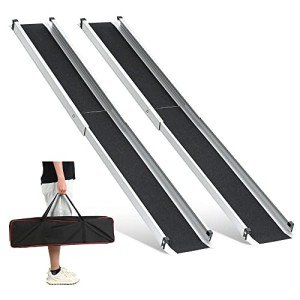
One of the most significant advantages of this model is its portability. The ramps are supplied with a durable carry bag, featuring handles and a shoulder strap. This makes them ideal for travel, allowing users to store them in the trunk of a car to ensure accessibility when visiting public spaces, shops, or family homes that may not be equipped with permanent ramps.
How to Properly Use the Aidapt Telescopic Channel Ramp
Proper setup is required to ensure the safety of the user and the longevity of the product. Caregivers and users should follow a systematic approach to deployment:
- Assess the Height: Measure the rise of the step or vehicle entry. Ensure the ramp is long enough to provide a safe angle of incline.
- Extend Both Channels: Release the locking pins and extend both ramps to equal lengths. Ensure the pins click firmly back into the locked position.
- Positioning: Place the top "lips" of the ramps securely on the upper threshold. The "lips" usually feature a padded underside to prevent damage to the vehicle or flooring.
- Align with Wheelbase: Align the channels precisely with the wheels of the mobility scooter. It is often helpful to have a second person assist with this alignment to ensure the tracks are parallel.
- Testing stability: Before the user attempts to climb the ramp, apply pressure to the top of the ramps to ensure they are stable and will not shift.
- Steady Ascent/Descent: The scooter user should proceed slowly and steadily. For manual wheelchairs, an attendant should always assist during the process.
Applications and Versatility
The Aidapt Telescopic Channel Ramp is not limited to a single use-case. Its design lends itself to a variety of scenarios:
- Vehicle Access: Facilitating the loading of mobility scooters into the rear of SUVs, vans, or estates.
- Residential Use: Negotiating front door steps or garden thresholds where permanent concrete ramps are not feasible.
- Travel: Taking the ramps on holiday to ensure that hotel rooms or rental properties are accessible.
- Commercial Use: Small businesses can keep a set of these ramps on hand to provide temporary access to customers with mobility impairments.
Comparing Channel Ramps vs. Suitcase Ramps
When shopping for ramps, users often choose between "channel" ramps and "suitcase" ramps. Both have distinct advantages depending on the equipment being used.
Channel Ramps (Like the Aidapt Model)
- Pros: Generally lighter per piece; can be positioned at various widths; often more affordable.
- Cons: Not suitable for three-wheeled mobility scooters (as the front central wheel has no track).
Suitcase Ramps (Single Surface)
- Pros: Accommodates three-wheeled scooters and four-wheeled scooters alike; feels more "solid" to some users.
- Cons: Can be significantly heavier to carry; wider footprint when stored.
Maintenance and Care
To ensure the Aidapt Telescopic Channel Ramp remains in peak condition, regular maintenance is recommended:
- Cleaning: Use a damp cloth and mild detergent to remove mud and grit. Keeping the telescopic tracks clean prevents jamming.
- Inspection: Periodically check the non-slip surface for wear and tear. If the grit begins to peel or smooth over, it may need refurbishment.
- Mechanism Lubrication: If the telescopic action becomes stiff, a small amount of silicone-based lubricant can be applied to the sliding tracks (avoid getting any lubricant on the non-slip driving surface).
- Locking Pin Check: Ensure the spring-loaded pins move freely and engage fully inside the alignment holes.
Frequently Asked Questions (FAQ)
Q: Can these ramps be used with three-wheeled mobility scooters?
A: Generally, no. Channel ramps are designed for vehicles with four wheels (two on each side). A three-wheeled scooter would have its front wheel in the middle, where there is no ramp surface. For three-wheeled models, a wide "suitcase" or "threshold" ramp is recommended.
Q: What is the maximum height these ramps can reach?
A: While they can reach high steps, the safely recommended gradient for a powered scooter is approximately 1:6 to 1:8. For a 7ft ramp, the maximum suggested vertical rise is usually between 12 and 14 inches to keep the incline safe and manageable.
Q: Are the ramps sold as a pair?
A: Yes, the Aidapt Telescopic Channel Ramps are traditionally sold and used as a set of two.
Q: Can these be used for heavy powerchairs?
A: The weight capacity is 272 kg (including the chair and the occupant). While many powerchairs fall within this limit, it is vital to check the total combined weight before use.
Q: Are they suitable for permanent outdoor installation?
A: While the aluminum is weather-resistant, these are designed as portable aids. For permanent outdoor use, a modular ramp system with handrails is usually a safer and more appropriate choice.
The Aidapt Telescopic Channel Ramp for mobility scooters represents a significant leap forward in portable accessibility technology. By combining a lightweight aluminum frame with an adjustable telescopic mechanism, Aidapt has provided a solution that is both practical for transport and robust enough for daily use.
Whether the goal is to load a scooter into a vehicle or to navigate the various steps and thresholds of the modern world, these ramps offer peace of mind. By prioritizing safety through non-slip surfaces and secure locking pins, they empower individuals with limited mobility to explore their environments with greater freedom and less reliance on permanent structural modifications. For anyone seeking a reliable, high-quality ramp system, the Aidapt Telescopic Channel Ramp is an investment in independence.