




Transporting heavy machinery, off-road vehicles, and garden equipment requires more than just a powerful truck and a sturdy tie-down strap. The bridge between the ground and the cargo bed is perhaps the most critical component of the transport process. Aluminium folding loading ramps have emerged as the industry standard for hobbyists, farmers, and professional contractors alike. Their unique combination of lightweight construction and high-load capacity makes them an indispensable tool for anyone needing to load ATVs, UTVs, motorcycles, or riding mowers.
This comprehensive guide explores the engineering, benefits, and safety considerations of aluminium folding loading ramps, ensuring that users can make an informed decision for their specific hauling needs.
Why Aluminium? The Material Advantage
In the past, heavy steel ramps were the primary option for loading vehicles. While steel is undeniably strong, its weight and susceptibility to rust made it cumbersome for a single operator. The transition to high-strength aluminium alloys, particularly 6061-T6 aircraft-grade aluminium, has revolutionized the market.
Key Benefits of Aluminium Construction
- Corrosion Resistance: Unlike steel, aluminium forms a natural oxide layer that protects it from rust. This is vital for ramps often exposed to rain, mud, and snow during outdoor use.
- Lightweight Portability: An aluminium ramp typically weighs 30% to 50% less than a steel counterpart with the same weight capacity. This allows a single person to deploy and store the equipment without strain.
- Structural Integrity: Modern aluminium ramps are engineered with reinforced rungs and heavy-duty hinges that provide a high strength-to-weight ratio.
The Innovation of the Folding Design
The "folding" aspect of these ramps addresses the primary drawback of traditional ramps: storage. Whether you are driving a short-bed pickup or a compact van, space is at a premium.
Single-Fold (Bi-Fold) vs. Tri-Fold Ramps
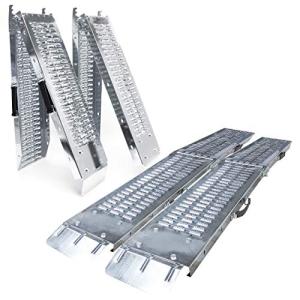
- Single-Fold Ramps: These typically consist of two separate ramps that fold once in the middle. They are ideal for ATVs and motorcycles because they are easy to align with the wheels.
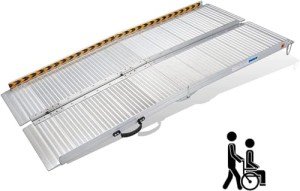
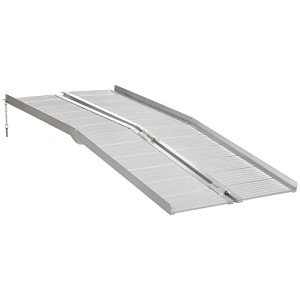
- Tri-Fold Ramps: These feature three panels connected by hinges, unfolding into one wide platform. They are preferred for equipment with smaller wheels or three-wheeled vehicles (like zero-turn mowers) where a continuous surface is necessary.
Technical Specifications and Choosing the Right Ramp
Selecting a ramp is not a one-size-fits-all process. The decision must be based on the weight of the vehicle, the height of the loading surface, and the ground clearance of the equipment.
Load Capacity
It is essential to distinguish between the capacity of a single ramp and a pair. If an ATV weighs 800 lbs, a pair of ramps rated at 1,500 lbs (750 lbs each) provides a necessary safety margin.
Ramp Length and Incline
The "Angle of Incline" is the most overlooked safety factor. A ramp that is too short creates a steep angle, which can cause the vehicle to flip backward or bottom out at the top.
Table 1: Recommended Ramp Lengths Based on Loading Height
| Loading Height (Ground to Tailgate) | Recommended Ramp Length (Straight) | Recommended Ramp Length (Arched) |
|---|---|---|
| 15 – 20 Inches | 6 Feet | 6 Feet |
| 21 – 26 Inches | 7 Feet | 7.5 Feet |
| 27 – 32 Inches | 8 Feet | 8.5+ Feet |
| 33 – 38 Inches | 10 Feet | Not Recommended for Single Fold |
Note: For low-clearance vehicles like lawnmowers or sports bikes, arched ramps are preferred to prevent the undercarriage from scraping at the tailgate transition.
Versatility: Beyond Just ATVs
While ATVs are the most common cargo for these ramps, their utility extends to a wide range of applications:
- Motorcycles and Dirt Bikes: Specialized ramps often feature a narrower track and higher-density rungs.
- Garden Equipment: Riding mowers and snowblowers can be easily moved into sheds or trailers.
- Mobility Scooters: Lightweight aluminium ramps enable easy access to vans for individuals using power chairs.
- Construction Gear: Hand trucks, generators, and cement mixers can be rolled up ramps rather than lifted, reducing workplace injuries.
Core Features to Look For
When shopping for an aluminium folding ramp, several design features can significantly improve the user experience and safety.
1. Surface Texture
- Serrated Rungs: Provide excellent grip for rubber tires, even in wet or muddy conditions.
- Punch Plate/Mesh: Ideal for smaller tires or solid wheels that might fall through the gaps of wide-spaced rungs.
2. Connection Points
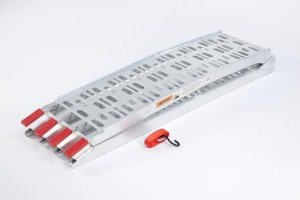
- Rubber-Coated Fingers: These rest on the tailgate or trailer edge. The rubber coating prevents scratching and increases friction to stop the ramp from sliding.
- Full-Width Plates: Offer a smoother transition onto the loading surface.
3. Safety Straps
High-quality ramps should always come with adjustable safety straps. These secure the ramp to the vehicle's bumper or hitch, preventing the ramp from "kicking out" while the vehicle is halfway up.
Safety Protocols for Loading
Even the best ramp can be dangerous if used incorrectly. Follow these third-person safety guidelines to ensure a smooth operation:
- Park on Level Ground: Both the transport vehicle and the equipment being loaded should be on a flat, non-slippery surface.
- Clear the Area: Ensure bystanders are at a safe distance in case of a mechanical failure or slip.
- Engage the 4WD: When loading an ATV, using four-wheel drive (if available) allows for a slower, more controlled ascent.
- Never Exceed Capacity: Always factor in the weight of the fuel, accessories, and the rider if they are sitting on the vehicle during loading.
- Steady Momentum: Maintain a slow, steady speed. Stopping halfway up a ramp increases the risk of a backward roll.
Maintenance and Care
Although aluminium is low-maintenance, the folding hinges and hardware require periodic attention to remain functional.
- Hinge Lubrication: Apply a dry silicone lubricant to the hinges every few months to ensure smooth folding and prevent binding.
- Visual Inspections: Before every use, check for hairline cracks in the welds or bent rungs. Aluminium "fatigues" over time, and regular inspection is the only way to catch structural failure before it happens.
- Cleaning: Rinse off salt, mud, and corrosive chemicals (like fertilizers) after use to maintain the integrity of the alloy.
Frequently Asked Questions (FAQ)
1. Can I use a single-fold ramp meant for an ATV to load a motorcycle?
While it is physically possible, it is not recommended unless the ramp is specifically designed for single-track vehicles. Standard ATV ramps may have gaps between rungs that are too wide for motorcycle tires, and the rider has nowhere to put their feet down for balance.
2. What is the difference between "Static" and "Dynamic" load capacity?
Static capacity refers to the weight the ramp can hold while the load is stationary. Dynamic capacity refers to the forces applied while the vehicle is in motion. Most reputable manufacturers list a capacity that accounts for the dynamic movement of a vehicle driving up the ramp.
3. How do I know if I need an arched ramp?
If the vehicle has a low "belly" (like a zero-turn mower or a cruiser motorcycle) and the truck tailgate is high, a straight ramp will likely cause the vehicle to high-center at the top. Arched ramps provide a curved transition to solve this.
4. Are aluminium ramps safe for tracked vehicles (like snowmobiles)?
Standard rungs can be damaged by metal tracks or carbide wear strips on snowmobile skis. For tracked vehicles, it is best to use ramps with plastic "ski glides" or specialized mesh surfaces.
5. Can I leave my aluminium ramps outside?
While aluminium is rust-resistant, prolonged exposure to the elements can lead to oxidation and can degrade the nylon safety straps. It is best to fold them and store them in a garage or the truck cab when not in use.
Summary of Specifications
Table 2: Typical Specifications for Leading Aluminium Folding Ramps
| Feature | Standard Duty | Heavy Duty |
|---|---|---|
| Combined Capacity | 1,000 – 1,200 lbs | 1,500 – 3,000 lbs |
| Weight per Ramp | 12 – 15 lbs | 18 – 25 lbs |
| Length (Unfolded) | 6 – 7 Feet | 7.5 – 9 Feet |
| Material | 6061 Aluminium | 6061-T6 Reinforced Aluminium |
| Best For | Dirt Bikes, Push Mowers | Large ATVs, UTVs, Tractors |
Aluminium folding loading ramps are a vital investment for anyone who regularly moves heavy equipment. By offering a lightweight yet incredibly strong solution, they remove the physical strain and safety hazards associated with makeshift loading methods. When choosing a ramp, prioritizing the correct length, weight capacity, and safety features like arched designs and security straps will ensure years of reliable service. Whether for weekend trail riding or professional landscaping, the right ramp makes the transition from ground to truck seamless, safe, and efficient.