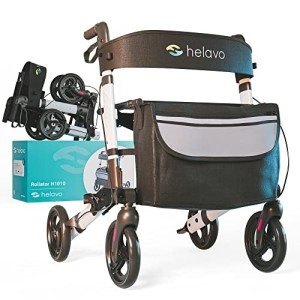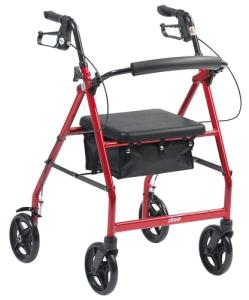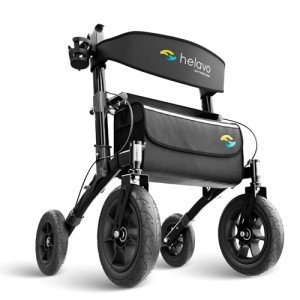





As the global population ages and the demand for adaptive mobility aids increases, manufacturers have stepped up to provide solutions that balance functionality, safety, and portability. Among the leaders in the home health equipment market, COSTWAY has gained a reputation for producing high-quality mobility aids that do not compromise on user comfort. The COSTWAY Lightweight Folding Walker with Seat and Brakes (often referred to as a rollator) represents a significant advancement for individuals who require assistance with balance or endurance but wish to maintain an active, independent lifestyle.
This guide explores the intricate features, technical specifications, and practical benefits of these walkers, providing an in-depth analysis for caregivers, medical professionals, and users alike.
The Evolution of Mobility: Why Choose a Rollator?
For many years, the standard "H-frame" walker was the primary tool for those with limited mobility. While stable, these traditional walkers require a "lift-and-move" motion that can be tiring and slow. The COSTWAY rollator model addresses these limitations by utilizing wheels, a built-in seat, and a sophisticated braking system. This design transition allows for a more natural walking gait, reduces physical strain, and provides the security of an immediate resting place.
Key Design Elements
- Aluminum Frame Construction: The core of the COSTWAY walker is its lightweight aluminum frame. Aluminum offers the perfect strength-to-weight ratio, ensuring the device is sturdy enough to support significant weight while remaining light enough for a senior or a person with limited strength to lift into a vehicle.
- Ergonomic Handles: The handles are designed to fit the natural contours of the hand, reducing pressure on the palms and wrists. This is particularly beneficial for users with arthritis.
- Adjustable Height: Recognizing that mobility aids are not "one size fits all," COSTWAY walkers feature multi-level height adjustments, ensuring that users can maintain proper posture while walking.
Technical Specifications at a Glance
To understand the engineering behind these walkers, it is helpful to look at the standardized specifications typically found across the COSTWAY lightweight line.
| Feature | Specification Details |
|---|---|
| Material | High-strength Aluminum Alloy |
| Weight Capacity | 300 lbs (Approx. 136 kg) |
| Product Weight | 15 - 18 lbs (Depending on specific model) |
| Wheel Size | 8-inch PVC or Rubber Wheels |
| Seat Dimensions | 18" (W) x 10" (D) (Average) |
| Handle Height Range | 31" to 37" (Adjustable) |
| Folded Dimensions | 23" x 11" x 31" (Approximate) |
| Braking System | Dual Loop-Lock Hand Brakes |
Safety and Control: The Braking System
One of the most critical components of the COSTWAY walker is the integrated braking system. Safety is paramount when dealing with mobility aids, and COSTWAY utilizes a dual-action system that provides the user with total control over their movement.
- Squeeze to Slow: While walking, the user can gently squeeze the hand levers to apply friction to the rear wheels. This is essential when navigating slight inclines or ramps to prevent the walker from "running away."
- Push to Lock: When the user intends to sit down or needs the walker to remain stationary, they can push the levers downward until they "click." This locks the rear wheels firmly in place, transforming the walker into a stable chair.
Comfort Meets Convenience: The Seat and Storage
The inclusion of a seat is perhaps the most valued feature for those who suffer from chronic fatigue, shortness of breath, or lower back pain.
Padded Support
The seats on COSTWAY walkers are typically padded with high-density foam and covered in a durable, easy-to-clean synthetic material. Accompanying the seat is a curved, padded backrest. Unlike basic models that use a thin metal bar, COSTWAY’s padded backrest provides lumbar support, making short periods of sitting far more comfortable.
Integrated Storage
Mobility shouldn't mean leaving essentials behind. Most COSTWAY models include a storage bag located either underneath the seat or attached to the front frame. This allows users to carry groceries, personal items, or medical supplies hands-free, further enhancing safety by keeping the user's hands dedicated to the walker handles.
Portability and the Folding Mechanism
The "Lightweight Folding" aspect of these walkers is a primary selling point for families who travel. The folding mechanism is designed for simplicity:
- One-Hand Operation: Most models feature a strap on the seat. By pulling this strap upward, the frame collapses inward.
- Compact Storage: Once folded, the walker is thin enough to fit in the trunk of a compact car, between seats in a van, or in a closet at home.
- Tool-Free Assembly: COSTWAY emphasizes user-friendliness; most of their walkers can be assembled without specialized tools, making them ready for use shortly after unboxing.
Why Choose COSTWAY? Pros and Cons
When selecting a mobility aid, it is important to weigh the advantages and limitations.
Pros
- Lightweight Maneuverability: The 8-inch wheels are large enough to handle uneven sidewalks, grass, and indoor thresholds with ease.
- Durable Finish: The powder-coated aluminum resists scratches and corrosion.
- Affordability: COSTWAY offers a competitive price point compared to high-end medical-grade rollators while maintaining similar safety standards.
- Aesthetic Variety: They often come in various colors (Red, Blue, Silver, Black), allowing users to choose a style that fits their personality.
Cons
- Width: Some models may be wide for very narrow bathroom doors in older homes.
- Terrain Limits: While excellent for most surfaces, they are not intended for heavy sand or deep mud.
Best Practices for Use
To ensure the longevity of the walker and the safety of the user, the following guidelines should be followed:
- Check the Bolts: Periodically ensure that all screws and adjustment knobs are tightened.
- Lock Before You Sit: Never attempt to sit down without ensuring the wheel locks are fully engaged.
- Adjust to Hip Height: The handles should generally be level with the user's wrists when their arms are hanging at their sides. This ensures a slight bend in the elbow during use.
- Clean the Wheels: Debris trapped in the wheels can affect the smoothness of the ride and the effectiveness of the brakes.
Frequently Asked Questions (FAQ)
1. Is the walker difficult to assemble?
No; most COSTWAY walkers come partially assembled. Users usually only need to insert the handles and the backrest, which often use push-button locking mechanisms or simple hand-tightened knobs.
2. Can this walker be used outdoors?
Yes. The 8-inch wheels are designed for "all-terrain" use, meaning they perform well on sidewalks, gravel paths, and grass. However, caution should always be used on slippery or extremely uneven surfaces.
3. What is the weight limit for the seat?
While the frame is rated for 300 lbs, it is always recommended to check the specific documentation for the model purchased, as some "ultra-light" versions may have different capacities.
4. Are the brakes adjustable?
Yes. If the brakes feel too loose or too tight over time, the cable tension can be adjusted near the rear wheels, similar to a bicycle brake system.
5. Does the walker stay folded on its own?
Most models feature a locking mechanism or remain in a folded position due to the frame's tension, making them easy to lean against a wall or stow in a vehicle.
The COSTWAY Lightweight Folding Walker with Seat and Brakes is more than just a mobility tool; it is a gateway to increased social engagement and physical activity. By providing a secure frame, a comfortable place to rest, and an easy-to-transport design, it removes the barriers that often keep individuals confined to their homes. For those seeking a balance of quality engineering and value, COSTWAY offers a reliable solution that supports the user's journey toward a more mobile and independent life.