




In the realm of mobility aids, the balance between affordability, durability, and functionality is often difficult to strike. However, the Drive DeVilbiss S1 Economy Transit Wheelchair has established itself as a cornerstone for those seeking a practical solution for short-term or occasional transport needs. This guide provides a comprehensive exploration of the S1 model, focusing on the 18-inch seat variant, its design philosophy, and how it serves as a vital tool for caregivers and users alike.
Introduction to the Drive DeVilbiss S1
The Drive DeVilbiss brand is synonymous with healthcare innovation, and while they produce high-end powered mobility devices, they also excel in the "economy" tier. The S1 Economy Transit Wheelchair is specifically designed for "transit" or "attendant-propelled" use. Unlike self-propelled wheelchairs which feature large rear wheels with hand rims, transit chairs have smaller rear wheels, requiring a companion or caregiver to push the occupant.
The S1 is built with simplicity in mind. It is intended for individuals who may have limited mobility due to age, injury, or post-surgical recovery and require a reliable way to navigate public spaces, hospitals, or shopping centers.
Design and Build Quality
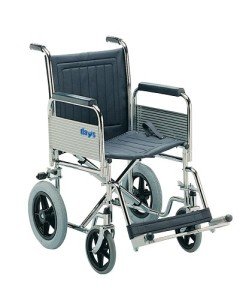
The S1 features a robust steel frame, which provides the necessary rigidity and strength for a wide range of users. Steel is often chosen for economy models because it offers exceptional durability at a lower price point than aluminum. While steel is slightly heavier, the S1 is engineered to remain manageable for the attendant.
The 18-inch seat width is the industry standard for an adult wheelchair, providing ample space for the average-sized user while remaining narrow enough to pass through standard interior doorways. The silver-vein finish on the frame is not only aesthetically pleasing but also serves as a protective layer against scratches and corrosion.
Key Dimensions and Specifications
For those considering the S1, technical specifications are crucial to ensure the chair fits both the user and the environment in which it will be used.
| Feature | Specification |
|---|---|
| Seat Width | 18" (45 cm) |
| Seat Depth | 16" (40 cm) |
| Seat Height | 19" (48 cm) |
| Total Width (Open) | 24" (60 cm) |
| Total Width (Closed) | 10" (26 cm) |
| Maximum User Weight | 115 kg (approx. 18 stone) |
| Total Weight | 14 kg - 15 kg (approx. 32 lbs) |
| Frame Material | Powder-coated Steel |
| Wheel Type | Solid, puncture-proof tires |
Features Designed for Comfort and Convenience
Despite its classification as an "economy" chair, the S1 does not neglect the basic needs of the user. Several features are integrated to ensure that transport is as seamless as possible.
1. Robust Upholstery
The seat and backrest are crafted from heavy-duty nylon. This material is preferred in the healthcare industry because it is easy to wipe down, resistant to tearing, and offers a level of breathability that vinyl lacks. The 18-inch width ensures that most users feel secure without feeling constricted.
2. Swing-Away Footrests
One of the most critical safety features of any wheelchair is the footrests. On the S1, these are "swing-away," meaning they can be moved to the side to allow the user to stand up or sit down without the risk of tripping. Furthermore, they are height-adjustable to accommodate different leg lengths and can be removed entirely for easier storage.
3. Padded Armrests
To prevent fatigue during longer outings, the S1 is equipped with full-length padded armrests. These provide necessary support for the forearms and assist the user when they need to shift their weight or reposition themselves in the seat.
4. Puncture-Proof Tires
The wheels are fitted with solid tires. This is a significant advantage for users and caregivers who do not want the hassle of maintaining air pressure or the risk of a flat tire while away from home. These tires perform exceptionally well on smooth surfaces such as mall floors, hospital corridors, and paved sidewalks.
Portability and Storage
One of the primary reasons families choose the Drive DeVilbiss S1 is its portability. Transit wheelchairs are frequently used for "car boot" trips where the chair must be loaded and unloaded multiple times a day.
- Folding Mechanism: The S1 utilizes a classic cross-brace folding mechanism. By pulling upward on the center of the seat, the chair collapses inward.
- Half-Folding Backrest: A standout feature of the S1 is the half-folding backrest. This allows the top half of the chair's back to fold down, significantly reducing the height of the chair when it is folded. This makes it much easier to fit into smaller vehicle trunks.
- Removable Components: By removing the footrests, the weight and bulk of the chair are further reduced, making it easier for an attendant to lift.
Who is the Drive DeVilbiss S1 For?
This wheelchair is not a "one size fits all" solution for every disability, but it fills a specific niche perfectly. It is most suitable for:
- Hospital and Clinical Settings: For transporting patients between departments.
- Shopping and Outings: For family members who can walk short distances but fatigue quickly.
- Traveling: As a secondary, lightweight chair that can be easily stored in a car, train, or plane.
- Rental/Loaner Services: Due to its durability and low cost, it is a favorite for organizations that provide mobility equipment for short-term hire.
Safety Considerations
Operating any wheelchair requires an understanding of safety protocols. The S1 includes several built-in safety mechanisms:
- Parking Brakes: The attendant can engage the lockdowns on the rear wheels to ensure the chair remains stationary during transfers.
- Lap Belt: Most S1 models come standard with a lap belt to prevent the user from sliding forward or out of the chair during sudden stops.
- Heel Loops: The footrests include loops behind the heel to prevent the user’s feet from slipping backward into the wheels.
Maintenance and Care
To ensure the Drive DeVilbiss S1 remains in peak condition, regular maintenance is recommended. Because it is a mechanical device, small adjustments can prevent long-term wear.
- Check the Brakes: Ensure the parking brakes grip the tires firmly and do not slip.
- Clean the Fabric: Use a mild detergent and warm water to wipe down the nylon seat and backrest to maintain hygiene.
- Inspect the Tires: While they are puncture-proof, they should still be checked for any embedded debris or uneven wear.
- Lubrication: Periodically apply a small amount of silicone-based lubricant to the folding cross-brace and the wheel axles to keep the movement smooth.
Pros and Cons at a Glance
Comparing the advantages and disadvantages helps potential buyers make an informed decision.
Pros:
- Extremely cost-effective and budget-friendly.
- Durable steel frame provides long-lasting use.
- Compact folding design with a half-folding backrest for easy transport.
- Puncture-proof tires eliminate the need for a pump or repair kit.
- Standard 18-inch seat width fits most adults comfortably.
Cons:
- Heavier than aluminum models, which may be a factor for some attendants.
- Solid tires can provide a slightly "firmer" ride on bumpy surfaces compared to pneumatic (air-filled) tires.
- Basic aesthetic may not appeal to those looking for a modern-style chair.
Final Verdict
The Drive DeVilbiss S1 Economy Transit Wheelchair (18" Seat) remains one of the most popular entry-level chairs on the market for a reason. It does not attempt to be a complex, high-performance sports chair; instead, it focuses on the essential requirement of getting a person from point A to point B safely and comfortably. Its folding features and durable construction make it an excellent investment for those who need a reliable mobility solution without the high price tag associated with specialized equipment.
Frequently Asked Questions (FAQ)
1. Does the S1 wheelchair come fully assembled?
The S1 usually comes almost entirely assembled. The user or caregiver typically only needs to slot the footrests into place (which requires no tools) and unfold the chair. Always check the manufacturer's manual included in the box.
2. Can the user push themselves in this wheelchair?
No. The S1 is a "Transit" wheelchair, meaning it has small rear wheels. It is designed to be pushed by an attendant using the handles at the back. If the user requires the ability to self-propel, they should look for the "S1 Self-Propel" model which features larger rear wheels with hand rims.
3. Is the 18-inch seat wide enough for a winter coat?
The 18-inch seat is standard, but if the user regularly wears heavy winter gear or is on the upper end of the weight limit, it is worth measuring the user’s hip width. For those requiring more space, Drive DeVilbiss offers wider models in different ranges.
4. Can this wheelchair be used on grass or gravel?
While the solid tires and steel frame are durable, the S1 is primarily designed for flat, hard surfaces. It can handle short stints on firm grass, but it is not an all-terrain chair and may be difficult for the attendant to push on soft or uneven ground.
5. What is the difference between this and an aluminum wheelchair?
The main difference is weight. An aluminum chair is significantly lighter, which makes it easier to lift into a car. However, steel chairs like the S1 are generally more affordable and can feel more "grounded" and sturdy to some users.