




Accessibility is a fundamental pillar of inclusive design, yet many physical environments remain challenging for individuals with limited mobility. Whether navigating a small threshold at home or attempting to load a mobility scooter into a vehicle, the right equipment can make a significant difference. One of the most versatile solutions in the mobility aid market is the Foldable Wide Wheelchair Ramp.
Available in lengths ranging from 61cm (2ft) to 183cm (6ft), these ramps provide a bridge between varying elevations, ensuring that wheelchair users, power chair operators, and those using walkers can move freely and safely. This guide explores the technical specifications, benefits, and selection criteria for these essential accessibility tools.
Understanding the Foldable Wide Wheelchair Ramp
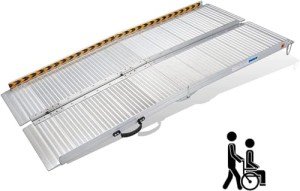
A foldable wide wheelchair ramp is typically constructed from high-strength, lightweight aluminum. The "wide" designation refers to a platform width that generally exceeds standard narrow ramps, often providing a usable surface of roughly 70cm to 80cm. This extra width is crucial for accommodating modern power chairs and oversized mobility scooters which may have wider wheelbases.
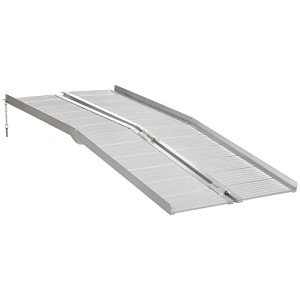
The "foldable" nature of these ramps refers to their suitcase-style design. They are hinged down the center, allowing the two halves to fold together. Many models also include a built-in carrying handle, making them highly portable for travel or temporary use at various locations.
Key Features and Benefits
The primary advantage of these ramps is the combination of stability and portability. Below are the key features that contribute to their effectiveness:
- High Load Capacity: Most aluminum wide ramps are engineered to support weights between 270kg and 300kg (approximately 600lbs to 660lbs), covering the combined weight of the user and their mobility device.
- Anti-Slip Surface: A high-traction grit surface or a serrated aluminum floor ensures that wheels maintain grip even in wet or icy conditions.
- Safety Curbs: Raised side rails prevent the wheelchair from accidentally rolling off the edge of the ramp.
- Transition Plates: Tapered edges at both the top and bottom of the ramp ensure a smooth transition from the ground to the ramp and from the ramp to the elevated surface.
- Portable Design: The ability to fold the ramp in half reduces its footprint, allowing it to be stored in a vehicle trunk or a closet when not in use.
Technical Specifications: The 61cm to 183cm Range
Selecting the correct length is the most critical decision when purchasing a ramp. The length determines the gradient (steepness) of the slope. A ramp that is too short for a specific rise will be too steep, posing a safety risk.
The following table outlines the typical specifications for the most common sizes within this range:
Table 1: Technical Specifications by Length
| Length (cm/ft) | Folded Width (approx.) | Unfolded Width (approx.) | Approx. Weight | Maximum Load Capacity |
|---|---|---|---|---|
| 61cm (2ft) | 36cm - 40cm | 70cm - 80cm | 5kg - 6kg | 272kg - 300kg |
| 91cm (3ft) | 36cm - 40cm | 70cm - 80cm | 8kg - 9kg | 272kg - 300kg |
| 122cm (4ft) | 36cm - 40cm | 70cm - 80cm | 10kg - 11kg | 272kg - 300kg |
| 152cm (5ft) | 36cm - 40cm | 70cm - 80cm | 13kg - 14kg | 272kg - 300kg |
| 183cm (6ft) | 36cm - 40cm | 70cm - 80cm | 15kg - 17kg | 272kg - 300kg |
Selecting the Correct Length Based on Rise
To ensure safety, the "slope ratio" must be calculated. While the Americans with Disabilities Act (ADA) recommends a 1:12 ratio (1 foot of ramp for every 1 inch of rise) for public commercial spaces, residential or portable applications often utilize a 1:6 or 1:8 ratio, depending on the strength of the user or the power of the motor.
Table 2: Recommended Rise Guidelines
| Ramp Length | Max Rise for Manual Chairs (Strong Assistant) | Max Rise for Power Chairs/Scooters | Max Rise for Loading (Unoccupied) |
|---|---|---|---|
| 61cm (2ft) | 10cm (4") | 15cm (6") | 20cm (8") |
| 91cm (3ft) | 15cm (6") | 23cm (9") | 30cm (12") |
| 122cm (4ft) | 20cm (8") | 30cm (12") | 40cm (16") |
| 152cm (5ft) | 25cm (10") | 38cm (15") | 50cm (20") |
| 183cm (6ft) | 30cm (12") | 45cm (18") | 60cm (24") |
Common Applications
The versatility of the foldable wide ramp allows it to be used in various scenarios. Its wide platform makes it more forgiving than pair-style ramps (two separate tracks), as there is no risk of the tracks moving independently.
1. Home Access
Many homes have a single step at the front or back door. A 61cm or 91cm ramp is often sufficient to bridge these small heights, allowing for easy entry and exit without the need for permanent construction or concrete pouring.
2. Vehicle Loading
For those who travel with mobility scooters or wheelchairs, the 152cm and 183cm lengths are ideal for bridging the gap between the ground and the rear of a van or SUV. Because they fold, they can be stored right next to the wheelchair during transit.
3. Thresholds and Curbs
When navigating public spaces or visiting friends, users often encounter unexpected curbs. Keeping a 61cm portable ramp in the back of a vehicle ensures that these obstacles do not become insurmountable barriers.
Safety and Best Practices
When using a foldable wide wheelchair ramp, safety should always remain the top priority. Following these guidelines helps prevent accidents:
- Check Surface Stability: Ensure both the top "tongue" of the ramp and the bottom edge are resting on flat, stable, and non-slippery surfaces.
- Secure the Ramp: Many ramps come with pre-drilled holes or security pins. Using these to anchor the ramp to the step or vehicle prevents the ramp from sliding backward as the wheels move forward.
- Monitor Weight Limits: Always account for the weight of the user, the mobility device, and any bags or accessories attached to the chair.
- Center the Load: The user should always stay in the center of the ramp to ensure even weight distribution and prevent the ramp from tipping or bowing.
- Weather Awareness: While most ramps have anti-slip surfaces, extra caution is needed during heavy rain, snow, or ice.
Maintenance and Care
Aluminum ramps are naturally resistant to rust and corrosion, but they still require periodic maintenance to ensure longevity and safety.
- Cleaning: Regularly sweep off debris, dirt, and gravel. If the grit surface becomes clogged with mud, it can be cleaned with a stiff brush and mild soapy water.
- Hinge Lubrication: The folding mechanism should be checked periodically. If the hinges become stiff, a small amount of silicone-based lubricant can keep the folding action smooth.
- Inspection: Check for any dents, cracks, or loose rivets. If the structural integrity of the aluminum is compromised, the ramp should not be used.
The Foldable Wide Wheelchair Ramp in the 61cm to 183cm range serves as a vital tool for independence. By providing a wide, stable, and portable surface, these ramps eliminate many of the physical barriers that limit mobility. By understanding how to measure for the correct length and adhering to safety protocols, users and caregivers can ensure a safer, more accessible environment wherever they go.
Frequently Asked Questions (FAQ)
1. Can these ramps be used for motorized scooters?
Yes. The "wide" design is specifically helpful for three-wheeled and four-wheeled scooters. However, users must ensure the ramp length provides a gentle enough slope for the scooter's motor and ground clearance.
2. Is the ramp heavy to carry?
The ramps are made of lightweight aluminum. A 61cm (2ft) ramp weighs approximately 5kg, which is manageable for most people. However, the 183cm (6ft) version can weigh up to 17kg, which may require two people or a person with good lifting strength to move comfortably.
3. Do I need to install the ramp permanently?
No. These are designed for portability. While they can be secured with pins for added safety during use, they are intended to be unfolded when needed and stored away afterward.
4. How do I know if my wheelchair will fit on the ramp?
Most wide ramps have an internal width of approximately 70-80cm. Users should measure the widest part of their wheelchair or scooter (usually the wheels or armrests) and ensure there is at least a 2-3cm clearance on each side.
5. Can the ramp be used in the rain?
Most models feature a high-traction grit surface or an extruded aluminum tread designed for outdoor use in various weather conditions. However, users should always move slowly and with caution when the ramp is wet.