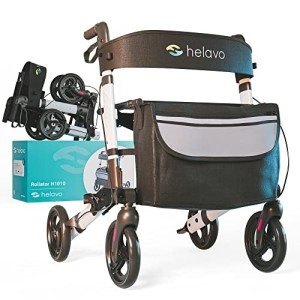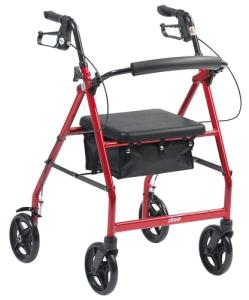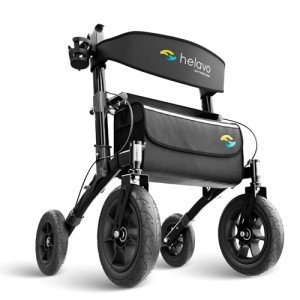





For individuals facing mobility challenges, the world can sometimes feel like it is shrinking. Whether due to age, chronic illness, or recovery from surgery, the ability to navigate both indoor and outdoor environments safely is crucial for maintaining a high quality of life. Traditionally, users had to choose between a manual walker (rollator) and a heavy-duty power scooter. However, a new category of mobility aid has emerged that bridges this gap: the Folding 4-Wheel Mobility Scooter Walker with a Seat.
This hybrid device combines the stability of a four-wheel design, the convenience of a compact folding mechanism, and the versatility of a motorized scooter. This guide explores the features, benefits, and technical specifications of these devices, providing a comprehensive guide for potential users and caregivers.
The Evolution of Mobility Aids: A Hybrid Approach
Technology in the healthcare sector has pivoted toward "hybridization." The folding mobility scooter walker is a testament to this trend. It serves individuals who may still have the ability to walk short distances (and thus benefit from the exercise of a walker) but require motorized assistance for longer journeys or when fatigue sets in.
By integrating a seat into a foldable, motorized frame, manufacturers have created a tool that promotes independence without sacrificing safety. These devices are designed to be lightweight enough for transport in a car trunk yet sturdy enough to support a full-grown adult on various terrains.
Key Features of a Folding 4-Wheel Mobility Scooter Walker
When evaluating these devices, several core features distinguish high-quality models from entry-level options.
- Dual-Mode Functionality: Many of these devices allow the user to switch between "Power Mode" (using the electric motor) and "Manual Mode" (pushing it like a traditional rollator).
- Compact Folding Mechanism: The ability to collapse the unit into a briefcase-sized shape is essential for travel and storage.
- Four-Wheel Stability: Unlike three-wheel scooters, which can be prone to tipping during tight turns, the four-wheel configuration provides a wider base of support.
- Ergonomic Seating: Since these walkers are designed for longer outings, the seat is usually padded and accompanied by a backrest.
- Simplified Controls: Controls are typically intuitive, featuring a thumb throttle, a battery indicator, and a speed dial.
Comparison of Mobility Solutions
To understand where the folding scooter walker fits, it is helpful to compare it to traditional mobility aids.
| Feature | Standard Rollator | 3-Wheel Mobility Scooter | Folding 4-Wheel Hybrid |
|---|---|---|---|
| Power Source | Manual (User) | Electric Battery | Electric Battery / Manual |
| Portability | High (Lightweight) | Moderate (Requires lift) | High (Folding design) |
| Stability | Moderate | Moderate (Tip risk) | High (4-Wheel base) |
| Exercise Value | High | Low | Moderate to High |
| Terrain Usage | Flat surfaces | Mixed terrain | Mixed terrain |
| Primary Use | Short distances | Long distances | Transition/Versatile use |
The Benefits of Integrated Seating
The inclusion of a seat is perhaps the most significant advantage of this device. For people with conditions like Chronic Obstructive Pulmonary Disease (COPD), Multiple Sclerosis (MS), or heart conditions, "pacing" is a critical part of daily life.
- Rest on Demand: Users can stop and sit whenever they feel fatigued, eliminating the anxiety of not finding a bench in a public space.
- Social Inclusion: Being able to sit comfortably means users can stay longer at family gatherings, museums, or shopping centers.
- Safety During Dizziness: If a user feels a bout of vertigo or weakness, a seat is immediately available to prevent a fall.
Technical Specifications and Expectations
While every brand differs, most high-end folding 4-wheel mobility scooter walkers follow a similar technical profile. Below is a sample specification table for a standard high-performance model.
| Specification | Typical Measurement |
|---|---|
| Weight Capacity | 250 lbs – 300 lbs |
| Device Weight | 40 lbs – 60 lbs (with battery) |
| Top Speed | 4 mph – 5 mph |
| Max Range | 10 – 15 miles per charge |
| Battery Type | Lithium-ion (Airline Approved) |
| Turning Radius | 35 – 45 inches |
| Folded Dimensions | 24" x 15" x 30" (approximate) |
Advantages for Travelers
For those who enjoy traveling, the folding nature of these scooters is a game-changer. Most modern units use lithium-ion batteries that are categorized as "travel-safe" by the TSA and international aviation authorities.
Why travelers prefer folding 4-wheel hybrids:
- Gate-Checking: Most airlines allow users to ride the device to the airplane door, where it is then folded and stored in the cargo hold.
- Cruise Ship Friendly: The narrow profile of these devices makes navigating tight cruise ship hallways and small cabin doors much easier than standard mobility scooters.
- Public Transport: Their ability to turn in tight spaces allows users to board buses and trains with minimal assistance.
Safety Considerations
While these devices are designed for ease of use, safety remains paramount. Third-person observations from physical therapists suggest the following safety checks:
- Braking Systems: Ensure the device features an electromagnetic braking system, which automatically engages the brakes when the user releases the throttle.
- Anti-Tip Wheels: Many models include small auxiliary wheels at the rear to prevent the device from tipping backward on inclines.
- Lighting: For evening use, models with integrated LED headlights and rear reflectors are highly recommended.
- Weight Limits: Exceeding the manufacturer’s weight capacity can compromise the motor's integrity and the frame's stability.
Checklist: Is a Folding 4-Wheel Scooter Walker Right for You?
Choosing a mobility aid is a personal decision. Potential users should consider the following points:
- Upper Body Strength: Does the user have the hand dexterity to operate a throttle and the strength to fold/unfold the device?
- Storage Space: Is there a convenient place near a power outlet to store and charge the device?
- Terrain: Will the device be used primarily on smooth mall floors, or will it need to navigate gravel or grass? (Note: Larger wheels are better for uneven terrain).
- Transportation: Can a caregiver lift 40-50 lbs into a vehicle, or is a ramp/lift required?
Frequently Asked Questions (FAQ)
Q: Can these devices be used in the rain?A: Most mobility scooters are "water-resistant" but not "waterproof." They can handle a light drizzle, but they should not be used in heavy rain or driven through deep puddles, as moisture can damage the electronic components.
Q: How long does the battery take to charge?A: On average, a lithium-ion battery for a mobility device takes between 4 to 8 hours to reach a full charge. It is often recommended to charge the device overnight.
Q: Do I need a license to drive one?A: No, these are classified as medical mobility aids and do not require a driver’s license or registration. However, they should generally be used on sidewalks and in pedestrian areas rather than on main roads.
Q: Can the battery be removed?A: Most folding models feature a removable battery pack. This allows the user to leave the scooter in a garage or car while taking only the battery inside to charge.
Q: Are the seats adjustable?A: While the height of the handlebars is almost always adjustable, the seat height on folding models is often fixed to ensure the folding mechanism remains stable. It is important to check the seat-to-floor height before purchasing.
The Folding 4-Wheel Mobility Scooter Walker with a Seat represents a significant leap forward in assistive technology. By blending the physical support of a walker with the effortless power of an electric scooter, it provides a versatile solution for those who refuse to let mobility limitations define their boundaries.
For the modern senior or the rehabilitating patient, this device offers the best of both worlds: the ability to walk when possible and the power to ride when necessary. As battery technology continues to lighten and motors become more efficient, these "transformers" of the mobility world will likely become a standard tool for maintaining an active, engaged, and independent lifestyle.