




In the modern world, accessibility is not merely a convenience; it is a fundamental necessity. For individuals with limited mobility, a single step or a high curb can represent a significant barrier to independence and social participation. Among the various solutions available to overcome these obstacles, the folding anti-slip wheelchair ramp—specifically the 4ft model—has emerged as a versatile and essential tool. This guide explores the features, benefits, and technical specifications of the 4ft folding anti-slip wheelchair ramp, providing a detailed overview for caregivers, business owners, and individuals seeking to improve accessibility.
The Importance of Portable Accessibility Solutions
Fixed ramps are ideal for permanent installations at residential or commercial entrances. However, the unpredictability of travel and the diverse architectural landscapes of public spaces often demand a more flexible solution. Portable ramps offer the ability to transform an inaccessible environment into a reachable one in a matter of seconds.
The 4ft length is particularly popular because it strikes a balance between portability and functionality. It is long enough to cover standard curbs and one or two small steps while remaining compact enough to be transported in the trunk of a standard vehicle.
Key Features of the 4ft Folding Anti-Slip Wheelchair Ramp
When evaluating a wheelchair ramp, several design elements are critical for ensuring the safety and comfort of the user. The 4ft folding model typically incorporates several high-end engineering features.
1. Folding Mechanism for Portability
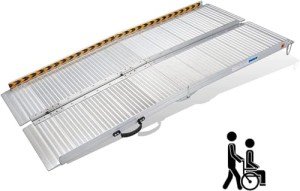
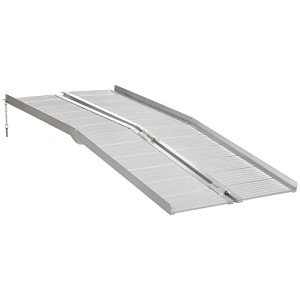
The primary advantage of this ramp is its ability to fold. Most designs utilize a longitudinal fold (folding in half length-wise), reducing the width of the ramp so it can be carried like a suitcase. Many models include integrated handles to facilitate easy transport.
2. High-Traction Anti-Slip Surface
Safety is the paramount concern when dealing with inclines. A quality 4ft ramp features a high-traction surface, often composed of a grit-coated "sandpaper" texture or a serrated aluminum tread. This ensures that wheelchair tires and power scooter wheels maintain a firm grip, even in inclement weather conditions such as rain or light frost.
3. Lightweight yet Durable Construction
Most modern ramps are constructed from aircraft-grade aluminum. This material is chosen for its exceptional strength-to-weight ratio. While the ramp itself may weigh between 15 and 25 pounds, it can often support weight capacities of up to 600 or 800 pounds.
4. Safety Side Rails (Curbs)
To prevent the accidental roll-off of a wheelchair or scooter, these ramps are equipped with raised side rails. These curbs act as a guide for the user, providing a physical barrier that keeps the mobility device centered on the ramp surface.
Technical Specifications at a Glance
For those considering the purchase or installation of a 4ft folding ramp, technical data is essential. The following table outlines the standard specifications found in high-quality models.
Table 1: Standard Specifications for a 4ft Folding Ramp
| Feature | Specification |
|---|---|
| Length | 4 Feet (approx. 122 cm) |
| Material | Aircraft-grade Aluminum |
| Weight Capacity | 600 lbs - 800 lbs (272 kg - 363 kg) |
| Folded Width | 14" - 15" |
| Unfolded Width | 28" - 30" |
| Product Weight | 18 lbs - 22 lbs |
| Surface Finish | High-traction grit or serrated tread |
| Safety Features | Side curbs, locking pins, transition plates |
Safety and Gradient: The "Inches-to-Foot" Rule
One of the most critical aspects of using a wheelchair ramp is ensuring the incline is safe for the user. A ramp that is too short for a specific height creates a steep, dangerous slope.
For portable ramps, the general recommendation for occupied manual wheelchairs is a 1:6 ratio (2 inches of rise for every 1 foot of ramp). For power wheelchairs or scooters, a 1:8 ratio is often acceptable. However, for maximum safety and ease of use, many experts suggest following the ADA (Americans with Disabilities Act) guidelines of 1:12 for permanent structures whenever possible, though this is often impractical for portable scenarios.
Table 2: Recommended Maximum Rise for a 4ft Ramp
| User Type | Recommended Max Rise (Inches) | Gradient Percentage |
|---|---|---|
| Unoccupied (Loading) | 10" - 12" | 20.8% - 25% |
| Power Wheelchair/Scooter | 8" | 16.7% |
| Manual Wheelchair (Assisted) | 6" - 8" | 12.5% - 16.7% |
| Manual Wheelchair (Independent) | 4" | 8.3% |
Practical Applications for the 4ft Ramp
The 4ft folding ramp is a "multi-purpose" tool. Its length makes it suitable for various everyday scenarios:
- Vehicle Access: It can bridge the gap for low-floor minivans or the side entry of certain SUVs.
- Threshold Management: It is ideal for navigating high door thresholds or sliding glass door tracks that are too high for standard wheels.
- Single Steps: Most residential steps are between 6 and 7.5 inches high. A 4ft ramp provides a comfortable slope for a single step.
- Curbs and Sidewalks: In urban environments where curb cuts may be absent or poorly maintained, the 4ft ramp allows for safe transition from the street to the sidewalk.
Maintenance and Care for Longevity
To ensure the ramp remains safe and functional over several years, a regular maintenance routine is recommended.
- Debris Removal: Hard particles like gravel or salt can degrade the anti-slip surface. Ramps should be swept regularly.
- Hinge Inspection: The folding hinges should be checked for debris or rust. Applying a dry silicone lubricant once a year can keep the folding mechanism smooth.
- Surface Check: If the anti-slip grit begins to wear down, many manufacturers offer replacement grip tape or spray to restore traction.
- Hardware Tightening: Periodically check that all bolts and rivets are secure, especially if the ramp is used frequently for heavy power chairs.
Benefits for Different Stakeholders
For Individual Users
The 4ft folding ramp provides a sense of freedom. It allows individuals to visit friends and family whose homes may not be accessible, and it reduces the anxiety associated with encountering unexpected obstacles in public.
For Caregivers
Caregivers often face physical strain when navigating mobility devices over obstacles. A lightweight, easy-to-deploy ramp significantly reduces the physical effort required to move a wheelchair over a step, thereby reducing the risk of musculoskeletal injuries.
For Business Owners
Small businesses located in older buildings may not have the space for a permanent concrete ramp. A portable 4ft ramp allows a business to be "accessible on demand," ensuring they can accommodate all customers and comply with local accessibility expectations without major construction costs.
Frequently Asked Questions (FAQ)
1. Is a 4ft ramp long enough to get a wheelchair into a full-sized van?
In most cases, no. Full-sized vans usually have a high floor-to-ground height. A 4ft ramp would create an extremely steep and dangerous incline. For standard vans or SUVs, a 6ft to 10ft ramp is typically recommended.
2. Can the ramp be used in the rain?
Yes. The anti-slip surface is specifically designed to provide traction in wet conditions. However, users should always exercise extra caution during inclement weather.
3. Does the ramp require assembly?
Most 4ft folding ramps come fully assembled. The user simply needs to unfold the ramp and ensure the top transition plate is securely resting on the upper landing.
4. What is the difference between a "suitcase ramp" and a "multifold ramp"?
A suitcase ramp usually folds in half once (lengthwise). A multifold ramp may fold both lengthwise and widthwise, or in sections, to become even more compact. The 4ft model is most commonly found in the suitcase style.
5. Can these ramps be left outside permanently?
While aluminum is rust-resistant, leaving a portable ramp outside indefinitely is not recommended. Exposure to the elements can eventually degrade the grip surface and the hinges. It is best to store the ramp in a dry place when not in use.
The 4ft folding anti-slip wheelchair ramp represents a vital intersection of engineering and empathy. By providing a portable, sturdy, and safe means of overcoming physical barriers, it empowers individuals with mobility challenges to navigate the world with greater confidence. Whether it is for residential use, vehicle access, or commercial hospitality, this tool is an invaluable asset in the ongoing movement toward a more inclusive and accessible society. When selecting a ramp, always prioritize weight capacity, surface traction, and the appropriate length-to-rise ratio to ensure a safe experience for every user.