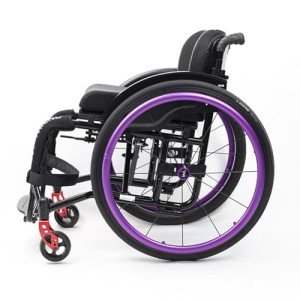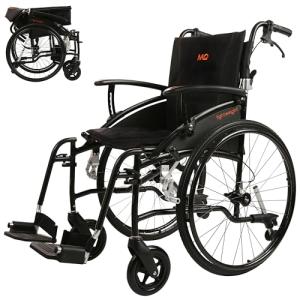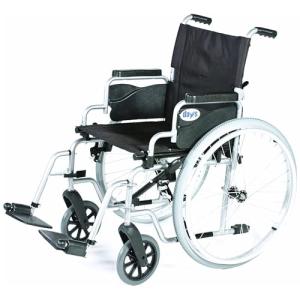





For decades, manual wheelchair design followed a relatively rigid path, primarily focusing on indoor maneuverability and smooth pavement. While these designs were effective for hospitals and shopping malls, they often left users grounded when faced with grass, gravel, sand, or uneven trails. The limitations of standard manual chairs often meant that outdoor enthusiasts and active individuals had to choose between a heavy, non-portable all-terrain chair or a lightweight chair that couldn't handle a simple park path.
The emergence of the lightweight folding all-terrain manual wheelchair has bridged this gap. By combining high-tech materials with innovative mechanical engineering, these devices offer a "go-anywhere" capability without the logistical burden of heavy machinery.
What Defines an All-Terrain Manual Wheelchair?
An all-terrain manual wheelchair is specifically engineered to handle surfaces that would bog down or damage a standard chair. To be considered "lightweight and folding," these chairs must balance durability with portability. Unlike traditional mountain-bike-style wheelchairs—which are often rigid and bulky—the folding variety utilizes advanced geometry to collapse into a compact size for transport in standard vehicle trunks.
Key Characteristics at a Glance
- Frame Material: High-strength, aerospace-grade aluminum or carbon fiber.
- Tire Design: Widened, high-traction pneumatic tires with thick treads.
- Suspension: Built-in shock absorption systems to mitigate vibration.
- Weight Capacity: Engineered to maintain structural integrity under dynamic stress.
Comparing Standard vs. All-Terrain Folding Wheelchairs
To understand the value of an all-terrain model, it is helpful to look at how it differs from a standard lightweight manual wheelchair.
| Feature | Standard Folding Wheelchair | All-Terrain Folding Wheelchair |
|---|---|---|
| Typical Weight | 25 – 35 lbs | 22 – 32 lbs (using high-end alloys) |
| Primary Tire Type | Solid or slim pneumatic (1" width) | Wide, knobby pneumatic (2" – 3" width) |
| Front Casters | Small (4" – 6"), narrow | Larger (8" – 10"), wider "frog" legs |
| Frame Geometry | Short wheelbase for tight turns | Longer wheelbase for stability on slopes |
| Surface Suitability | Tile, hardwood, flat asphalt | Grass, gravel, snow, dirt trails |
| User Effort | Low on flat ground; high on turf | Consistent across varied surfaces |
The Engineering Behind the "Lightweight" Factor
The "lightweight" designation is not merely a marketing term; it is a critical functional requirement. For a manual user, every extra pound in the frame is an extra pound they must propel with their arms. Similarly, for a caregiver or a user loading their own chair into a car, weight is the primary factor in maintaining independence.
Materials Science
Most modern all-terrain chairs utilize 7000-series Aluminum. This alloy offers an incredible strength-to-weight ratio, allowing the frame to flex slightly under the stress of uneven ground without permanent deformation. Some ultra-high-end models incorporate Carbon Fiber components, which reduce weight even further while providing natural vibration-dampening properties.
The Folding Mechanism
The engineering challenge lies in creating a folding joint that does not become a point of failure. Most all-terrain folding chairs use a reinforced "X-brace" or a specialized folding backrest combined with quick-release wheels. This allows the chair to be stripped down to its lightest possible frame in seconds.
Advantages of All-Terrain Capabilities
The benefits of these specialized chairs extend beyond simple movement; they impact the user’s quality of life and physiological health.
1. Increased Accessibility
Standard chairs often get stuck in the smallest patches of soft ground. All-terrain chairs utilize a larger footprint, distributing the user’s weight more effectively. This prevents the "sinking" effect on grass or sand.
2. Enhanced Physical Health
Propelling a wheelchair over uneven terrain provides a significant cardiovascular workout. Because these chairs are designed with optimized push-rims and low-rolling-resistance tires (specifically for off-road use), they allow the user to engage in outdoor exercise that would be impossible in a standard chair.
3. Portability and Storage
The folding nature of these chairs is a game-changer for travel.
- Air Travel: They can be gate-checked and folded to fit in smaller cargo holds.
- Road Trips: They do not require a specialized van lift or a trailer.
- Home Storage: They can be tucked away in a closet, unlike rigid frame "adventure" chairs.
Terrain Suitability Guide
While "all-terrain" implies versatility, different environments require different approaches.
| Terrain Type | Performance Level | Recommendation |
|---|---|---|
| Gravel/Crushed Stone | Excellent | Use medium tire pressure for better grip. |
| Tall Grass | Good | Larger front casters are essential to prevent tipping. |
| Wet Mud | Moderate | Requires high-tread tires and significant upper body strength. |
| Sand (Firm/Damp) | Good | Works best with wide-profile tires. |
| Soft/Sugar Sand | Challenging | May require specialized "balloon" wheel attachments. |
| Hiking Trails | Excellent | Best suited for "accessible" rated dirt paths. |
Maintenance Considerations for Off-Road Use
Because these chairs are exposed to harsher elements than indoor chairs, a regular maintenance schedule is vital.
- Tire Pressure Management: Users should check PSI before every outing. Lower pressure is better for sand; higher pressure is better for gravel.
- Caster Cleaning: Mud and hair frequently wrap around the front caster axles. These should be wiped down and lubricated weekly.
- Bearing Inspection: Fine dust and silt from trails can penetrate wheel bearings. Owners should listen for "grinding" sounds and replace bearings annually.
- Frame Integrity: Regularly check the folding hinges for debris that might prevent a secure lock.
How to Choose the Right Model
When selecting a lightweight folding all-terrain manual wheelchair, one should consider the following factors:
- The 80/20 Rule: Where will the chair be used 80% of the time? If the user spends most of their time indoors but wants weekend access to parks, a "hybrid" model with interchangeable tires may be best.
- Adjustability: Look for chairs with adjustable centers of gravity. Moving the seat forward or backward balances the weight over the rear wheels, which is crucial for navigating bumps.
- Transit Compatibility: Ensure the chair meets WC19 crash-test standards if it will be used for transport while the user is seated in a vehicle.
Frequently Asked Questions (FAQ)
Can an all-terrain manual wheelchair be used indoors?
Yes. Most models are designed with a width that still allows for passage through standard residential doorways (usually 32 inches). However, the knobby tires may track more dirt inside than standard smooth tires.
Are these chairs covered by insurance?
Coverage varies significantly. Many insurance providers view all-terrain features as "luxury" or "recreational." However, if a clinician can justify the need based on the user's living environment (e.g., a rural home with a gravel driveway), partial coverage may be possible.
How much do they typically weigh?
Most "lightweight" all-terrain folding chairs weigh between 22 and 32 pounds once the wheels are detached. With wheels attached, the total weight may increase by 10 to 15 pounds due to the heavy-duty nature of the tires.
Do I need special tires for snow?
Standard all-terrain knobby tires work well in light, packed snow. For deep snow, some users utilize "wheelchair skis" that clip onto the front casters to prevent them from digging in.
Is it difficult to fold an all-terrain chair?
Most manufacturers utilize a quick-release mechanism. By pressing a button in the center of the axle, the large rear wheels pop off. The frame then folds via a central cross-brace, making it roughly the size of a large suitcase.
The lightweight folding all-terrain manual wheelchair represents a significant leap forward in assistive technology. It acknowledges that people with mobility challenges are not restricted to climate-controlled, paved environments. By utilizing modern materials and thoughtful mechanical design, these chairs provide the freedom to explore nature without the traditional drawbacks of heavy, cumbersome equipment. Whether it is a stroll through a local park, a trek on a gravel path, or navigating a snowy sidewalk, these chairs empower users to push the boundaries of their independence.