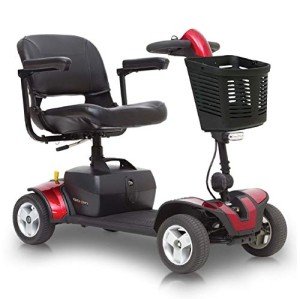


For many individuals with limited mobility, the desire for independence and exploration remains a top priority. The ST1 Travel Mobility Scooter has long been a favorite in the mobility market precisely because it bridges the gap between functional performance and extreme portability. Often referred to as a "boot scooter," the ST1 is engineered specifically to be broken down into manageable pieces that fit comfortably into the trunk of a standard vehicle.
The standout feature of the ST1 is its tool-free, 5-part disassembly process. This design allows users and caregivers to transport the device without the need for heavy-duty ramps or expensive vehicle modifications. In this guide, the intricate process of disassembling the ST1 will be detailed, alongside safety protocols, maintenance tips, and technical specifications.
The Importance of the 5-Part Design
Modern travel scooters are judged by their "splitting" capability. The ST1 excels by dividing its total weight into five distinct components. By spreading the weight across these parts, the physical strain on the person loading the scooter is significantly reduced. This modular approach also makes the scooter easier to store in small apartments or transport via air travel.
The Five Main Components of the ST1:
- The Padded Swivel Seat: Provides comfort and can be removed to reduce height.
- The Battery Pack: A self-contained unit that houses the power source.
- The Front Chassis/Section: Includes the tiller, front wheels, and floorboard.
- The Rear Chassis/Motor Section: Contains the drivetrain and motor.
- The Front Basket: A simple clip-on accessory for storage.
Technical Specifications: Weight and Dimensions
Before proceeding with the disassembly, it is helpful to understand the weights of the individual components. This ensures that the person handling the scooter is prepared for the lift.
Table 1: ST1 Component Weight Breakdown (Approximate)
| Component | Estimated Weight (kg / lbs) | Purpose in Disassembly |
|---|---|---|
| Total Weight | 40 kg / 88 lbs | Complete assembled weight. |
| Front Section | 14.5 kg / 32 lbs | The heaviest single part after disassembly. |
| Rear Section | 10.5 kg / 23 lbs | Housing for the motor and transmission. |
| Battery Pack | 9.5 kg / 21 lbs | Removable for independent charging. |
| Seat Assembly | 5.5 kg / 12 lbs | Includes folding backrest and armrests. |
| Basket | < 1 kg / 2 lbs | Lightweight plastic/metal storage. |
Pre-Disassembly Safety Checklist
Safety should always be the priority when handling mechanical mobility aids. Adhering to a checklist ensures the longevity of the scooter and the safety of the operator.
Table 2: Safety Requirements
| Action | Necessity | Reasoning |
|---|---|---|
| Power Off | Mandatory | Prevents accidental engagement of the motor. |
| Key Removal | Recommended | Ensures the scooter cannot be turned on during transit. |
| Flat Surface | Mandatory | Prevents the scooter from rolling while being split. |
| Freewheel Lever | Engage Drive | The scooter should NOT be in freewheel mode during disassembly. |
Step-by-Step Guide to the 5-Part Disassembly
The ST1 is designed for tool-free operation. This means every connection point is secured by levers, knobs, or pins that can be operated by hand.
Step 1: Removing the Front Basket and Seat
The process begins with the most accessible parts. The front basket simply lifts off the specialized mounting bracket located on the tiller.
To remove the seat, the user must locate the seat release lever (usually found beneath the seat base). By pulling or pushing this lever (depending on the specific model variation), the locking mechanism is released. The seat can then be lifted vertically off the seat post. It is recommended to fold the backrest down first to make the seat more aerodynamic and easier to grip.
Step 2: Removing the Battery Pack
The ST1 features a "drop-in" battery design. Unlike larger scooters that require wire disconnection, the ST1 uses contact pins. To remove the battery, the user simply grips the handle integrated into the top of the battery box and lifts it straight up.
Pro Tip: This is an ideal time to check the battery contacts for any dust or debris, as clean contacts ensure a more consistent power flow once reassembled.
Step 3: Lowering the Tiller
The tiller (the steering column) must be folded down to minimize the height of the front section. Locate the large adjustment knob at the base of the tiller. By loosening this knob, the tiller can be gently lowered toward the floorboard. Once it is in its lowest position, the knob should be tightened again to prevent the tiller from flopping or moving during the lift.
Step 4: Separating the Front and Rear Sections
This is the most critical stage of the disassembly. The ST1 utilizes a "hook-and-pin" mechanism to connect the front chassis to the rear motor section.
- Locate the release lever near the base of the seat post (on the rear section).
- While supporting the rear section with one hand, pull the release lever or handle.
- The front section will tilt forward slightly, and the "hooks" of the front section will lift off the "pins" of the rear section.
- Carefully pull the two sections apart.
Step 5: Final Preparation for Loading
With the scooter now in five parts, they are ready to be loaded into a vehicle. It is generally advised to load the heaviest component (the front section) first, placing it in the deepest part of the trunk. The rear section and battery pack should follow, with the seat and basket placed on top or in the remaining gaps.
Maintenance During Disassembly
The disassembly process provides an excellent opportunity for "preventative maintenance." Because the internal mechanisms are exposed, the owner can perform quick checks that are otherwise difficult.
- Inspect Connectors: Ensure the metal contact points between the battery and the frame are shiny and gold-colored. If they appear dull or corroded, they should be cleaned with a dry cloth.
- Check the Locking Pin: Ensure the spring-loaded pin that connects the frame sections moves freely. A drop of silicone-based lubricant can prevent this from seizing over time.
- Tire Inspection: While the sections are separate, it is easier to rotate the wheels by hand to check for embedded glass, thorns, or flat spots.
Reassembling the ST1
Reassembly is essentially the disassembly process in reverse. However, there is one crucial rule: The Click.
When joining the front and rear sections, the user must listen for an audible "click" as the locking mechanism engages. After the sections are joined, the operator should give the tiller a firm tug to ensure the frame is locked. If the frame is not locked properly, the scooter may feel unstable or power may fail to reach the motor.
Frequently Asked Questions (FAQ)
1. Do I need any tools to disassemble the ST1?
No. The ST1 is designed for "tool-free" disassembly. All components are removed via quick-release levers, hand-tightened knobs, or simple lifting motions.
2. Can the battery pack be charged while it is removed from the scooter?
Yes. One of the primary benefits of the 5-part system is "off-board" charging. The battery pack has its own charging port, allowing the user to leave the scooter in a vehicle while bringing only the battery pack inside to charge.
3. How long does the disassembly process take?
With practice, most users or caregivers can disassemble the ST1 in under 60 seconds. Reassembly generally takes slightly longer (about 90 seconds) to ensure all components are securely locked.
4. Is the ST1 suitable for airline travel?
The ST1 is often used for air travel, but passengers must notify the airline in advance. While the scooter disassembles into five parts, the batteries (typically Sealed Lead Acid or SLA) must be handled according to the airline’s specific safety protocols for "non-spillable" batteries.
5. What should I do if the sections won't separate?
Ensure that the seat and battery pack have been removed first, as their weight can put pressure on the locking pin. Also, ensure the tiller is folded and locked; sometimes a slight "jiggle" of the tiller while pulling the release lever helps disengage the frame hooks.
The ST1 Travel Mobility Scooter stands as a testament to thoughtful engineering in the mobility sector. By breaking the device down into five manageable pieces, manufacturers have empowered users to take their mobility aids on road trips, shopping excursions, and holidays with minimal fuss.
Understanding the 5-part disassembly process is not just about logistics; it is about maintaining the device's lifespan and ensuring the safety of everyone involved in its transport. By following the structured steps of removing the seat, battery, and basket before splitting the frame, users can enjoy a seamless transition from the pavement to the car trunk, keeping the focus on the destination rather than the equipment.