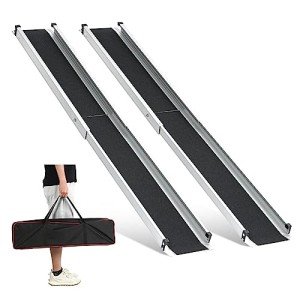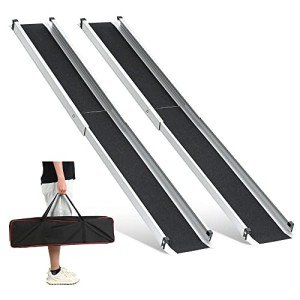





Accessibility is a fundamental right, yet architectural barriers often present significant challenges for individuals with limited mobility. For wheelchair and scooter users, even a single step or a high vehicle threshold can become an impassable obstacle. Telescopic anti-slip wheelchair ramps, specifically those ranging from 4ft to 7ft in length, have emerged as a premier solution for bridging these gaps.
Designed for versatility, portability, and safety, these ramps offer a dynamic way to navigate the modern environment. This guide explores the features, technical specifications, and safety considerations of telescopic ramps, providing a detailed overview for caregivers, facility managers, and users.
What are Telescopic Wheelchair Ramps?
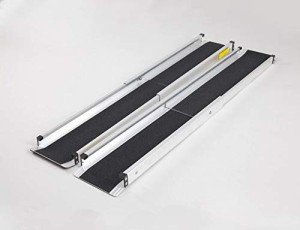
Telescopic ramps consist of two separate tracks (often referred to as channel ramps) that extend and retract like a telescope. Unlike folding ramps, which hinge in the middle, telescopic models slide internal sections into one another. This design allows for a compact storage profile while providing a significant reach when fully deployed.
The 4ft to 7ft range is particularly popular because it covers the most common elevation changes encountered in daily life, such as curbs, porch steps, and the entryways of SUVs or minivans.
Key Advantages of the Telescopic Design
- Adjustable Length: Users are not restricted to a single length. A 7ft ramp can often be used at shorter increments depending on the locking mechanism, making it adaptable to different heights.
- Compact Storage: Because the sections slide into each other, they occupy less space in a trunk or closet than a fixed-length ramp.
- Lightweight Construction: Most modern telescopic ramps are manufactured from high-grade aluminum, making them easy for a single person to carry.
Technical Specifications and Variations
When selecting a telescopic ramp, understanding the dimensions and weight capacities is crucial for safety. Most ramps in this category are sold as a pair and feature a specific weight-bearing capacity that applies when the weight is distributed across both tracks.
Table 1: Comparative Specifications of Telescopic Ramps
| Nominal Length | Minimum (Retracted) Length | Maximum (Extended) Length | Average Weight (Pair) | Typical Weight Capacity |
|---|---|---|---|---|
| 4 Feet | Approx. 2.5 ft | 4 ft | 10 - 12 kg | 270 - 300 kg |
| 5 Feet | Approx. 3 ft | 5 ft | 12 - 14 kg | 270 - 300 kg |
| 6 Feet | Approx. 3.5 ft | 6 ft | 14 - 16 kg | 250 - 270 kg |
| 7 Feet | Approx. 4 ft | 7 ft | 16 - 18 kg | 250 - 270 kg |
Note: Weight capacity may decrease slightly as the ramp length increases due to the physics of the span.
The Importance of the Anti-Slip Surface
Safety is the paramount concern when transporting a person in a wheelchair. Telescopic ramps are equipped with specialized "anti-slip" surfaces to ensure traction in various weather conditions.
Types of Anti-Slip Surfaces
- High-Grit Coating: Similar to heavy-duty sandpaper, this surface provides maximum friction even when the wheels of the wheelchair are wet.
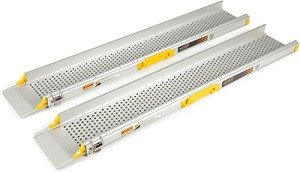
- Perforated Aluminum: Some ramps feature punched holes with raised edges. This allows rain, snow, and debris to fall through while providing a "toothed" grip for tires.
- Ribbed/Serrated Patterns: Extruded aluminum with deep grooves provides mechanical traction, though it is generally secondary to grit coatings for steep inclines.
Safety Side Rails
In addition to the surface texture, telescopic ramps feature raised side curbs (usually 2 to 3 inches high). These act as bumpers to prevent the wheelchair wheels from slipping off the edge of the track, a critical feature for users with limited upper body control or when a caregiver is pushing a heavy load.
Calculating the Correct Ramp Length
Choosing between a 4ft and a 7ft ramp depends entirely on the height of the step or threshold (the "rise"). Using a ramp that is too short creates a dangerously steep gradient, which can cause the wheelchair to tip backward or prevent the user from having enough strength to ascend.
The Gradient Guide
For independent manual wheelchair users, a 1:12 slope is the gold standard (1 foot of ramp for every 1 inch of rise). However, for portable use with a caregiver, a 1:6 ratio is often acceptable.
Table 2: Recommended Ramp Length Based on Rise Height
| Rise Height (Inches) | 4ft Ramp Gradient | 5ft Ramp Gradient | 6ft Ramp Gradient | 7ft Ramp Gradient |
|---|---|---|---|---|
| 4 inches | 1:12 (Ideal) | 1:15 (Very Easy) | 1:18 (Excellent) | 1:21 (Superior) |
| 6 inches | 1:8 (Manageable) | 1:10 (Good) | 1:12 (Ideal) | 1:14 (Excellent) |
| 8 inches | 1:6 (Steep) | 1:7.5 (Manageable) | 1:9 (Good) | 1:10.5 (Good) |
| 12 inches | Not Recommended | 1:5 (Very Steep) | 1:6 (Steep) | 1:7 (Manageable) |
Ideal Use Cases for Telescopic Ramps
Because these ramps consist of two separate tracks, they are highly versatile but require proper alignment. They are best suited for:
1. Vehicle Access
Telescopic ramps are excellent for loading wheelchairs into the back of SUVs, station wagons, or side-entry vans. The ability to retract the ramps makes them easy to stow in the trunk alongside the wheelchair.
2. Differing Step Heights
If a user travels frequently, they may encounter a 3-inch curb at one location and a 10-inch porch step at another. A 7ft telescopic ramp can be partially extended for the curb and fully extended for the porch, providing a "one-size-fits-most" solution.
3. Narrow Pathways
Unlike wide suitcase ramps, telescopic channel ramps can be set at any width. This makes them ideal for non-standard wheelchairs or extra-wide power chairs that might not fit on a standard 30-inch wide folding ramp.
Operational Features and Maintenance
To ensure the longevity and safety of telescopic ramps, users should be aware of the mechanical components involved.
Features to Look For:
- Simple Locking Buttons: High-quality ramps use spring-loaded pins that click into place, ensuring the sections don't slide while in use.
- Ergonomic Handles: Many models include a clip that holds the two tracks together with a central carrying handle.
- Non-Slip End Caps: The "head" of the ramp (where it rests on the step) should have a rubberized underside to prevent the ramp from sliding away from the ledge.
Maintenance Checklist:
- Debris Removal: Grit and dirt can get trapped between the sliding sections. It is recommended to wipe the inner tracks periodically.
- Lubrication: Avoid using heavy oils which attract dirt. A dry silicone spray is best for keeping the telescopic action smooth.
- Surface Inspection: Check the anti-slip coating for wear. If the grit begins to peel or smooth over, it should be replaced or refurbished to prevent accidents.
Frequently Asked Questions (FAQ)
1. Can telescopic ramps be used for power wheelchairs and scooters?
Yes, provided the total weight (user + chair) does not exceed the ramp's weight capacity. Most telescopic ramps are rated for approximately 250kg to 300kg. However, because power chairs are often wider and heavier, users must ensure the tracks are perfectly aligned and spaced.
2. Is it difficult to align the two separate tracks?
It requires a moment of care. The tracks must be parallel and spaced to match the distance between the wheelchair's wheels. Most caregivers find that after two or three uses, the alignment becomes second nature.
3. Can I use these ramps for a permanent installation?
No. Telescopic ramps are designed for temporary or portable use. For a permanent solution, a modular ramp system or a concrete ramp is safer and more compliant with building codes.
4. What is the difference between a 2-section and a 3-section telescopic ramp?
A 2-section ramp has one sliding joint and is generally sturdier but longer when retracted. A 3-section ramp (often used for the 7ft models) retracts into a much smaller footprint, making it easier to fit into small car trunks.
5. Are these ramps weather-resistant?
Most are made of anodized aluminum, which is highly resistant to rust and corrosion. However, the anti-slip grip tape may degrade over several years of heavy exposure to rain and sun.
Telescopic anti-slip wheelchair ramps ranging from 4ft to 7ft offer a vital balance between portability and functionality. By providing an adjustable length, these devices allow users to navigate varying heights with a single piece of equipment. When choosing a ramp, it is essential to prioritize the anti-slip surface quality, the ease of the locking mechanism, and the appropriate length-to-rise ratio. With the right telescopic ramp, the world becomes significantly more accessible, allowing for greater independence and peace of mind for both users and their caregivers.