
For individuals who rely on wheelchairs or mobility scooters, adverse weather conditions can present significant logistical challenges. Standard raincoats and umbrellas often prove inadequate; umbrellas require manual operation that interferes with steering, while traditional jackets are rarely cut to accommodate a seated position or the structural frame of a mobility aid.
The development of the specialized waterproof mobility poncho has transformed how users navigate rainy environments. Designed specifically for the ergonomics of a seated user, these garments offer comprehensive protection for both the individual and the equipment. This guide explores the critical features, materials, and benefits of waterproof ponchos for wheelchair and scooter users.
Why Specialized Rainwear is Essential
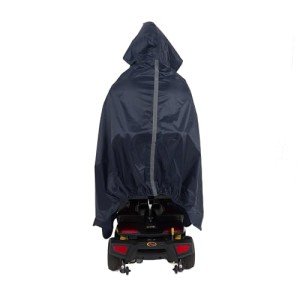
Traditional rain gear is designed for a standing, walking person. When a user sits in a wheelchair or scooter, several issues arise with standard garments. First, the excess fabric at the waist bunches up, creating discomfort. Second, the length is often insufficient to cover the knees and shins, leaving the lower body exposed to runoff. Lastly, standard jackets do not account for the back of the mobility device, which can result in rain seeping down between the user’s back and the seat upholstery.
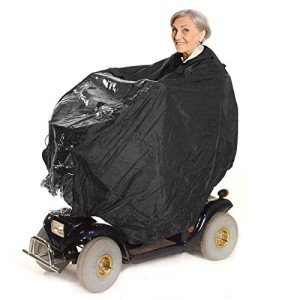
In contrast, a mobility poncho is engineered with a specific silhouette. It typically features a shorter back to prevent fabric from getting tangled in wheels or tucking into the seat, and a longer front to drape over the legs and the footplates.
Key Benefits of Mobility Ponchos
- Ease of Use: Most designs feature a simple over-the-head application, which is vital for those with limited dexterity.
- Equipment Protection: By covering the seat and the tiller (steering column) of a scooter, the poncho protects sensitive electronics from moisture damage.
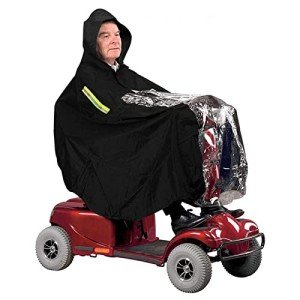
- Safety: Integrated reflective strips ensure that the user remains visible to motorists and pedestrians during heavy rain or low-light conditions.
- Independence: Effective rainwear allows users to maintain their daily schedules regardless of the weather forecast.
Comparison: Standard Raincoats vs. Mobility Ponchos
| Feature | Standard Raincoat | Specialized Mobility Poncho |
|---|---|---|
| Cut/Fit | Designed for standing; tight at the hips when seated. | Ergonomically shaped for a seated position. |
| Lower Body Coverage | Ends at the waist or mid-thigh; legs get wet. | Extended front panel covers knees, shins, and feet. |
| Back Design | Full length; bunches behind the user. | Often features a "scoop" back to clear the wheels/seat. |
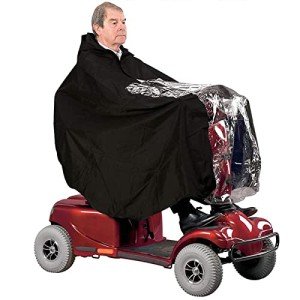
| Electronics Protection | None. | Can be draped over scooter tillers or powerchair joysticks. |
| Ease of Entry | Requires arm-through-sleeve motion. | Wide head opening; often uses zippers or Velcro for easy access. |
Technical Features to Consider
When selecting a waterproof poncho, the choice of material and specific design elements will dictate the garment’s performance and longevity.
1. Fabric and Breathability
Not all waterproof materials are created equal. While 100% PVC (polyvinyl chloride) is entirely waterproof and affordable, it lacks breathability. This can lead to a "sauna effect," where perspiration becomes trapped inside the garment. Higher-end ponchos utilize PU-coated (polyurethane) nylon or polyester. These materials are lightweight, durable, and allow for better air circulation while remaining impervious to rain.
2. Seam Sealing
A poncho is only as waterproof as its weakest point: the seams. High-quality mobility gear features "taped" or "heat-sealed" seams. This process involves applying a waterproof tape over the interior stitching to ensure that water cannot seep through the needle holes.
3. The Hood Design
The hood should be large enough to accommodate a headrest if necessary, but adjustable enough to prevent it from blowing off in the wind. Many models include drawstrings with toggles. A peaked hood (featuring a small stiffened brim) is also beneficial as it keeps water away from the eyes and glasses.
4. Fastenings and Closures
Zippers are generally more secure, but they can be difficult for individuals with limited hand strength. Many manufacturers opt for high-quality Velcro or magnetic snaps. A neck-line zip or a "hook-and-loop" flap allows the user to widen the opening when putting the poncho on or taking it off.
Understanding the Difference: Wheelchair vs. Scooter Ponchos
While the terms are often used interchangeably, there are subtle differences in design based on the type of mobility aid being used.
Ponchos for Manual Wheelchairs
Manual wheelchair users require a greater range of motion in their arms. Ponchos designed for these users often have shorter sides or specific arm-slits to prevent the fabric from interfering with the push-rims. It is vital that the fabric does not hang too low on the sides, as it could become entangled in the spokes of the wheels, posing a serious safety risk.
Ponchos for Power Scooters
Scooter ponchos are typically larger. The front panel must be long enough to drape over the handlebars (tiller). Some premium versions feature a clear plastic window in the front panel. This allows the user to see the battery gauge and control buttons on the tiller while keeping them completely dry.
Material Comparison Table
| Material Type | Pros | Cons |
|---|---|---|
| PVC (Vinyl) | Extremely waterproof, very low cost, easy to wipe clean. | Heavy, non-breathable, can crack in extreme cold. |
| PU-Coated Nylon | Lightweight, flexible, durable, mid-range price. | Less breathable than luxury fabrics. |
| Gore-Tex / Technical Fabric | Highly breathable, fully waterproof, long-lasting. | High cost, requires specific washing instructions. |
| Lined (Fleece/Faux Fur) | Provides significant warmth in winter. | Bulky, takes longer to dry after use. |
Maintenance and Care
To ensure a waterproof poncho remains effective for years, proper care is required. Most synthetic waterproof fabrics should not be washed with standard biological detergents, as the enzymes can break down the waterproof coating. Instead, a specialized tech-wash is recommended.
- Drying: Never put a waterproof poncho in a tumble dryer unless the care label explicitly permits it. High heat can melt the waterproof lining. Air drying is the safest method.
- Storage: Ensure the poncho is completely dry before folding it for storage. Storing a damp poncho can lead to mold, mildew, and the degradation of the seams.
- Re-proofing: Over time, the Durable Water Repellent (DWR) coating on the exterior of the fabric may wear off. If water stops "beading" on the surface and starts soaking in, a spray-on re-proofing agent can restore its effectiveness.
Safety Considerations
Safety should always be the priority when selecting and using mobility accessories. Users should keep the following points in mind:
- Avoid Entanglement: Always ensure the excess fabric is tucked away from moving parts, especially the rear wheels of a manual chair.
- Visibility: Rain often reduces visibility for drivers. A poncho should ideally be a bright color or feature reflective piping.
- Brake Access: The poncho should not obstruct the user's ability to reach the manual brakes or the emergency stop on a power chair.
- Weight: A heavy, water-logged poncho can change the center of gravity of a lightweight manual wheelchair. Choosing lightweight, high-tech fabrics helps mitigate this.
Frequently Asked Questions (FAQ)
Q: Are mobility ponchos "one size fits all"?A: Many manufacturers offer a "universal" size, which is designed to be generous. However, some brands offer "Small/Medium" and "Large/Extra-Large" options. It is important to check the measurements, particularly the "front length," to ensure it covers the feet without dragging on the ground.
Q: Can I use a wheelchair poncho on a scooter?A: While a wheelchair poncho provides protection for the body, it may not be wide enough at the front to cover a scooter’s tiller. For scooter users, a purpose-built scooter cape is usually a better investment as it protects the vehicle's electronics.
Q: Is a lined poncho better than an unlined one?A: This depends on the climate. A lined (fleece or quilted) poncho is excellent for cold, wintry rain. However, for summer rain or spring showers, an unlined, lightweight poncho is more versatile as it can be layered over existing clothing without causing overheating.
Q: How do I know if the poncho is truly waterproof and not just "water-resistant"?A: Look for terms like "seam-sealed," "taped seams," or a "hydrostatic head" rating. A rating of 5,000mm or higher indicates a good level of waterproofing suitable for heavy rain.
A waterproof poncho is more than just a piece of clothing; for wheelchair and scooter users, it is a tool for maintaining autonomy and comfort. By choosing a garment specifically designed for a seated posture, users can ensure they stay dry from head to toe while protecting their mobility equipment. When selecting a poncho, prioritizing breathable fabrics, reflective safety features, and appropriate sizing will ensure that the user is prepared for any weather the seasons may bring.