Collapsible car boot mobility scooters are the ultimate solution for on-the-go freedom. These scooters fold up easily, making them perfect for travel or just popping in the trunk of your car. If you're looking for a compact and convenient way to stay mobile wherever you go, you've come to the right place!
Collapsible Car Boot Mobility Scooters
Conveniently compact scooters that fit perfectly in your car for easy travel and independence
Product List
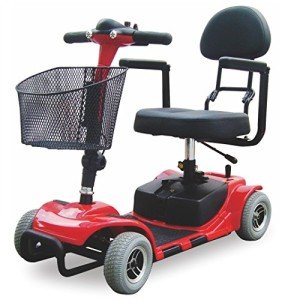
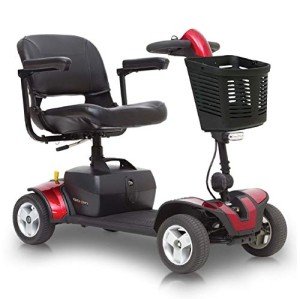
Pride GoGo Elite Sport Scooter
Fenetic Wellbeing
Product Review Score
4.91 out of 5 stars
111 reviews£1,249.99
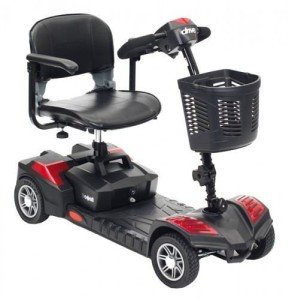
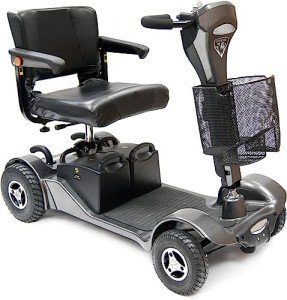
Sterling Sapphire 2 Scooter
Fenetic Wellbeing
Product Review Score
4.92 out of 5 stars
183 reviews£1,399.99

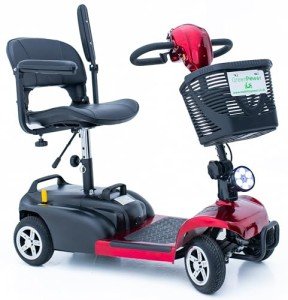
Green Power Folding Scooter
Green Power
Product Review Score
4.54 out of 5 stars
111 reviews£449.00
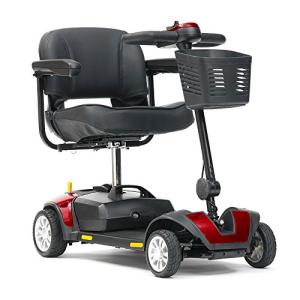
Livewell Jaunt Portable Scooter
Livewell
Product Review Score
4.53 out of 5 stars
192 reviews£699.00
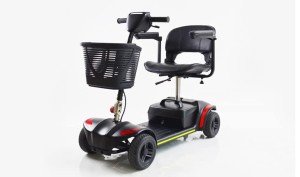
Angel Mobility Foldable Scooter
Angel Mobility
Product Review Score
4.88 out of 5 stars
172 reviews£545.00
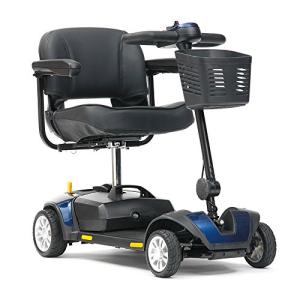
Livewell Jaunt Portable Scooter
Livewell
Product Review Score
4.85 out of 5 stars
202 reviews£699.00
For individuals facing mobility challenges, the desire for independence remains a top priority. Whether it is a trip to the local shopping center, a visit to a park, or a family holiday, the ability to move freely is essential for a high quality of life. In recent years, the mobility industry has seen a significant shift toward the development of collapsible car boot mobility scooters. These specialized devices are designed to bridge the gap between heavy-duty stability and lightweight portability, offering a solution that fits neatly into the lifestyle of the modern traveler.
This guide explores the features, benefits, and technical considerations of collapsible mobility scooters, providing a comprehensive overview for those looking to invest in their personal freedom.
What is a Collapsible Car Boot Mobility Scooter?
A car boot mobility scooter, often referred to as a "travel scooter" or "portable scooter," is a compact mobility aid specifically designed to be transported in the luggage compartment of a standard vehicle. Unlike their larger, road-legal counterparts (Class 3 scooters), these devices are typically Class 2 vehicles, meaning they are intended for use on pavements and have a maximum speed of 4mph (6.4kph).
There are two primary ways these scooters achieve portability:
- Dismantling Models: These scooters can be broken down into four or five smaller, interlocking parts (seat, battery pack, front section, and rear motor section).
- Folding Models: These scooters feature a single-frame design that collapses or "folds" down into a compact shape through a series of hinges and latches, often without the need to remove any parts.
The Advantages of Collapsible Scooters
The transition from a standard wheelchair or a heavy-duty scooter to a collapsible model offers several transformative benefits.
1. Ease of Transport
The primary draw is the ability to take the scooter anywhere. By fitting into a car boot, the user is no longer restricted to areas within driving distance of their home. This opens up opportunities for day trips to distant cities, visits to coastal piers, or maneuvers through narrow museum corridors.
2. Compact Storage
For those living in apartments or houses with limited hallway space, a full-sized scooter can be an obstacle. Collapsible models can be stored in a cupboard, under a staircase, or even left in the car boot between uses, keeping the living environment clutter-free.
3. Public Transport and Air Travel Compatibility
Most collapsible scooters are designed with travel regulations in mind. Many models feature lithium-ion batteries that are "Flight Safe," allowing users to take their scooters on airplanes. Their compact footprint also makes them easier to navigate onto buses, trains, and cruise ships.
4. Simplified Charging
Many portable models allow for "off-board charging." This means the battery pack can be removed and taken inside to a standard wall outlet, while the rest of the scooter remains in the car or a garage.
Comparison of Collapsible Scooter Categories
To help understand the differences between various models, the following table compares the typical specifications of three popular sub-categories of portable scooters.
| Feature | Standard Manual Folding | Automatic Remote Folding | Heavy-Duty Portable |
|---|---|---|---|
| Folding Mechanism | Manual latches | Electric / Remote control | Dismantles into 5 parts |
| Typical Weight | 20kg – 25kg | 25kg – 30kg | 40kg – 55kg (Total) |
| Heaviest Part | N/A (One piece) | N/A (One piece) | 12kg – 15kg |
| Battery Type | Lithium-Ion | Lithium-Ion | Lead Acid or Lithium |
| Max Range | 10 – 15 miles | 10 – 12 miles | 15 – 20 miles |
| Weight Capacity | Up to 115kg (18st) | Up to 125kg (19st) | Up to 145kg (23st) |
| Ideal Use | Shopping & Pavements | Frequent vehicle transfers | Longer trips / Rougher paths |
Key Features to Consider Before Purchasing
When selecting a collapsible scooter, one should evaluate several technical and ergonomic factors to ensure the device meets their specific physical requirements and lifestyle.
Weight of the Heaviest Part
For those who choose a dismantling model, the weight of the heaviest component (usually the rear motor section) is critical. Even if a scooter is advertised as "lightweight," a 15kg component can be difficult for someone with back pain or limited strength to lift into a high car boot.
The Mechanism: Manual vs. Automatic
- Manual Folding: These are often lighter because they lack the heavy motors required for automatic folding. However, they require the user to bend down and manipulate clips and levers.
- Automatic Folding: With the touch of a button on a key fob, the scooter unfolds itself in seconds. This is ideal for users with limited dexterity or arthritis, though it typically adds a few kilograms to the unit’s overall weight.
Battery Technology
The choice between Lead Acid (SLA) and Lithium-Ion batteries is significant.
- Lithium-Ion: Much lighter, faster to charge, and longer-lasting. However, they are more expensive.
- Lead Acid: Heavier and bulkier, but significantly cheaper and easier to replace if on a budget.
Turning Radius and Wheel Configuration
- 3-Wheel Models: Offer a tighter turning circle, making them excellent for navigating narrow shop aisles or crowded indoor spaces. They offer less stability on uneven ground.
- 4-Wheel Models: Provide greater stability and a more "planted" feel when turning, which is often preferred for outdoor pavement use.
Safety and Maintenance Best Practices
Owning a mobility scooter carries the responsibility of regular maintenance to ensure the safety of both the user and pedestrians.
Maintenance Checklist:
- Tire Inspections: Most boot scooters use solid, puncture-proof tires. Check them regularly for wear and tear or embedded debris.
- Battery Care: Never let the battery drain to 0%. For lithium batteries, it is best to keep them between 20% and 80% charge when not in use for long periods.
- Cleaning: Use a damp cloth to wipe down the chassis. Avoid using high-pressure hoses, as water can easily damage the sensitive electronics under the floorpan or tiller.
- Joint Lubrication: For folding models, ensure the hinges are kept clean and occasionally lubricated with a silicone-based spray to prevent stiffness.
Driving Etiquette and Practicality
While these scooters offer freedom, they must be used responsibly. Because they are designed for the "boot," they often have lower ground clearance. Users should be mindful of:
- Kerbs: Always use dropped kerbs where possible. Collapsible scooters with small wheels can struggle with traditional kerbs.
- Speed: In crowded areas, the speed should be reduced to a walking pace (approx. 2mph) to avoid accidents.
- Incline Limits: Most portable scooters are rated for a maximum incline of 6 to 8 degrees. Attempting steeper hills can strain the motor and increase the risk of tipping.
Frequently Asked Questions (FAQ)
Can I take my collapsible scooter on a plane?
Yes, most models are designed for air travel. However, you must check the Watt-hour (Wh) rating of the lithium battery. Most airlines allow batteries up to 300Wh, but it is essential to notify the airline at least 48 hours before the flight and bring the battery’s safety certificate.
Do I need insurance for a car boot scooter?
While insurance is not a legal requirement for Class 2 scooters in many regions (such as the UK), it is highly recommended. Specialist mobility insurance covers third-party liability, accidental damage, and theft.
How do I know if the scooter will fit in my car?
It is advisable to measure the dimensions of your car boot (width, depth, and height) and compare them to the "folded dimensions" provided by the manufacturer. Keep in mind that "lip height" of the boot also matters when lifting the unit.
Can these scooters be used in the rain?
Most mobility scooters are "weather resistant" but not "waterproof." They can handle a light drizzle, but heavy rain can damage the electronics in the tiller (handlebars). Using a waterproof cover for the control panel is a wise precaution.
Is there a weight limit for these scooters?
Yes. most collapsible models have a weight capacity between 115kg and 135kg (approx. 18 to 21 stone). Exceeding this limit can void the warranty and lead to motor failure or structural damage.
The collapsible car boot mobility scooter represents a significant leap forward in assistive technology. By prioritizing portability without sacrificing the core functionality of a mobility aid, these devices empower individuals to maintain active social lives and explore the world around them. Whether opting for a high-tech automatic folding model or a sturdy dismantling version, users gain more than just a piece of machinery; they gain the ability to remain participants in life’s many journeys. For anyone seeking to maintain their independence while on the move, the car boot scooter is an investment that truly delivers.