If you’re looking for a rollator walker with a seat, you’re in the right place. These walkers give you the freedom to move around comfortably and take a break whenever you need it. With sturdy frames and cushioned seats, they’re perfect for both short walks and longer outings.
Rollator Walker With Seat
Discover the convenience and comfort of a rollator walker that features a built-in seat for easy rest on the go
Product List
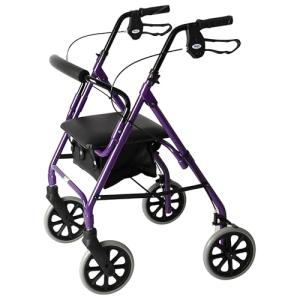
Lightweight Folding Walker Seat
Days Mobility
Product Review Score
4.19 out of 5 stars
228 reviews£89.95 £84.99
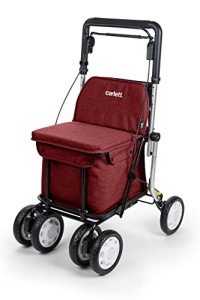
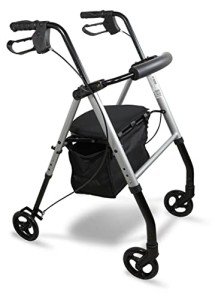
Lightweight Folding Rollator Scooter
Aidapt
Product Review Score
4.45 out of 5 stars
22 reviews£69.99
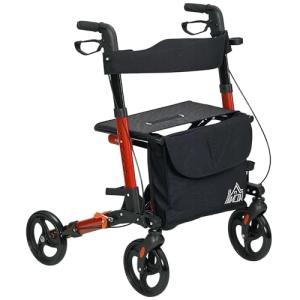
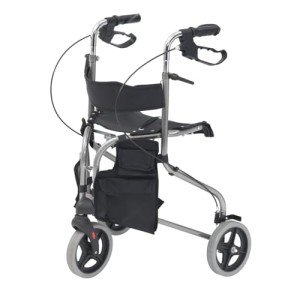
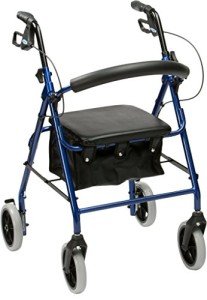
Drive Devilbiss R6 Rollator
Devilbiss Healthcare
Product Review Score
4.7 out of 5 stars
181 reviews£79.00 £69.89
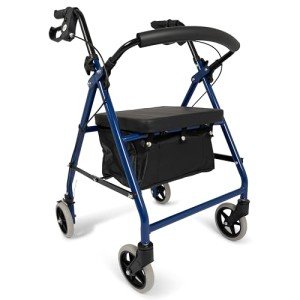
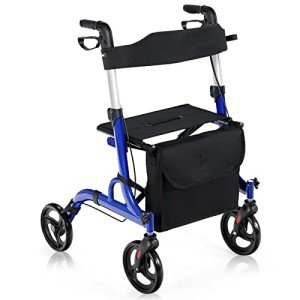
COSTWAY Folding Walker with Seat
Costway
Product Review Score
4.81 out of 5 stars
124 reviews£84.95
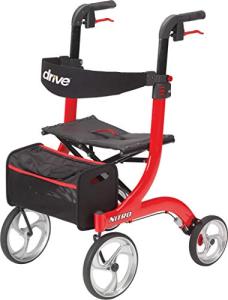
Drive Medical Nitro Walker - Red
Drive Medical
Product Review Score
4.96 out of 5 stars
105 reviews£205.99
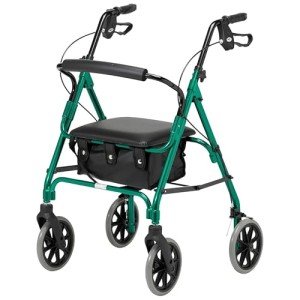
Lightweight Folding 4-Wheel Walker
Days Mobility
Product Review Score
4.72 out of 5 stars
223 reviews£99.99
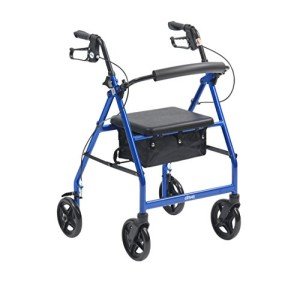
DeVilbiss Blue Rollator Seat
Devilbiss Healthcare
Product Review Score
4.9 out of 5 stars
107 reviews£64.99 £61.99
For individuals facing mobility challenges due to age, injury, or chronic conditions, the world can sometimes feel increasingly out of reach. However, the advancement of assistive devices has paved the way for greater autonomy. Among the most popular and effective tools is the rollator walker with a seat. Unlike traditional walkers that require the user to lift the device with every step, a rollator provides a smooth, rolling motion and a built-in place to rest, making it a game-changer for those who wish to maintain an active lifestyle.
This guide explores the features, benefits, and essential considerations for choosing the right rollator walker with a seat, providing a complete overview for healthcare providers, caregivers, and users alike.
What is a Rollator Walker?
A rollator, often referred to as a "wheeled walker," consists of a frame with three or four wheels, handlebars with brakes, and a built-in seat. While a standard walker is designed for stability and weight-bearing by being lifted and moved forward, a rollator is designed for those who have the balance to walk but need help with endurance and stability.
The inclusion of a seat is perhaps the most significant feature. It allows the user to stop and rest at any time, which is particularly beneficial for individuals with respiratory issues, heart conditions, or lower-body weakness.
Key Features of Rollator Walkers
Modern rollators are engineered with several components designed to enhance user safety and comfort. Understanding these features is vital when selecting the appropriate model.
1. The Braking System
Most rollators come equipped with loop-lock brakes located on the handlebars. These function similarly to bicycle brakes. Pulling up on the levers slows the rollator down while walking, and pushing the levers down into a "locked" position secures the device, which is essential before the user sits on the seat.
2. Adjustable Handle Height
To prevent slouching or back pain, the handles of a rollator must be set at the correct height. Most models offer telescopic handles that can be adjusted to match the user's wrist height when their arms are hanging naturally at their sides.
3. Padded Seating and Backrest
The seat is designed for short periods of rest. Higher-end models feature thick padding and a contoured backrest bar to provide lumbar support. Some backrests are reversible, allowing the user to sit from either side, though most are fixed for safety.
4. Storage Solutions
Whether it is a basket beneath the seat or a zippered pouch in front, storage is a standard feature. This allows users to carry personal items, groceries, or medical supplies without compromising their balance.
5. Wheel Size and Material
Wheel size typically ranges from 6 to 8 inches.
- 6-inch wheels: Ideal for indoor use on flat surfaces.
- 8-inch wheels: Better for outdoor use, as they can navigate cracked sidewalks, grass, and gravel more effectively.
Comparison Table: Common Types of Rollators
| Feature | Standard 4-Wheel Rollator | Bariatric (Heavy Duty) | Travel/Lightweight |
|---|---|---|---|
| Weight Capacity | 250 - 300 lbs | 400 - 500+ lbs | 200 - 250 lbs |
| Average Device Weight | 15 - 20 lbs | 25 - 30 lbs | 12 - 15 lbs |
| Seat Width | 13 - 15 inches | 18 - 22 inches | 12 - 14 inches |
| Best Used For | General daily use | Larger framed individuals | Travel and transport |
| Wheel Size | Usually 6" or 7" | Usually 8" | Usually 6" |
The Benefits of Using a Rollator Walker with a Seat
The primary goal of a rollator is to maximize mobility while minimizing the risk of falls. Here are the core benefits of integrating a rollator into a daily routine:
- Increased Endurance: Knowing a seat is always available encourages users to walk further distances, whether in a shopping mall or a local park.
- Safety and Stability: The four-wheel base provides a wider center of gravity than walking unaided, reducing the likelihood of stumbles.
- Improved Posture: Unlike standard walkers that can cause users to "hunch" over as they lift the device, rollators can be pushed while maintaining an upright gait.
- Social Engagement: By removing the fear of becoming stranded without a place to sit, rollators help individuals stay involved in community and family events.
- Portability: Most rollators feature a folding mechanism that allows them to be stored in a car trunk or a closet with ease.
How to Choose the Right Rollator
Selecting a rollator is not a "one size fits all" process. Proper measurements are critical to ensure safety.
Measuring for the Correct Fit
- Handle Height: The user should stand straight with their shoes on. Measure from the floor to the crease of the wrist. The handles should be set to this height.
- Seat Height: The user should measure from the back of the knee to the floor. The seat should be at a height where the user can sit comfortably with their feet flat on the ground.
- Width: Ensure the rollator is narrow enough to fit through the doorways in the user's home (standard doorways are roughly 30-32 inches).
Environmental Considerations
Where will the rollator be used most? If the user lives in an area with uneven pavement or enjoys walking on nature trails, a model with large, pneumatic (air-filled) tires and heavy-duty suspension is recommended. If the primary use is inside a small apartment, a compact model with a tight turning radius is preferred.
Safety Tips for Proper Use
While rollators are designed for safety, improper use can lead to accidents. Following these guidelines ensures the device remains a helpful tool rather than a hazard.
- Always Lock the Brakes: Before sitting down on the seat, the user must engage the parking brakes. Failure to do so can cause the rollator to roll away as the user sits, leading to a fall.
- Avoid Using as a Wheelchair: A rollator seat is for stationary resting only. A person should never be pushed by another person while sitting on a rollator unless the device is specifically a "Hybrid Rollator/Transport Chair."
- Check the Hardware Regularly: Because wheels and brakes are moving parts, they can loosen over time. Inspecting the screws and brake cables once a month is a necessary safety precaution.
- Walk "Inside" the Frame: New users often push the rollator too far in front of them. The user should stay close to the frame to maintain optimal support and control.
Frequently Asked Questions (FAQ)
1. Does Medicare cover the cost of a rollator?
Yes, Medicare Part B generally covers rollators as Durable Medical Equipment (DME) when prescribed by a doctor for use in the home. Typically, Medicare covers 80% of the approved amount after the deductible is met.
2. Can a rollator walker be used on stairs?
No. Rollators should never be used on stairs or escalators. Users should always locate an elevator or have assistance if they must navigate steps.
3. What is the difference between a 3-wheel and a 4-wheel rollator?
A 3-wheel rollator is more maneuverable and fits better in tight spaces but is generally less stable than a 4-wheel model. Critically, 3-wheel rollators usually do not have a seat. For those requiring a seat, the 4-wheel version is the standard choice.
4. How do I know if the brakes need adjustment?
If the user pulls the brake levers and the device does not stop immediately, or if the wheels slide while the brakes are in the "locked" position, the cables need tightening. Most manuals provide instructions on how to adjust the tension nuts near the wheels.
5. Are there weight limits for rollators?
Yes. Standard rollators typically support up to 300 lbs. If a user exceeds this, they should look for a "Bariatric" model, which features reinforced frames and wider seats to accommodate 400 to 600 lbs safely.
A rollator walker with a seat is more than just a mobility aid; it is a tool for empowerment. By providing a bridge between limited mobility and an active lifestyle, these devices help individuals maintain their dignity and independence. When choosing a rollator, focusing on the correct measurements, wheel type, and weight capacity will ensure that the user receives the maximum benefit from the device. With the right rollator, the world becomes a much more accessible place, one steady step at a time.