




Mobility is a fundamental aspect of independence, yet architectural barriers such as stairs, curbs, and high thresholds often present significant challenges for individuals using wheelchairs, power chairs, or mobility scooters. Permanent ramps are not always a feasible solution due to cost, space constraints, or rental agreements. This is where folding wheelchair ramps—specifically those ranging from 2ft to 8ft in length—provide a versatile, portable, and reliable solution.
These ramps are designed to bridge the gap between inaccessible environments and freedom of movement. By offering a range of lengths, manufacturers cater to various "rise" heights, ensuring that whether a user is navigating a single doorstep or entering a high-clearance van, there is a specific tool for the job.
Understanding the Folding Mechanism
Folding wheelchair ramps are typically categorized into two main designs: single-fold and multi-fold (often referred to as tri-fold).
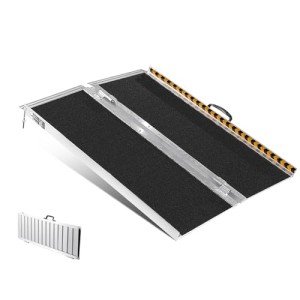
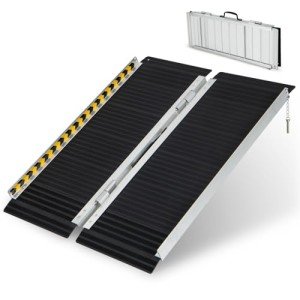
- Single-Fold Ramps: These ramps fold once down the center, much like a book. They are commonly equipped with a handle, allowing them to be carried like a suitcase. Single-fold designs are most prevalent in the 2ft to 5ft range.
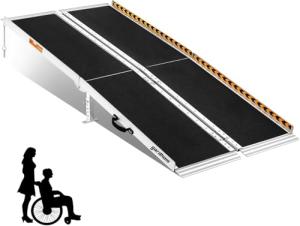
- Multi-Fold Ramps: For longer lengths, such as 6ft to 8ft, a multi-fold design is often utilized. These ramps fold both lengthwise and widthwise, reducing their footprint to a fraction of their extended size. This makes it possible to transport a long, 8ft ramp in the trunk of a standard vehicle.
Choosing the Right Length: The Importance of Gradient
The most critical factor when selecting a ramp is determining the appropriate length for the height of the obstacle (the "rise"). A ramp that is too short will create a slope that is too steep, making it dangerous or impossible to climb. Conversely, a ramp that is unnecessarily long may be too heavy or take up too much space.
The Americans with Disabilities Act (ADA) recommends a 1:12 slope for permanent ramps (1 foot of ramp for every 1 inch of rise). However, for portable residential use, a 2:12 slope is often acceptable for occupied manual wheelchairs with an assistant, or for power chairs.
Table 1: Recommended Ramp Lengths Based on Rise Height
| Total Rise (Inches) | Recommended Length (ADA 1:12) | Recommended Length (Residential 2:12) | Maximum Safety Limit (1:6) |
|---|---|---|---|
| 2" - 3" | 3 ft | 2 ft | 2 ft |
| 4" - 5" | 5 ft | 3 ft | 2.5 ft |
| 6" - 8" | 8 ft | 4 ft | 4 ft |
| 9" - 10" | 10 ft* | 5 ft | 5 ft |
| 12" (1 foot) | 12 ft* | 6 ft | 6 ft |
| 14" - 16" | 16 ft* | 8 ft | 8 ft |
*Note: Lengths over 8ft usually require modular systems rather than single portable folding units.
Key Features of Folding Wheelchair Ramps
When evaluating folding ramps between 2ft and 8ft, several features contribute to safety, durability, and ease of use. These products are engineered to provide maximum stability while remaining lightweight enough for transport.
Material and Build Quality
Most high-quality folding ramps are constructed from aircraft-grade aluminum. This material is chosen for its high strength-to-weight ratio and its natural resistance to corrosion. A well-constructed aluminum ramp can support anywhere from 600 lbs to 800 lbs, accommodating the combined weight of the user, the mobility device, and occasionally an assistant.
Surface Traction
Safety is paramount when navigating a slope. Most folding ramps feature a high-traction surface. This may include:
- Grit Surface: A sandpaper-like texture applied to the aluminum.
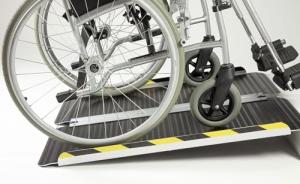
- Ribbed/Serrated Surface: Grooves extruded into the metal to provide grip for rubber tires.
- Perforated Designs: Holes that allow rain, snow, and debris to pass through, preventing the surface from becoming slick.
Safety Curbs and Transition Plates
To prevent a wheelchair from accidentally rolling off the edge, folding ramps typically include "side rails" or "safety curbs" that are 2 to 3 inches high. Additionally, "transition plates" at the top and bottom of the ramp ensure a smooth move from the ground to the ramp and from the ramp to the landing.
Benefits of Using Portable Folding Ramps
The adoption of folding ramps offers several advantages over permanent structural modifications.
- Portability: The ability to fold the ramp and take it to a restaurant, a relative's house, or on a trip is invaluable.
- No Construction Permits: Unlike permanent wooden or concrete ramps, portable folding ramps do not require building permits or professional contractors.
- Storage: When managed in a home environment, these ramps can be tucked away in a closet or garage when not in use, maintaining the aesthetic of the home’s entryway.
- Cost-Effectiveness: A high-quality 8ft folding ramp is significantly less expensive than the materials and labor required for a permanent installation.
Table 2: Comparison of Folding Ramp Lengths (2ft - 8ft)
| Length | Typical Fold Style | Approx. Weight | Ideal Use Case |
|---|---|---|---|
| 2 ft | Single-Fold | 10 - 15 lbs | Low curbs, single steps (up to 4"). |
| 4 ft | Single-Fold | 20 - 25 lbs | Raised thresholds, 1-2 standard steps. |
| 6 ft | Multi-Fold | 35 - 45 lbs | SUV/Van access, 3 standard steps. |
| 8 ft | Multi-Fold | 50 - 60 lbs | High porches, full van entry, 4 steps. |
Essential Safety Considerations
While folding ramps are designed for ease of use, third-party operators and users must adhere to strict safety protocols to prevent accidents.
- Weight Capacity: Always verify that the total weight (person + chair + accessories) does not exceed the ramp’s rated capacity.
- Anchoring: Many ramps come with pre-drilled holes or security pins. It is highly recommended to secure the top lip of the ramp to the landing surface to prevent the ramp from sliding backward.
- Center Support: For 8ft ramps, users should ensure the ramp is fully locked in the open position and that the hinges are resting on a stable surface if the design requires it.
- Weather Awareness: While many ramps have non-slip surfaces, extreme ice or heavy mud can still create hazards. Care should be taken to clear the ramp before use.
Comparison: Manual vs. Power Chair Requirements
The type of mobility device being used significantly impacts the choice of ramp.
- Manual Wheelchairs: If the user is self-propelling, a very shallow slope (longer ramp) is required to prevent exhaustion or tipping. If an attendant is pushing, a slightly steeper slope is manageable.
- Power Chairs and Scooters: Because these devices have low centers of gravity and powerful motors, they can often handle slightly steeper inclines. However, their lower ground clearance means the transition plates at the top and bottom of the ramp must be thin and flush to avoid "high-centering" the device.
FAQ: Frequently Asked Questions
1. How do I know if I need a 4ft or a 6ft ramp?
Measure the total vertical rise from the ground to the top of the step. If the rise is 8 inches, a 4ft ramp provides a 1:6 ratio (steep), while a 6ft ramp provides a 1:9 ratio (safer). Generally, the longer the ramp, the safer and easier it is to climb.
2. Can these ramps be used for pets or equipment?
Yes. While designed for wheelchairs, these ramps are frequently used for loading lawnmowers, heavy equipment, and helping aging pets into vehicles. Always ensure the equipment’s wheelbase fits within the ramp width.
3. Are folding ramps weather-resistant?
Most are made of aluminum, which does not rust. However, the steel hinges and locking pins should be checked periodically for signs of oxidation or wear, especially in coastal or snowy environments.
4. Is it difficult to carry an 8ft ramp?
An 8ft ramp usually weighs between 50 and 60 pounds. While they fold down into a manageable size, they are often a two-person carry or require a sturdy individual. The 2ft and 4ft versions are easily carried by one person.
5. Do I need to bolt the ramp down?
For temporary use, bolting is not required, provided the top lip has a significant overlap (usually 3 inches) on the landing and the security pins are used. For frequent use at the same location, semi-permanent mounting is safer.
Folding wheelchair ramps in the 2ft to 8ft range represent a vital intersection of engineering and accessibility. They provide a bridge to equality for those with limited mobility, allowing for easier navigation of the physical world without the need for permanent, costly renovations. By understanding the relationship between rise and ramp length, as well as the importance of load capacities and material quality, users can select a tool that ensures safety, longevity, and—most importantly—freedom.