




As individuals age or recover from surgery, maintaining independence and mobility becomes a top priority. For many, traditional walkers can feel cumbersome, while canes may not provide sufficient stability. This is where the lightweight 3-wheel rollator steps in—a specialized mobility aid designed for agility, ease of use, and portability.
This guide explores the intricate details of 3-wheel rollators, specifically focusing on the importance of lightweight frames and adjustable handles, providing a comprehensive overview for caregivers, medical professionals, and users.
Understanding the 3-Wheel Rollator Design
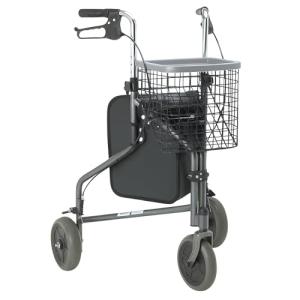
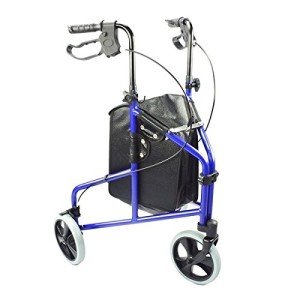
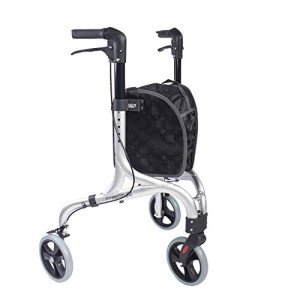
A 3-wheel rollator, often referred to as a "tri-walker," features a triangular frame with one wheel at the front and two at the back. Unlike the standard 4-wheel rollator, these models do not typically include a built-in seat. Instead, they prioritize a narrow profile and a tight turning radius, making them the ideal choice for navigating indoor environments with restricted space.
Why Three Wheels Instead of Four?
The primary advantage of the three-wheel configuration is maneuverability. Because the front wheel acts as a single pivot point, the user can turn the device in a much smaller area than a four-wheel walker. This makes it particularly effective in:
- Narrow hallways
- Crowded grocery store aisles
- Small bathrooms or kitchens
- Public transportation
The Importance of Lightweight Construction
In the world of mobility aids, weight is a critical factor. Most high-quality 3-wheel rollators are constructed from high-grade aluminum. This material offers a high strength-to-weight ratio, ensuring the device is sturdy enough to support the user while remaining light enough to be lifted easily.
Benefits of a Lightweight Frame
- Ease of Transport: For individuals who travel frequently or need to stow their rollator in a car trunk, a lightweight frame (usually weighing between 12 and 15 pounds) is essential.
- Reduced Fatigue: Pushing a heavy device can lead to premature exhaustion. A lightweight rollator requires less physical exertion to move and steer.
- Lifting Over Obstacles: Users often encounter curbs, door thresholds, or single steps. A lightweight design allows the user to tilt or lift the front wheel with minimal strain.
| Feature | Standard 4-Wheel Rollator | Lightweight 3-Wheel Rollator |
|---|---|---|
| Average Weight | 18 - 25 lbs | 12 - 16 lbs |
| Turning Radius | Wide | Very Tight |
| Best Use Case | Long walks with breaks | Indoor use and tight spaces |
| Storage | Folds flat but bulky | Folds into a compact "V" shape |
| Seat Included? | Yes | Generally No |
Ergonomics: The Role of Adjustable Handles
One size does not fit all when it comes to mobility equipment. The "adjustable handle" feature is perhaps the most crucial ergonomic component of a rollator. Handles that are too low cause the user to hunch forward, leading to back pain and poor posture. Handles that are too high cause shoulder strain and reduce the user’s ability to apply downward force for stability.
Achieving the Perfect Height
Adjustable handles allow the rollator to be customized to the user’s height. Generally, the handles should be at the level of the user’s wrists when their arms are hanging naturally at their sides.
Key Benefits of Proper Handle Adjustment:
- Neutral Spine Alignment: Encourages an upright walking posture.
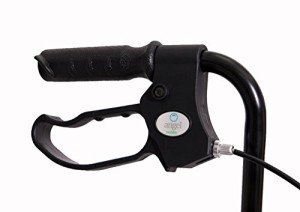
- Optimal Brake Access: Ensures the user can reach the hand brakes comfortably and quickly in an emergency.
- Weight Distribution: Allows the user to transfer their weight through their arms into the frame effectively.
Key Features to Look For
When selecting a lightweight 3-wheel rollator, several features beyond the frame and handles contribute to the overall user experience.
1. Braking Systems
Most 3-wheel rollators utilize a "loop-lock" braking system. These are similar to bicycle brakes but include a locking mechanism. Pushing the levers down clicks them into a "park" position, ensuring the rollator does not roll away while the user is standing still.
2. Wheel Material and Size
Most models come with 7-inch or 8-inch wheels. Larger wheels are generally better for traversing uneven surfaces like cracked pavement or thick carpets. Solid rubber or PVC wheels are preferred over pneumatic (air-filled) tires because they require zero maintenance and cannot go flat.
3. Storage Options
Since 3-wheelers lack a seat, they often utilize the center space for storage. Most models come equipped with:
- Removable Pouches: For personal items like phones or wallets.
- Baskets: For light grocery shopping or carrying household items.
- Trays: Hard plastic trays that clip onto the top, allowing the user to transport plates or drinks.
4. Folding Mechanism
The folding design of a 3-wheel rollator is unique. It usually collapses inward from the sides, creating a slim profile that can fit behind a car seat or in a narrow closet.
Safety and Maintenance Tips
To ensure the longevity of the mobility aid and the safety of the user, regular maintenance is required.
Monthly Maintenance Checklist:
- Check the Brakes: Ensure the tension is sufficient to stop the wheels immediately. Adjust the cable tension if the brakes feel "spongy."
- Tighten Bolts: Hand knobs for handle adjustments can loosen over time due to vibration.
- Inspect Wheels: Check for debris caught in the axles or excessive wear on the tread.
- Clean the Grips: Use a mild disinfectant to keep the hand grips clean and prevent them from becoming slippery.
Who Should Use a 3-Wheel Rollator?
While these devices are highly versatile, they are not suitable for everyone.
Ideal Candidates:
- Individuals who have good balance but need assistance with endurance.
- Users who primarily navigate indoor environments with tight corners.
- Those who need a portable walking aid that is easy to lift into a vehicle.
Who Should Reconsider:
- Individuals with severe balance issues who might tip a three-wheeled frame.
- Users who require a seat to rest during long walks (a 4-wheel rollator is better suited for this).
- People with very low grip strength who cannot operate hand brakes effectively.
Frequently Asked Questions (FAQ)
1. Are 3-wheel rollators as stable as 4-wheel ones?
While 3-wheel rollators are stable for forward movement, they have a narrower base of support. They are safe for those with mild to moderate mobility issues but may feel less "planted" than a 4-wheel model for users with significant balance impairment.
2. Can I sit on a 3-wheel rollator?
Generally, no. Due to the triangular design and focus on a compact frame, 3-wheel rollators do not include a seat. Attempting to sit on the crossbars of a 3-wheel rollator is dangerous and could lead to the device tipping.
3. How do I know the maximum weight capacity?
Most lightweight aluminum 3-wheel rollators have a weight capacity ranging from 250 lbs to 300 lbs. Always check the manufacturer’s specifications before purchasing, as exceeding the weight limit can compromise the frame’s integrity.
4. Are 3-wheel rollators suitable for outdoor use?
They are capable of outdoor use on flat surfaces like sidewalks and paved paths. However, they are not intended for "off-roading" on grass, gravel, or very uneven terrain, where the single front wheel might struggle.
5. Do they come pre-assembled?
Most models come partially assembled. Typically, the user or caregiver only needs to insert the handles and attach the storage pouch or basket. No specialized tools are usually required.
The lightweight 3-wheel rollator with adjustable handles represents a perfect intersection of engineering and ergonomics. By offering a solution that is both easy to maneuver and easy to transport, it empowers individuals to navigate their worlds with greater confidence. When choosing a model, prioritizing a lightweight aluminum frame and ensuring the handles can be adjusted to the correct anatomical height will provide the most comfortable and safe experience for the user. Whether it’s navigating a boutique shop or simply moving between rooms at home, the 3-wheel rollator is a reliable companion for independent living.