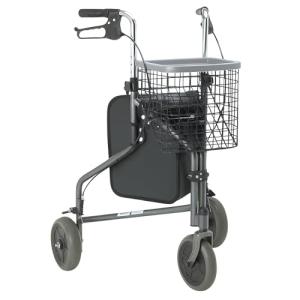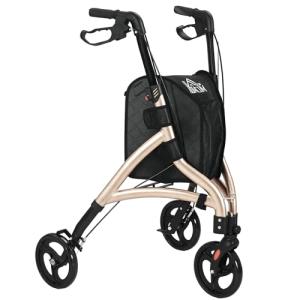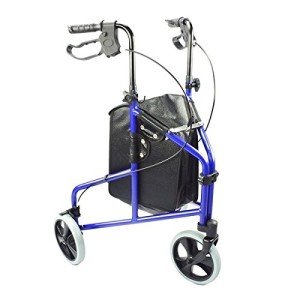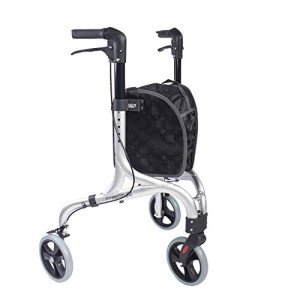





Mobility is a fundamental component of independent living. For many individuals facing age-related physical changes, recovering from surgery, or managing chronic conditions like arthritis, maintaining a sense of autonomy often depends on the tools they use to navigate the world. Among the most versatile and increasingly popular mobility aids is the lightweight folding Tri-Walker rollator.
Often referred to as a "three-wheeled walker" or "scooter," this device bridges the gap between a standard walking cane and a heavy-duty four-wheeled rollator. This guide explores the intricate details, benefits, and practical applications of the Tri-Walker, providing a comprehensive resource for those seeking a balance between support and agility.
What is a Lightweight Folding Tri-Walker?
At its core, a Tri-Walker is a three-wheeled mobility frame designed to provide stability and support during walking. Unlike traditional walkers that must be lifted with every step, the Tri-Walker features wheels that allow for a continuous, fluid walking motion.
The "lightweight" aspect refers to its construction—usually high-grade aluminum—which makes it easy to maneuver and lift. The "folding" capability ensures that the device can be collapsed into a narrow profile, making it a favorite for those who travel frequently or live in smaller spaces.
Key Components of a Tri-Walker
- The Frame: Typically made of reinforced aluminum to keep the weight between 10 and 15 lbs.
- The Wheels: Three puncture-proof tires, with a single swiveling front wheel.
- Handlebars: Height-adjustable grips designed to reduce strain on the wrists.
- Braking System: Loop brakes that allow for "slow-down" control or a "lock" feature for stationary security.
- Storage: Most models include a removable bag or basket for personal items.
Technical Specifications: At a Glance
Selecting the right mobility aid requires an understanding of the technical dimensions. The table below represents the average specifications for a premium lightweight folding Tri-Walker.
| Feature | Specification (Average) |
|---|---|
| Frame Material | High-Grade Aluminum |
| Total Weight | 11 lbs – 15 lbs (5 kg – 7 kg) |
| Weight Capacity | 250 lbs – 300 lbs (115 kg – 136 kg) |
| Adjustable Handle Height | 31" – 38" (80 cm – 96 cm) |
| Folded Width | 9" – 11" (23 cm – 28 cm) |
| Wheel Diameter | 7" – 8" (Solid PVC or Rubber) |
| Brake Type | Locking Loop Brakes |
The Advantages of the Three-Wheeled Design
The primary reason individuals choose a Tri-Walker over a standard four-wheeled rollator is maneuverability. The triangular footprint allows for a much tighter turning radius, which is essential in specific environments.
1. Superior Agility in Tight Spaces
Four-wheeled rollators can feel bulky in narrow hallways, crowded cafes, or small grocery store aisles. Because the Tri-Walker tapers toward a single front wheel, it can pivot almost in place. This makes it the ideal choice for indoor use, particularly in older homes with narrow doorframes.
2. Portability and Storage
Because the device lacks a seat (a common feature in four-wheeled versions), it can fold much more compactly. When the central frame is pulled inward, the Tri-Walker collapses into a sliver of its original size. This allows it to fit behind a car seat, in a trunk alongside groceries, or in a hallway closet without becoming a tripping hazard.
3. Lightweight Construction
The reduction of the fourth wheel and the simplified frame drastically reduces the overall weight. For an elderly individual or a person with limited upper-body strength, being able to lift a 12-lb walker into a vehicle is significantly easier than lifting a 20-lb four-wheeled model.
Comparison: Tri-Walker vs. Standard 4-Wheeled Rollator
It is important to understand the trade-offs when choosing between a three-wheeled and a four-wheeled model.
| Feature | Tri-Walker (3-Wheel) | Standard Rollator (4-Wheel) |
|---|---|---|
| Maneuverability | Excellent (Tight turns) | Moderate (Wider turns) |
| Stability | Moderate | High |
| Built-in Seat | Rarely Included | Almost Always Included |
| Weight | Very Lightweight | Heavier |
| Folded Size | Ultra-Compact | Bulkier |
| Best For | Indoor/Portability | Long Walks/Outdoor Resting |
Design and Ergonomics: Ensuring User Comfort
Modern Tri-Walkers are engineered with ergonomics in mind to prevent secondary injuries such as shoulder strain or carpal tunnel issues.
Handlebar Optimization
Most models feature height-adjustable handles. It is crucial that the handles are set at the level of the user’s wrists when their arms are hanging naturally at their sides. This ensures that the user walks with a straight posture rather than slouching forward.
Locking Loop Brakes
Safety is paramount. The loop brakes are designed to be operated even by those with limited grip strength or arthritis. By pulling the loops upward, the user can control their speed on inclines. By pushing the loops downward, the brakes "click" into a locked position, ensuring the walker does not roll away when the user is standing still.
Maintenance and Safety Tips
To ensure the longevity of a lightweight folding Tri-Walker, regular maintenance is required. Because these devices are often used daily, wear and tear on the wheels and brakes is inevitable.
- Check the Brakes Weekly: Ensure that both wheels lock simultaneously when the brakes are applied. If one side is loose, adjust the brake cable tension.
- Inspect the Wheels: Look for debris, hair, or dirt lodged in the axles. Clean the wheels with a damp cloth to maintain traction.
- Verify Folding Mechanisms: Ensure the locking pin or sliding bar that keeps the walker open is clicking securely into place.
- Adjust Handle Tightness: Over time, the hand knobs that secure handle height can loosen. Tighten them regularly to avoid sudden handle drops.
- Observe Weight Limits: Never exceed the manufacturer's weight capacity, as this can stress the aluminum frame and lead to structural failure.
Ideal Use Cases for the Tri-Walker
While the Tri-Walker is a versatile tool, it excels in specific scenarios:
- Shopping Trips: The included bags/baskets are perfect for carrying light groceries, and the agility allows for easy navigation of store displays.
- Travel: Its ability to fold flat makes it the perfect companion for bus, train, or air travel.
- Home Use: Ideal for navigating between the kitchen, bathroom, and bedroom where space is at a premium.
- Rehabilitation: For those recovering from hip or knee surgery who need some balance assistance but are encouraged to put weight on their limbs.
Frequently Asked Questions (FAQ)
Can you sit on a Tri-Walker?
In general, no. Unlike four-wheeled rollators, most Tri-Walkers do not come with a seat. They are designed for continuous movement and maneuverability. If a user requires frequent seated breaks, a four-wheeled rollator might be a more suitable option.
Is the Tri-Walker suitable for outdoor use?
Yes, they are suitable for flat, paved outdoor surfaces such as sidewalks and parking lots. However, due to having only three wheels, they may be less stable than four-wheeled models on uneven terrain, such as thick grass or gravel.
How do I know if the height is set correctly?
Stand straight with your shoes on and let your arms hang naturally. The top of the Tri-Walker handles should align with the crease of your wrist. When you grip the handles, your elbows should have a slight bend (about 20–30 degrees).
Can the Tri-Walker fit in a small car?
Yes. One of the primary selling points is the compact folding mechanism. Most Tri-Walkers fold to a width of 10 inches or less, allowing them to fit in the footwell of a car or even in a small hatchback trunk.
Is assembly difficult?
Most lightweight Tri-Walkers come almost fully assembled. Usually, the user only needs to insert the handlebars and attach the storage bag. No specialized tools are typically required.
The lightweight folding Tri-Walker rollator is an exceptional tool for individuals who value independence and agility. By prioritizing a compact design and ease of movement, it solves many of the common frustrations associated with bulkier mobility aids. While it may not offer the seating capacity of larger models, its ability to navigate tight corners and transport easily makes it an invaluable asset for an active lifestyle. When selected carefully and maintained properly, a Tri-Walker can significantly improve the quality of life for its user, providing the support needed to move through the world with confidence.