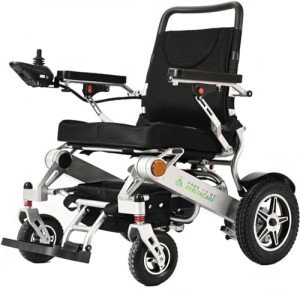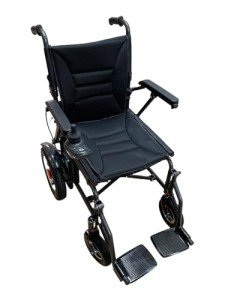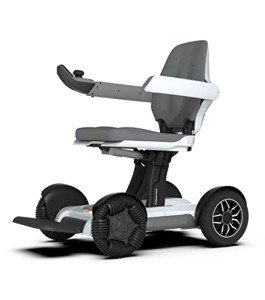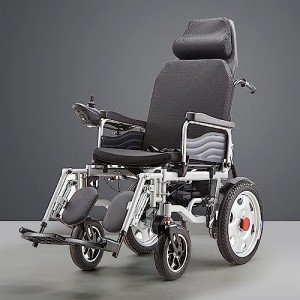


For many seniors, maintaining independence and an active lifestyle is a top priority. However, mobility challenges can often feel like a barrier to exploring the world beyond one’s front door. Traditionally, those requiring power assistance were forced to choose between heavy, bulky electric wheelchairs that were impossible to transport or lightweight manual chairs that lacked the power needed for outdoor excursions.
The landscape of assistive technology has changed dramatically with the introduction of the lightweight all-terrain folding electric wheelchair. These innovative devices combine the rugged durability of an off-road vehicle with the portability of a standard folding chair. This guide explores the features, benefits, and essential considerations of these modern mobility solutions designed specifically for the needs of seniors.
The Evolution of Mobility: Why Lightweight Matters
In the past, a standard power wheelchair could weigh upwards of 200 to 300 pounds. This necessitated expensive modifications to vehicles, such as hydraulic lifts or reinforced ramps. For seniors who may live alone or with an aging spouse, handling such heavy equipment is simply not feasible.
Modern lightweight electric wheelchairs have revolutionized this space. By utilizing aircraft-grade aluminum alloys and high-density carbon fiber, manufacturers have managed to bring the weight of these chairs down to between 45 and 65 pounds. This weight reduction allows a caregiver or a family member to lift the chair into a car trunk or SUV without specialized equipment.
Key Benefits of Lightweight Design:
- Ease of Transport: Fits easily into most vehicle trunks.
- Travel-Friendly: Most are TSA-approved for airline travel.
- Reduced Strain: Minimizes the physical effort required for caregivers to maneuver the chair when not in use.
Understanding "All-Terrain" Capabilities
The term "all-terrain" signifies that the wheelchair is engineered to handle surfaces beyond smooth linoleum or paved sidewalks. For seniors who enjoy gardening, visiting parks, or traveling to destinations with uneven cobblestones, all-terrain features are critical.
What Makes a Wheelchair All-Terrain?
- Powerful Dual Motors: Unlike standard chairs, all-terrain models usually feature dual brushless motors (typically 250W to 300W each). These motors provide the torque necessary to climb inclines and navigate through grass or gravel.
- Advanced Suspension Systems: Shock absorbers are integrated into the frame to dampen the vibrations from rough surfaces, ensuring a smooth ride that protects the senior’s spine and joints.
- Tire Composition: Large, puncture-proof rear tires with deep treads are a hallmark of these chairs. They provide the traction needed for sand, dirt, and wet grass.
- High Ground Clearance: To avoid getting stuck on small obstacles like door thresholds or tree roots, these chairs sit higher off the ground than indoor-only models.
Comparison: Standard Power Chair vs. Lightweight All-Terrain Folding Chair
| Feature | Standard Power Wheelchair | Lightweight All-Terrain Folding Chair |
|---|---|---|
| Average Weight | 200 - 350 lbs | 45 - 65 lbs |
| Portability | Requires van lift | Folds for car trunk |
| Main Surface | Flat, indoor surfaces | Grass, gravel, uneven pavement |
| Battery Type | Lead Acid (Heavy) | Lithium-Ion (Lightweight) |
| Turning Radius | Can be wide | Very tight (approx. 30-33 inches) |
| Travel Approval | Difficult/Restricted | Usually FAA & TSA approved |
The Folding Mechanism: Independence in Seconds
One of the most impressive features of these wheelchairs is their ability to fold. Most modern models utilize a "one-touch" folding system. In less than five seconds, the chair can collapse into a compact size similar to a large suitcase.
This foldability is a game-changer for seniors who wish to remain social. It means they can go out to lunch with friends, attend family gatherings, or take a cruise without worrying about the logistics of their mobility aid. The ability to stow the chair in a coat closet at home also keeps living spaces clutter-free and safe from tripping hazards.
Essential Features Checklist for Seniors
When shopping for a lightweight all-terrain folding electric wheelchair, certain features are non-negotiable for safety and comfort.
- Electromagnetic Braking System: This is a vital safety feature. The chair should automatically stop the moment the user lets go of the joystick, even on a ramp or incline.
- Joystick Controller: A 360-degree, responsive joystick that can be mounted on either the left or right armrest is essential for ease of use.
- Battery Range: Seniors should look for a chair that offers at least 10–15 miles on a single charge to ensure they aren't left stranded during a day out.
- Ergonomically Designed Seating: Since users may spend several hours in the chair, breathable honeycomb mesh or memory foam cushions are preferred.
- Anti-Tip Wheels: Small wheels at the back prevent the chair from tipping backward when ascending hills.
Safety and Comfort Considerations
While the "all-terrain" label implies ruggedness, the primary focus for seniors must remain on safety. Modern designs address this through several smart engineering choices:
Intelligent Control Systems
Many all-terrain chairs feature speed settings. This allows the user to set a maximum speed that feels comfortable, whether they are navigating a crowded shopping mall (low speed) or a wide park path (higher speed).
Comfort on Rough Ground
Seniors are often more susceptible to discomfort from vibrations. Manufacturers mitigate this by using specialized front-wheel forks that act as springs. Additionally, many chairs offer flip-up armrests, making it easier for users to transfer in and out of the chair or to sit closer to a dining table.
Maintenance and Longevity
To ensure the wheelchair remains a reliable companion, regular maintenance is required. Fortunately, the lightweight design usually simplifies this process.
- Battery Care: Lithium-ion batteries should be charged regularly. It is best not to let them drop to 0% frequently.
- Cleaning: After an outdoor excursion, wiping down the frame and checking the tires for debris (like pebbles or mud) helps prevent wear and tear.
- Tire Inspection: While many tires are solid and "flat-free," checking the tread for even wear ensures the chair remains stable.
The lightweight all-terrain folding electric wheelchair represents a significant leap forward in gerontechnology. By addressing the previous limitations of weight and terrain restrictedness, these devices offer seniors more than just mobility; they offer the freedom to participate in life’s moments. Whether it’s a stroll through a local park, a trip to see grandchildren, or an overseas vacation, these chairs provide the reliability and ease of use necessary to keep seniors moving forward.
Investing in such a device is an investment in quality of life, proving that aging does not have to mean slowing down.
Frequently Asked Questions (FAQ)
1. Can these wheelchairs be taken on an airplane?Yes, most lightweight folding electric wheelchairs use Lithium-ion batteries that are rated for air travel. However, it is always recommended to check with the specific airline 48 hours in advance and ensure the battery's Watt-hour (Wh) rating meets their requirements.
2. Are these chairs difficult to operate for someone with arthritis?No. The joysticks are designed to be extremely sensitive and require very little physical pressure. They can be operated with just a finger or the palm of the hand.
3. How long does the battery typically last?On average, a full charge will last between 10 and 15 miles, depending on the weight of the user and the type of terrain being navigated. Slopes and rough grass will consume more battery power than flat pavement.
4. Can the wheelchair be used manually if the battery dies?Yes. Most models feature a "freewheel" or "manual" mode. By flipping a lever on the motors, the gears are disengaged, allowing a caregiver to push the chair like a traditional manual wheelchair.
5. How much weight can these lightweight chairs support?Despite their light build, most are constructed from high-strength alloys and can support weight capacities ranging from 260 lbs to 400 lbs, depending on the specific model.