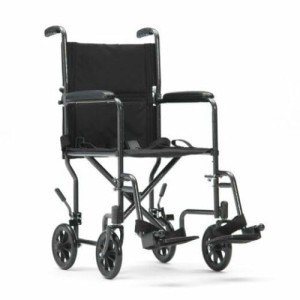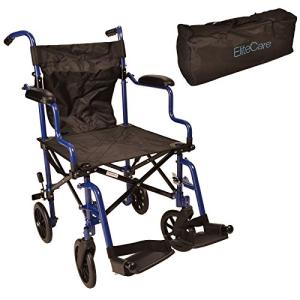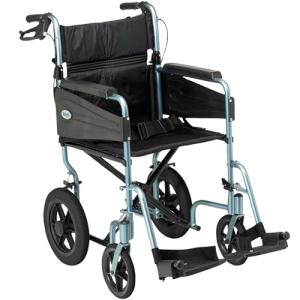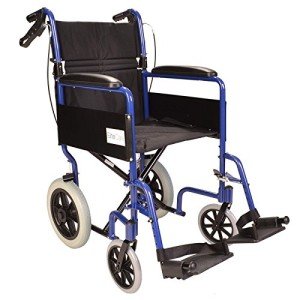





Mobility is a fundamental aspect of independence and quality of life. For individuals with limited mobility, the wheelchair is not merely a piece of medical equipment; it is a gateway to the world. In recent years, the engineering behind manual wheelchairs has seen significant advancements, moving away from the cumbersome, heavy steel frames of the past toward sophisticated, lightweight, and highly portable solutions. Among these innovations, the lightweight folding wheelchair equipped with a dual brake system stands out as a pinnacle of safety, convenience, and user-centric design.
This guide explores the technical nuances, safety benefits, and practical advantages of these modern mobility aids, providing a comprehensive guide for users, caregivers, and healthcare professionals.
The Shift Toward Lightweight Materials
Traditionally, wheelchairs were constructed from heavy-duty steel to ensure durability. While robust, these chairs often weighed between 40 and 60 pounds, making them difficult to transport and physically taxing for both the user to self-propel and the caregiver to lift.
Modern lightweight folding wheelchairs typically utilize aerospace-grade aluminum or magnesium alloys. These materials maintain high structural integrity while significantly reducing the overall weight—often bringing the total weight down to between 15 and 30 pounds.
Benefits of Lower Weight
- Reduced Physical Strain: Users require less energy to propel themselves, reducing the risk of repetitive strain injuries in the shoulders and wrists.
- Ease of Transport: Caregivers can easily lift the chair into a vehicle trunk or onto public transportation without specialized lifting equipment.
- Enhanced Maneuverability: A lighter frame responds more quickly to turns and navigates tight indoor spaces with greater precision.
The Critical Role of the Dual Brake System
The most significant safety feature in contemporary lightweight wheelchairs is the dual brake system. Unlike standard wheelchairs that might only feature a parking brake on the wheels, a dual system provides control mechanisms for both the occupant and the attendant.
How the Dual Brake System Functions
- Manual Parking Brakes (User-Operated): Located near the large rear wheels, these allows the user to lock the chair in place during transfers or when stationary. They are essential for preventing the chair from rolling away when the user is sitting down or standing up.
- Hand Brakes (Caregiver-Operated): These are traditionally located on the push handles at the back of the chair. Similar to bicycle brakes, they allow the attendant to control the speed of the wheelchair on inclines or uneven terrain. This ensures the chair does not gain too much momentum, which could be dangerous for both the user and the caregiver.
Table 1: Comparison of Brake Systems
| Feature | Standard Single Brake System | Dual Brake System (Modern) |
|---|---|---|
| User Control | Manual locks on wheels only | Manual locks on wheels |
| Caregiver Control | None (must use physical strength) | Hand-operated brakes on handles |
| Safety on Inclines | High risk of runaway | High control and deceleration |
| Transfer Safety | Fixed lock only | Fixed lock + immediate stop capability |
| Terrain Versatility | Limited to flat surfaces | Suitable for ramps and slopes |
Foldability and Portability: Engineering the Compact Frame
A primary requirement for modern users is the ability to fold the wheelchair for storage or travel. The folding mechanism usually involves a cross-brace design underneath the seat. By pulling upward on the seat upholstery, the sides of the chair collapse inward.
Many lightweight models go a step further with "quick-release" features. For example, the rear wheels can often be removed with the push of a button, and the backrest may fold down to further reduce the height of the folded unit. This modularity ensures that even small sedan trunks can accommodate a full-sized mobility aid.
Key Considerations for Folding Mechanisms
- Latch Stability: The folding mechanism must be secure enough to prevent accidental collapsing while in use.
- Width When Folded: High-end models can collapse to a width of just 10 to 12 inches.
- Upholstery Durability: Frequent folding requires flexible yet durable fabrics like ballistic nylon or reinforced polyester.
Technical Specifications and Material Science
When selecting a lightweight folding wheelchair, understanding the specifications is vital. Manufacturers often categorize these chairs based on their weight and frame composition.
Table 2: Typical Specifications for Lightweight Folding Wheelchairs
| Specification | Standard Lightweight Model | Ultra-Lightweight Model |
|---|---|---|
| Frame Material | Aluminum Alloy | Magnesium or Carbon Fiber |
| Weight | 25 – 35 lbs | 15 – 24 lbs |
| Weight Capacity | 250 lbs | 200 – 300 lbs |
| Wheel Type | Solid Rubber or PU | Pneumatic or High-End Solid |
| Seat Widths | 16", 18", or 20" | Customizable |
| Folding Size | ~35" x 12" x 30" | ~30" x 10" x 28" |
Advantages for the Caregiver
Caregiving is a physically demanding role. The combination of a lightweight frame and a dual brake system significantly mitigates the physical risks associated with assisting a wheelchair user.
- Safety on Descending Slopes: When navigating a ramp or a downhill sidewalk, the weight of the user and the chair exerts a downward force. Without hand brakes, the caregiver must use their own body weight and friction to hold the chair back. Hand brakes allow the caregiver to apply gradual pressure to slow the descent safely.
- Ergonomics: Lightweight chairs reduce the force required to push, benefiting the caregiver’s lower back and cardiovascular health.
- Loading Logistics: The ability to fold the chair quickly allows for a more efficient transition from outdoors to the interior of a vehicle, which is particularly beneficial in inclement weather.
Maintenance and Care
To ensure the longevity of a lightweight folding wheelchair and the reliability of its dual brake system, regular maintenance is required.
- Brake Calibration: Over time, the cables for the hand brakes may stretch. They should be tightened periodically to ensure they engage the wheels effectively.
- Tire Pressure: If the chair uses pneumatic (air-filled) tires, maintaining the correct pressure is essential for smooth rolling and effective braking.
- Cleaning the Folding Joints: Dirt and debris can accumulate in the cross-brace. Wiping these joints down prevents the folding mechanism from becoming stiff or jammed.
- Checking Fasteners: Ensuring that all bolts and screws are tight prevents frame rattling and maintains the structural integrity of the lightweight alloy.
Who Should Choose This Type of Wheelchair?
While lightweight folding chairs are versatile, they are particularly suited for specific profiles:
- Active Seniors: Those who still wish to travel or visit family but require occasional or full-time mobility assistance.
- Post-Surgical Patients: Individuals recovering from surgery who need a temporary, transportable solution.
- Frequent Travelers: Those who often use air travel, cruise ships, or public transit.
- In-Home Users with Caregivers: Anyone living in an environment with ramps or varied elevations where the dual brake system provides essential safety.
FAQ: Frequently Asked Questions
1. Does a lightweight wheelchair sacrifice durability because of its low weight?
No. Modern aluminum and magnesium alloys have excellent strength-to-weight ratios. While they are lighter than steel, they are engineered to support 250-300 lbs when maintained correctly. However, they should not be used for high-impact sports unless specifically designed as sports chairs.
2. Can these wheelchairs be taken on an airplane?
Yes. Lightweight folding wheelchairs are generally "gate-checked." Because they fold compactly and the wheels are often removable, they are much easier for airline staff to handle than rigid-frame chairs, and they are less likely to suffer damage during transit.
3. Are the hand brakes on the handles effective for stopping the chair entirely?
The hand brakes are primarily designed for speed control and deceleration. For a complete "parked" lock, the manual wheel locks (the parking brakes) should always be engaged.
4. What is the difference between "Lightweight" and "Ultra-Lightweight"?
A "lightweight" chair typically weighs between 25 and 34 pounds. An "ultra-lightweight" chair is generally under 25 pounds and often features more specialized materials or minimalist designs.
5. Can a user self-propel a chair with a dual brake system?
Yes. As long as the chair features the large rear wheels (usually 22-24 inches) with hand rims, the user can self-propel. Some transport-only models have small rear wheels and must be pushed by an attendant; these are technically "transport chairs" rather than standard wheelchairs.
The lightweight folding wheelchair with a dual brake system represents a significant leap forward in mobility technology. By balancing the need for portability with the necessity of safety, these devices empower users to engage more fully with their communities. The integration of high-tech materials and intuitive braking systems ensures that both the user and the caregiver can navigate the world with confidence, ease, and security. When selecting a model, prioritizing frame material, folding dimensions, and the presence of both manual and attendant brakes will lead to a more comfortable and safer mobility experience.