




Maintaining independence and mobility is a cornerstone of quality of life, particularly for individuals facing the challenges of aging, rehabilitation, or chronic physical conditions. While the market offers a wide array of mobility aids, finding a balance between the agility of a three-wheeled walker and the stability of a seated rollator can be difficult. The Drive DeVilbiss Tri-Walker Aid with Seat in vibrant red is a specialized solution designed to bridge this gap.
This guide provides a comprehensive analysis of this mobility aid, exploring its design, functional features, safety mechanisms, and suitability for various environments.
The Evolution of the Tri-Walker: Why a Seat Matters
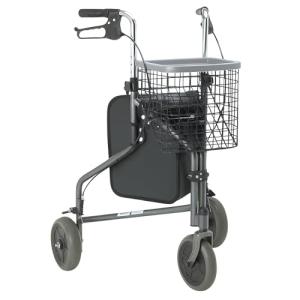
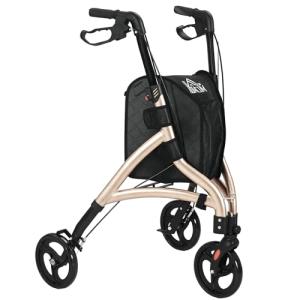
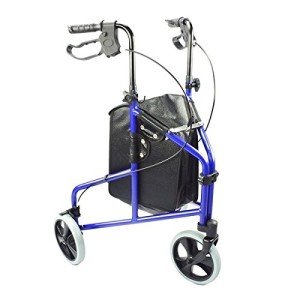
Traditionally, mobility walkers are divided into two main categories: the four-wheeled rollator (which usually includes a seat) and the three-wheeled tri-walker (which is known for being lightweight and maneuverable but lacks a resting point). The Drive DeVilbiss Tri-Walker with Seat challenges this convention by integrating a flip-down seat into a classic triangular frame.
For many users, the primary deterrent to using a standard tri-walker is the fear of fatigue. Without a seat, the user must be certain they can complete their journey or find a public bench for rest. By incorporating a discreet, sturdy seat, Drive DeVilbiss provides the agility needed for navigating tight spaces—such as narrow hallways or busy shops—without sacrificing the security of a built-in resting spot.
Design and Structural Integrity
The Drive DeVilbiss Tri-Walker is constructed from high-quality materials, typically featuring a robust steel or reinforced aluminum frame. The striking red finish is not merely aesthetic; the high-visibility color can assist users with visual impairments and makes the walker easily identifiable in crowded areas.
Maneuverability and Wheel Construction
The "tri" design features a single front swivel wheel and two fixed rear wheels. This configuration allows for a significantly smaller turning radius than a four-wheeled rollator. It is particularly effective in domestic environments where navigating around furniture or through narrow doorways is a daily requirement. The wheels are usually solid, puncture-proof, and designed to handle both indoor flooring and smooth outdoor pavements.
Ergonomic Features
The handles are height-adjustable, a critical feature for ensuring the user maintains a healthy posture. Walking with handles that are too low can lead to slouching and back pain, while handles that are too high can cause shoulder fatigue. The Drive DeVilbiss model utilizes a simple button or knob adjustment system to find the perfect ergonomic fit.
Detailed Specifications
To understand the practical capabilities of this mobility aid, it is helpful to look at the technical data.
Table 1: Technical Specifications of the Drive DeVilbiss Tri-Walker with Seat
| Feature | Specification Details |
|---|---|
| Frame Material | Durable Steel / Lightweight Alloy |
| Color | High-Gloss Red |
| Maximum User Weight | 115 kg (approx. 18 stone) |
| Handle Height Range | 82 cm – 94 cm (approximate) |
| Overall Width | 62 cm |
| Seat Height | 50 cm – 55 cm |
| Wheel Diameter | 18 cm – 20 cm (7 - 8 inches) |
| Product Weight | 7 kg – 8 kg |
| Brake Type | Locked Loop Cable Brakes |
Safety and Braking Systems
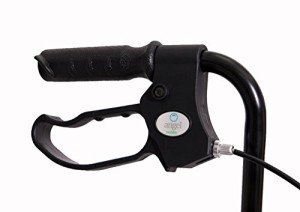
Safety is the paramount concern for any mobility equipment. The Drive DeVilbiss Tri-Walker is equipped with loop-handled cable brakes. These brakes serve two vital functions:
- Speed Control: By gently pulling the loops upward, the user can slow the walker down while moving, which is essential for maintaining control on slight inclines.
- Parking Brake: By pushing the loops downward, the brakes "click" into a locked position. This is the most crucial step before the user attempts to sit on the seat. Engaging the parking brake ensures the walker does not roll away while the user is transitioning to a seated position or resting.
The seat itself is typically positioned between the two rear wheels, providing a stable center of gravity. However, users are always advised to sit centrally and avoid leaning excessively to one side, as three-wheeled units are inherently less stable laterally than four-wheeled versions.
Portability and Storage
One of the standout features of the Drive DeVilbiss Tri-Walker is its folding mechanism. Unlike standard chairs or heavy-duty rollators, this tri-walker can be collapsed into a compact shape with a single-handed pull of the central frame or seat mechanism.
Key Benefits of the Folding Design:
- Transport: It fits easily into the boot of most standard cars or even in the footwell of a rear seat.
- Home Storage: When not in use, it can be tucked behind a door or in a hallway closet, reducing trip hazards in the home.
- Public Transport: Its slim profile when folded makes it manageable for users who frequently travel by bus or train.
Comparison: Tri-Walker vs. 4-Wheel Rollator
Choosing the right aid depends on the user's specific environment and physical requirements. The table below compares the Drive DeVilbiss Tri-Walker with a standard 4-wheel rollator.
Table 2: Mobility Aid Comparison
| Feature | Drive DeVilbiss Tri-Walker (Wait Seat) | Standard 4-Wheel Rollator |
|---|---|---|
| Turn Radius | Very Tight (Best for indoors) | Wider (Better for stabilization) |
| Stability | Moderate | High |
| Weight | Typically lighter | Typically heavier |
| Seat Comfort | Functional/Compact | Usually padded/Larger |
| Storage Space | Fits in narrow gaps | Requires more floor space |
| Best For | Active users in tight spaces | Users requiring maximum stability |
Who is the Ideal User?
The Drive DeVilbiss Tri-Walker Aid with Seat is specifically engineered for individuals who:
- Have enough balance to manage a three-wheeled base but lack the stamina for long-distance walking.
- Live in homes with narrow corridors or small rooms where a 4-wheel rollator would be cumbersome.
- Value a lightweight frame that is easy to lift into vehicles.
- Require a mobility aid that can double as a temporary resting station during shopping trips or outings.
Benefits Summary
- Agility: Navigates corners and obstacles with ease.
- Visibility: The red color adds a modern look and improves safety.
- Convenience: Includes a basket, pouch, or tray (standard in most models) for carrying personal items.
- Adjustability: Height-adjustable handles accommodate users of varying heights.
- Functionality: The rare inclusion of a seat on a three-wheeler provides a safety net for those prone to fatigue.
Frequently Asked Questions (FAQ)
1. Is the walker difficult to assemble?
In most cases, the Drive DeVilbiss Tri-Walker arrives partially assembled. Users or caregivers typically only need to insert the handles and tighten the adjustment knobs. No specialized tools are generally required.
2. Can the seat be used on uneven ground?
It is strongly recommended to use the seat only on flat, level surfaces. Before sitting, the user must ensure that the parking brakes are fully engaged. Using the seat on a slope or uneven grass could cause the walker to tip.
3. How do I adjust the handle height correctly?
To find the correct height, the user should stand straight with their arms hanging naturally at their sides. The handles of the Tri-Walker should be adjusted to line up with the user's wrists. This ensures that when the user grips the handles, their elbows are slightly bent (at about a 20-30 degree angle).
4. Can this walker be used outdoors?
Yes, it is designed for both indoor and outdoor use. However, like all three-wheeled walkers, it performs best on paved surfaces. Extra caution should be taken when navigating high curbs or very soft ground.
5. What is the weight limit for the seat?
The standard weight capacity for this model is approximately 115kg (18 stone). It is important not to exceed this limit to maintain the structural integrity of the frame and the safety of the user.
The Drive DeVilbiss Tri-Walker Aid with Seat in Red represents a thoughtful integration of maneuverability and user comfort. By addressing the common limitation of three-wheeled walkers—the lack of a resting place—Drive DeVilbiss has created a versatile tool that supports both the physical and emotional aspects of independence. Whether used for a quick trip to the local corner store or for navigating the home, this aid provides a reliable, stylish, and functional solution for those seeking to stay active. Regardless of the environment, its combination of robust braking, adjustable handles, and a convenient seat ensures that the journey is as safe as it is accessible.