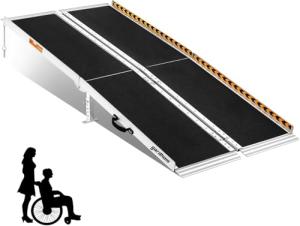





For individuals relying on mobility scooters or power wheelchairs, the world is often full of physical barriers. Whether it is a steep curb, a set of porch stairs, or the threshold of a transport vehicle like an SUV or a van, these obstacles can significantly limit independence. To bridge these gaps safely and efficiently, mobility scooter loading ramps have become indispensable tools.
Among the various sizes available, the 2.2m (approx. 7.2ft) folding loading ramp stands out as a versatile gold standard. This length offers the ideal balance between a gentle gradient and manageable portability. This blog explores everything one needs to know about these ramps, from their technical specifications to safety protocols and maintenance.
Why Length Matters: The Science of the 2.2m Gradient
The primary purpose of a ramp is to reduce the angle of ascent. A ramp that is too short creates a steep incline, which can be dangerous for several reasons:
- Motor Strain: Mobility scooter motors may overheat or fail when forced up a steep slope.
- Tipping Risk: A steep angle shifts the center of gravity backward, increasing the risk of the scooter tipping over.
- Ground Clearance: Many scooters have low ground clearance; a steep ramp angle can cause the "undercarriage" of the scooter to bottom out at the top of the ramp.
A 2.2m ramp is specifically designed to accommodate higher rises, such as those found in larger vehicles (SUVs, Transit vans) or three-to-four-step entrances. By spreading the vertical rise over a longer horizontal distance, the 2.2m length ensures a smoother, safer transition.
Key Features of 2.2m Folding Loading Ramps
When selecting a 2.2m ramp, certain features are non-negotiable for safety and ease of use. Most high-quality ramps in this category are constructed from aircraft-grade aluminum.
1. Folding Mechanisms
Folding ramps generally come in two designs:
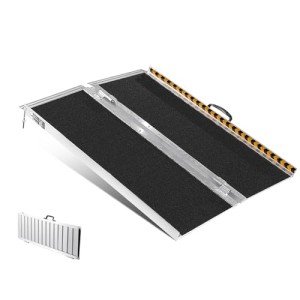
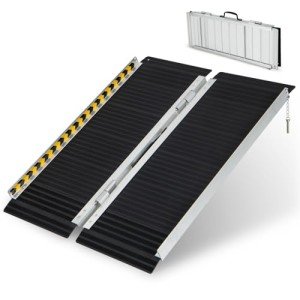
- Single-Fold (Suitcase Style): Folds once down the middle (longitudinally), making it narrow like a suitcase.
- Multi-Fold: These may fold both narrow and then in half again (latitudinal), making them much more compact for storage in small trunks.
2. High Traction Surfaces
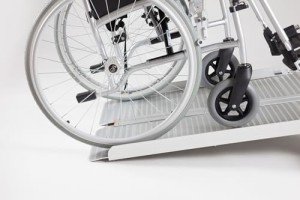
Safety is paramount. Quality ramps feature either a grit-tape surface (similar to sandpaper) or a serrated "mesh" punch-face. These designs ensure that even in wet or icy conditions, the scooter tires maintain a firm grip.
3. Transition Plates and Tail Lips
The "lip" is the part of the ramp that rests on the vehicle or the top step. A good 2.2m ramp will have a widened, rubber-backed transition plate to prevent the ramp from slipping forward during use.
4. Side Curbs
Safety side curbs (usually 2-3 inches high) prevent the scooter wheels from accidentally veering off the edge of the ramp.
Technical Specifications: At a Glance
The following table outlines the typical specifications one can expect from a high-quality 2.2m folding mobility ramp.
Table 1: Standard Specifications for 2.2m Folding Ramps
| Feature | Specification Details |
|---|---|
| Material | Lightweight, Rust-proof Aluminum |
| Total Length | 2200mm (2.2m / approx. 7.2ft) |
| Width (Internal) | 700mm - 800mm (Standard) |
| Weight Capacity (SWL) | 272kg - 400kg (600lbs - 880lbs) |
| Product Weight | 18kg - 25kg (varies by fold type) |
| Folded Dimensions | Approx. 1100mm x 380mm (for bifold) |
| Safety Features | Side curbs, Locking pins, Non-slip surface |
Determining the Correct Ramp Length for Your Rise
It is a common mistake to buy a ramp that is too short. To ensure safety, one must follow the "Slope Ratio" guidelines. For independent use of a power scooter, a 1:12 ratio is often recommended (1 inch of rise for every 12 inches of ramp). For assisted loading into a vehicle, a steeper 1:6 or 1:8 ratio is often acceptable.
Table 2: Recommended Rise Heights for a 2.2m Ramp
| Slope Ratio | Maximum Vertical Rise (Height) | Recommended Use Case |
|---|---|---|
| 1:12 (Gentle) | 18.3 cm (approx. 7") | Independent power scooter use. |
| 1:8 (Moderate) | 27.5 cm (approx. 11") | Manual wheelchairs with an assistant. |
| 1:6 (Steep) | 36.6 cm (approx. 14") | Loading empty scooters into vans (assisted). |
The Benefits of a Folding Design
Portability is the "folding" ramp’s greatest asset. While a permanent concrete ramp is steady, it lacks the versatility required for an active lifestyle.
- Vehicle Transport: A 2.2m ramp, when folded, can easily fit into the rear of most hatchbacks or SUVs. This allows the user to take their accessibility with them to parks, shopping centers, or relatives' homes.
- Space Saving: For many homeowners, a 2.2m permanent ramp would take up too much space on a driveway. Folding ramps can be deployed in seconds and stored in a garage or hall closet when not in use.
- Lightweight Durability: Despite their length, the use of aluminum ensures that the ramp is light enough for a caregiver or spouse to lift using the integrated carry handles.
Safety Considerations for Loading Mobility Scooters
Using a loading ramp requires a systematic approach to prevent accidents.
Checklist for Safe Loading:
- Surface Check: Ensure both the ground and the vehicle/step are level and stable.
- Alignment: Center the scooter perfectly with the ramp. If the scooter has three wheels, ensure the single front wheel remains centered on the ramp.
- Locking Pins: Many 2.2m ramps come with safety pins or straps. These must be used to secure the ramp to the vehicle's bumper to prevent it from kicking out during the ascent.
- Speed Control: The scooter should be driven at its lowest speed setting. Abrupt acceleration can cause the wheels to spin or the ramp to shift.
- Unoccupied Loading: It is often recommended that the user does not sit on the scooter while it is being driven up a ramp into a vehicle, depending on the ramp's weight capacity and the scooter's center of gravity. Most users prefer to stand beside the ramp and use the scooter's controls "off-board."
Maintenance and Care
To ensure a long lifespan for a 2.2m folding ramp, regular maintenance is required.
- Inspect Hinges: Regularly check the folding hinges for any signs of wear, rust, or loosening bolts. Lubricate with a silicone-based spray if they become stiff.
- Clean the Surface: Grit surfaces can become clogged with mud or salt. Use a stiff brush and mild soap to clean the traction area.
- Check for Dents: Aluminum is strong but can be dented if dropped. Inspect the side rails for structural integrity.
- Storage: Store the ramp in a dry place. While aluminum does not rust, the pins, hinges, and springs may be made of steel and can suffer from corrosion if left in the rain.
Frequently Asked Questions (FAQ)
1. Will a 2.2m ramp fit into my car's trunk?
Most 2.2m ramps are "bifold," meaning they fold down to 1.1m in length. You should measure your trunk space. If 1.1m is too long, look for a "multifold" or "trifold" version which folds to a smaller footprint.
2. Can I use these ramps for a 3-wheel scooter?
Yes, but you must ensure you purchase a "wide" single-platform ramp rather than "pair" ramps (two separate tracks). A 3-wheel scooter needs a solid middle surface for the front wheel.
3. What is the maximum weight these ramps can hold?
Standard 2.2m ramps usually support between 272kg and 300kg. However, heavy-duty versions are available that can support up to 400kg. Always check the weight of the scooter plus the driver before purchasing.
4. Are these ramps weather-resistant?
Yes, most are made of aluminum which is naturally resistant to corrosion. However, the non-slip grit tape can peel over several years if exposed to extreme weather constantly, so indoor storage is advised.
5. Can I use this ramp for a van with a very high floor?
A 2.2m ramp is suitable for most standard SUVs and minivans. However, for a high-roof delivery-style van (like a Mercedes Sprinter), you may need a 2.5m or 3m ramp to keep the incline safe.
The 2.2m folding mobility scooter loading ramp is a vital tool for achieving a barrier-free lifestyle. Its length provides the necessary safety margin for various inclines, while its folding mechanism ensures it remains a portable solution rather than a permanent obstacle. By understanding the weight capacities, gradient requirements, and safety features, users can confidently select a ramp that will provide reliable service for years to come. Investing in a high-quality ramp is not just a hardware purchase; it is an investment in freedom and mobility.