

For many individuals, maintaining independence is synonymous with maintaining mobility. As age or certain health conditions begin to affect balance and stamina, the transition to using a mobility aid can be a significant life adjustment. Among the various tools available, the lightweight 3-wheeled tri walker with a seat and bag has emerged as a premier choice for those who require support without sacrificing agility.
This guide provides an in-depth exploration of the features, benefits, and practical considerations of these specialized mobility aids, offering a clear guide for prospective users and caregivers.
Understanding the 3-Wheeled Tri Walker Design
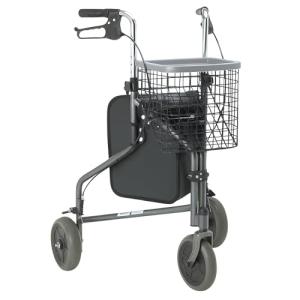
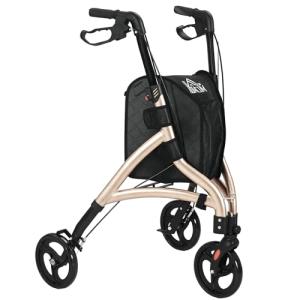
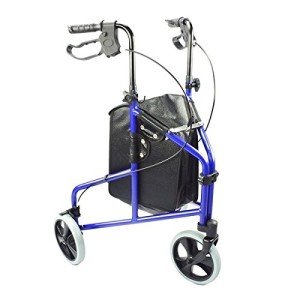
A tri walker, often referred to as a "three-wheel rollator," is a mobility frame designed with one wheel at the front and two at the rear. This triangular configuration provides a unique set of advantages over traditional walking frames or four-wheeled rollators. Historically, three-wheeled walkers were praised for their maneuverability but criticized for lacking a place to rest. Modern innovations have solved this by integrating lightweight, fold-away seats and convenient storage bags into the design.
The Evolution of the Integrated Seat
Traditionally, the "rollator with a seat" category was dominated by four-wheeled models. However, engineers recognized that three-wheel users also experienced fatigue. The inclusion of a seat in a 3-wheeled model typically involves a clever flip-down mechanism or a bridge between the rear handles, allowing users to take short breaks during walks. This addition transforms the tri walker from a simple walking aid into a versatile lifestyle tool.
Key Features of Lightweight Tri Walkers
When selecting a mobility aid, understanding the technical components is essential. Here are the primary features that define a high-quality 3-wheeled tri walker:
- Lightweight Aluminum Frame: Most modern tri walkers utilize aircraft-grade aluminum. This ensures the device is sturdy enough to support significant weight while remaining light enough (often between 5kg and 7kg) to be lifted into a car boot or onto public transport.
- Adjustable Handle Height: Proper posture is vital to prevent back and shoulder pain. High-quality models offer multiple height increments to accommodate users of different statures.
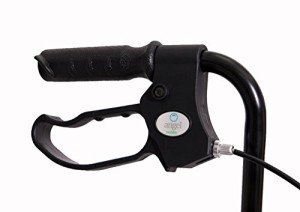
- Loop Brake System: These brakes are designed for ease of use, even for individuals with arthritis or limited hand strength. They can be squeezed to slow down or pushed down to "lock" the walker in place.
- Swivel Front Wheel: The 360-degree rotation of the front wheel is what gives the tri walker its legendary "turning on a dime" capability.
- Detachable Storage Bag: Most models include a vinyl or mesh bag. This allows users to carry groceries, personal items, or medical supplies hands-free.
Comparison Table: 3-Wheeled Tri Walkers vs. 4-Wheeled Rollators
| Feature | 3-Wheeled Tri Walker (with Seat) | 4-Wheeled Standard Rollator |
|---|---|---|
| Maneuverability | Excellent; ideal for tight spaces. | Moderate; requires more room to turn. |
| Stability | Good; best on flat surfaces. | Superior; extremely stable for all terrains. |
| Weight | Highly Lightweight (5-7kg). | Heavier (7-12kg). |
| Folded Width | Very Narrow; fits in small gaps. | Generally wider when folded. |
| Seat Type | Compact/Flip-down. | Wide/Permanent padded seat. |
| Best Use Case | Indoor use and shopping trips. | Long outdoor walks and rougher terrain. |
The Benefits of Choosing a 3-Wheeled Model
1. Superior Maneuverability in Tight Spaces
The primary reason users choose a tri walker is its narrow profile. Unlike four-wheeled walkers, which can be bulky, the triangular shape allows the user to navigate through narrow doorways, crowded cafes, and busy supermarket aisles with ease. The single front wheel allows for much sharper turns, making it ideal for indoor environments where space is at a premium.
2. Ease of Transportation and Storage
For many users, a mobility aid is only useful if it can travel with them. Lightweight tri-walkers typically feature a "fold-and-go" mechanism. By pulling a single lever or cord, the walker collapses inward. Because it has only three wheels, it often occupies significantly less volume in a car trunk than a four-wheeled counterpart.
3. Promoting an Active Lifestyle
The psychological benefit of a tri walker cannot be overstated. Knowing there is a seat available provides a "safety net" for users who fear getting tired while out. This confidence encourages users to walk further, visit friends, and engage with their community, which is essential for mental health and physical fitness.
Technical Specifications to Consider
Before purchasing, it is important to review the technical data to ensure the walker meets the user's specific needs.
| Specification | Standard Range |
|---|---|
| Weight Capacity | 100kg to 135kg (approx. 15-21 stone) |
| Handle Height Range | 80cm to 98cm |
| Wheel Diameter | 7 inches to 8 inches |
| Material | Powder-coated Aluminum / Steel |
| Seat Material | Reinforced Nylon or Padded Vinyl |
A Checklist for Choosing the Right Tri Walker
When shopping for a lightweight 3-wheeled tri walker with a seat and bag, consider the following list of requirements:
- Is the weight capacity sufficient? Ensure the unit can safely support the user’s weight.
- Are the brakes easy to operate? Test the loop brakes to ensure they don't require excessive force.
- Does the seat height match the user? Since many tri walker seats are fixed, ensure the user can sit and stand comfortably.
- Is the bag waterproof? If the walker will be used outdoors, a vinyl or waterproof bag is preferable to keep belongings dry.
- Are the tires puncture-proof? Look for "solid" or "PU" tires rather than pneumatic (air-filled) ones to avoid maintenance issues.
Maintenance and Safety Tips
To ensure the longevity of the mobility aid and the safety of the user, regular maintenance is required.
- Check the Brakes Regularly: Over time, the brake cables may stretch. Ensure they are tightened so that the wheels lock securely when the "park" function is engaged.
- Inspect Wheel Bearings: Dirt and hair can get caught in the wheel axles. Clean them regularly to ensure the walker glides smoothly.
- Tighten Bolts: Monthly checks of the frame bolts are recommended, especially if the walker is frequently folded and unfolded.
- Usage Caution: It is vital to remind users that the seat on a tri walker is for stationary rest only. One should never attempt to "scoot" along while sitting, as the three-wheel design is not intended for that type of movement and may tip.
The lightweight 3-wheeled tri walker with a seat and bag represents a perfect middle ground in the world of mobility aids. It offers more stability than a walking cane but more agility than a full-sized 4-wheeled rollator. By providing a portable place to rest and a convenient way to carry personal items, it empowers users to maintain their daily routines with confidence.
For those seeking to navigate the world with more ease, this versatile tool is more than just a piece of equipment—it is a gateway to continued independence and an active, engaged life.
Frequently Asked Questions (FAQ)
Q: Can a 3-wheeled tri walker be used on uneven ground?
A: While they can be used on pavements and gravel, they are most stable on flat, level surfaces. For very rough terrain (like woodland paths), a 4-wheeled rollator with larger wheels is generally recommended.
Q: How do I know if the handle height is correct?
A: The user should stand upright with their arms hanging naturally at their sides. The handles should be level with the user's wrists. This allows for a slight bend in the elbow during use, which is optimal for support.
Q: Is the bag included, or do I need to buy it separately?
A: Most models marketed as "Tri Walkers with Bags" include the bag as standard. However, some luxury models offer additional accessories like baskets or trays that may be sold separately.
Q: Is the walker difficult to assemble?
A: Most lightweight tri walkers arrive partially assembled. Usually, the user only needs to insert the handles and tighten the adjustment knobs. No tools are typically required.
Q: Can I use the tri walker seat to be pushed by someone else?
A: No. Tri walkers are not transit chairs. The seat is strictly for the user to rest while the walker is stationary and the brakes are locked. Attempting to be pushed while seated could result in a fall.