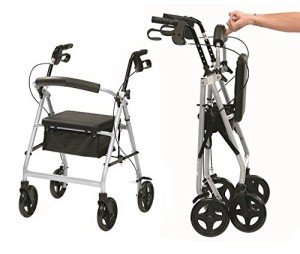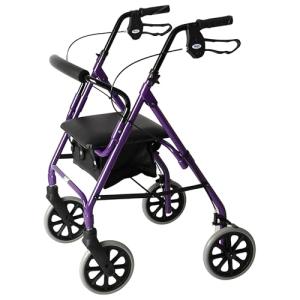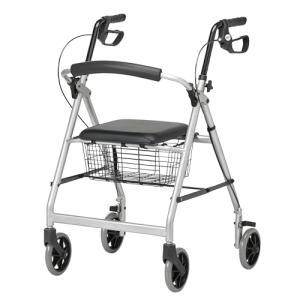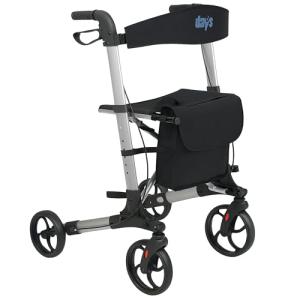

Maintaining independence and mobility is a fundamental aspect of a high quality of life, especially for seniors or those recovering from surgery. As mobility becomes a challenge, the right equipment can make the difference between staying home or enjoying a vibrant, active lifestyle. Among the most popular and effective solutions available today is the lightweight folding 4-wheel mobility walker with a seat—commonly referred to as a "rollator."
This guide explores the features, benefits, and technical specifications of these essential mobility aids, providing a detailed look at why they have become the gold standard for personal transport assistance.
What is a 4-Wheel Mobility Walker with a Seat?
Unlike a standard medical walker that must be lifted with every step, a 4-wheel mobility walker features wheels on all four legs. This design allows for a fluid, continuous walking motion. These devices are specifically engineered with a built-in seat and a backrest, providing the user with a portable resting station whenever fatigue sets in.
The "lightweight" and "folding" aspects are critical. Modern engineering utilizes materials like aircraft-grade aluminum to ensure the device is sturdy enough to support significant weight while remaining light enough for an individual to lift into a car trunk or navigate over a curb.
Key Features to Look For
When selecting a mobility walker, certain features distinguish a high-quality model from a generic one. Understanding these components ensures the user receives the best balance of safety and comfort.
1. Ergonomic Hand Grips and Braking Systems
Most 4-wheel walkers feature "loop-lock" brakes. This allows the user to pull up on the levers to slow down while walking or push down to lock the wheels into a "parked" position. This locking mechanism is vital for safety when the user chooses to sit on the built-in seat.
2. Adjustable Handle Height
Proper posture is essential to prevent back and neck pain. Quality walkers offer adjustable height settings, usually ranging from 31 to 38 inches, to accommodate users of various heights.
3. Padded Seating and Backrests
Because the primary advantage of a rollator is the ability to rest, the seat should be constructed with high-density foam and covered in durable, easy-to-clean material. A flexible or padded backrest provides additional support and prevents the user from tipping backward.
4. Wheel Size and Material
- 6-inch wheels: Ideal for indoor use and flat surfaces like shopping malls.
- 8-inch wheels: Better for "all-terrain" use, including cracked sidewalks, gravel, or grass.
Comparison of Mobility Walker Types
To understand where the lightweight folding 4-wheel walker fits in the market, consider the following technical comparison:
| Feature | Standard Walker (No Wheels) | 2-Wheel Walker | 4-Wheel Rollator (Standard) | Lightweight Folding Rollator |
|---|---|---|---|---|
| Material | Heavy Aluminum/Steel | Aluminum | Steel | Grade-A Aluminum |
| Weight | 6 - 8 lbs | 8 - 10 lbs | 20 - 25 lbs | 13 - 17 lbs |
| Foldability | Compact | Moderate | Bulky | Ultra-Compact |
| Seat Included | No | No | Yes | Yes |
| Braking System | None | Manual Friction | Loop-Lock Brakes | Advanced Loop-Lock |
| Ideal Terrain | Indoor/Flat | Indoor/Slightly Uneven | All-Terrain | All-Terrain/Travel |
The Benefits of a Lightweight Folding Design
The transition from a standard walker to a 4-wheel rollator offers several psychological and physical benefits.
Enhanced Portability
The "folding" mechanism is perhaps the most appreciated feature by caregivers. Most modern lightweight walkers feature a "cross-brace" or "side-to-side" folding design. With a simple pull of a handle located on the seat, the walker collapses into a slim profile. This makes it easy to store in the backseat of a car or in a narrow hallway.
Reduced Fatigue
Walking with a standard walker requires significant upper-body strength to lift the frame with every step. A 4-wheel walker stays on the ground, allowing the user to glide forward. This reduces the caloric expenditure of walking, meaning the user can travel further distances before feeling tired.
Social Freedom
Knowing there is a seat available at any moment reduces the "anxiety of distance." Many individuals stop attending outdoor events or shopping trips because they fear there will be nowhere to sit if they get tired. The built-in seat eliminates this barrier, encouraging social engagement.
How to Choose the Right Size
Selecting the wrong size can lead to poor posture or safety hazards. Follow these steps for an accurate fit:
- Check the Weight Capacity: Standard lightweight models usually support up to 300 lbs. "Bariatric" models are available for higher weight requirements but may be slightly heavier.
- Measure Handle Height: The user should stand straight with their shoes on. Their arms should hang naturally at their sides. The distance from the floor to the crease of the wrist is the ideal handle height.
- Check Seat Width: Ensure the width between the handles is comfortable for the user’s hips when sitting down.
- Evaluate Folded Dimensions: If the user has a small car, measure the trunk space to ensure the folded walker will fit.
Safety and Maintenance Tips
To ensure the longevity and safety of a 4-wheel mobility walker, regular maintenance is required.
Operational Safety
- Always Lock the Brakes: Never sit on the walker without first engaging the downward locking mechanism on the brakes.
- Do Not Use as a Wheelchair: These walkers are designed to be sat upon while stationary. They are not intended to be pushed by another person while a user is sitting in them (unless specifically labeled as a "Hybrid Transport Chair").
- Avoid Steep Slopes: Rollators can gain speed quickly on declines; always keep a firm grip on the brakes.
Maintenance Checklist
- Tires: Check for wear and tear. Ensure there are no flat spots or debris stuck in the tread.
- Brake Cables: Inspect cables for fraying. If the brakes feel "mushy," they may need tightening at the adjustment nut.
- Bolts and Knobs: Regularly tighten the height-adjustment knobs to prevent the handles from slipping downward.
Frequently Asked Questions (FAQ)
1. Does insurance or Medicare cover a 4-wheel mobility walker?
In many cases, yes. If a doctor deems the walker "medically necessary" and provides a prescription, Medicare Part B or private insurance may cover a portion of the cost. However, specific "lightweight" or "luxury" features might require an out-of-pocket upgrade.
2. Can the walker be taken on an airplane?
Yes. Most airlines treat mobility aids as "assistive devices" and do not count them toward baggage limits. They are usually checked at the gate (gate-checked) so the user can use the walker right up until they board the plane.
3. What is the difference between a walker and a rollator?
A walker is a simple frame with four legs that requires lifting. A rollator has four wheels and a seat. The term "4-wheel mobility walker" is generally used interchangeably with "rollator."
4. Are the wheels lockable for stationary use?
Yes. Every standard 4-wheel mobility walker comes with a locking mechanism, usually activated by pushing the brake handles downward until they "click" into place.
5. Is assembly difficult?
Most lightweight folding walkers arrive "semi-assembled." Usually, the user only needs to insert the handles and the backrest, often without the need for specialized tools.
The lightweight folding 4-wheel mobility walker with a seat is more than just a piece of medical equipment; it is a tool for empowerment. By combining safety, comfort, and portability, it allows individuals to navigate their environments with confidence. Whether it is a trip to the grocery store or a stroll through a local park, the right mobility walker ensures that the journey is as enjoyable as the destination.
When choosing a model, prioritize the weight of the frame, the ease of the folding mechanism, and the robustness of the braking system to ensure years of reliable service.