




For many individuals facing mobility challenges, the world can slowly start to feel smaller. Whether due to aging, recovery from surgery, or chronic conditions like arthritis, the simple act of walking to the park or navigating a grocery store can become a source of anxiety. However, the evolution of mobility aids has introduced a transformative solution: the lightweight folding 4-wheel rollator walker with a seat.
This device is not merely a "walker"; it is a sophisticated mobility tool designed to bridge the gap between stability and independence. By offering a combination of support, rest, and portability, it allows users to maintain an active lifestyle without compromising safety.
What is a 4-Wheel Rollator Walker?
A rollator, often called a "walker with wheels," differs from a standard walker in several key ways. While a standard walker requires the user to lift the frame with every step, a rollator features four wheels that glide across the ground. This creates a more natural walking gait and reduces the physical exertion required for movement.
The "4-wheel" aspect is particularly important as it provides the highest level of stability among wheeled mobility aids. Coupled with a built-in seat and a folding mechanism, the lightweight rollator serves as a mobile resting station and a sturdy support system all in one.
Key Features of Lightweight Folding Rollators
When selecting a mobility aid, understanding the technical specifications is essential for ensuring the right fit for the user's needs.
1. Advanced Braking Systems
Safety is the foremost priority. Most modern rollators feature hand-operated loop brakes. These brakes serve two purposes: they allow the user to slow down while walking on inclines and can be "locked" into place to prevent the rollator from moving when the user sits on the seat.
2. Built-in Padded Seating and Backrests
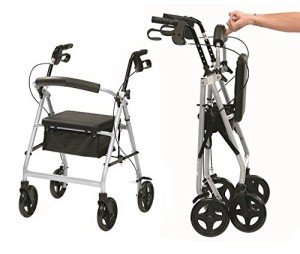
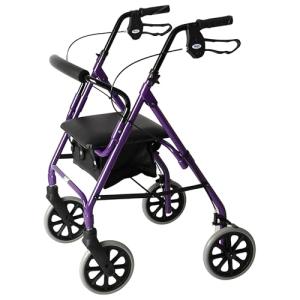
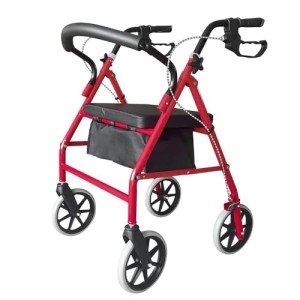
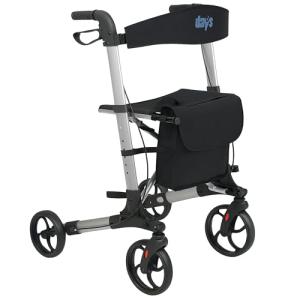
Unlike traditional walkers, rollators recognize that endurance can vary. The integration of a padded seat allows the user to take a break whenever necessary. A flip-up backrest provides additional lumbar support, ensuring that these rest periods are comfortable and safe.
3. Lightweight Aluminum Construction
The move toward aluminum frames has revolutionized the industry. Historically, mobility aids were heavy and cumbersome. Today’s lightweight models typically weigh between 11 and 18 pounds, making them easy to maneuver for the user and simple to lift for caregivers.
4. Folding Mechanism for Portability
The ability to fold the rollator is a game-changer for travel. High-quality models feature a "cross-fold" or "side-to-side" folding design that allows the unit to stand upright even when collapsed. This makes it easy to store in the trunk of a car, navigate narrow hallways, or tuck away in a restaurant.
Comparison: Standard Walker vs. 4-Wheel Rollator
To better understand the value of a rollator, it is helpful to compare it to the traditional stationary walker.
| Feature | Standard Walker | 4-Wheel Rollator |
|---|---|---|
| Movement Style | Lift and place | Continuous rolling |
| Walking Speed | Slower, rhythmic | Faster, natural gait |
| Braking System | None (usually) | Hand-operated loop brakes |
| Seating | None | Integrated padded seat |
| Terrain | Primarily indoors/flat | Indoor and outdoor/all-terrain |
| Weight | Very light | Lightweight to moderate |
| Storage | Folding frame | Folding frame + storage bag |
The Benefits of Using a Lightweight Rollator
The advantages of utilizing a 4-wheel rollator extend beyond physical support; they encompass psychological and social well-being.
Physical Health and Safety
- Balance Support: The four-wheel base provides a wide center of gravity, significantly reducing the risk of falls.
- Energy Conservation: Because the user does not have to lift the device, they can walk longer distances before fatigue sets in.
- Posture Correction: Adjustable handle heights ensure that users walk upright rather than hunching over, which reduces back and neck strain.
Mental and Social Well-being
- Confidence: Knowing that a seat is always available if needed reduces the "fear of falling" or "fear of getting stuck," encouraging users to leave the house more often.
- Social Connectivity: By facilitating easier movement, rollators enable users to attend family gatherings, go to the theater, or visit friends, preventing the isolation often associated with limited mobility.
Practical Convenience
- Storage Solutions: Most rollators come equipped with an under-seat pouch or a front-mounted basket. This allows users to carry personal items, groceries, or oxygen tanks hands-free.
Technical Specifications to Consider
When purchasing a rollator, one size does not fit all. Consideration must be given to the dimensions and capacity of the unit.
Specification Overview Table
| Specification | Standard Range | Why it Matters |
|---|---|---|
| Weight Capacity | 250 lbs - 350 lbs | Ensures structural integrity for the user. |
| Seat Height | 18" - 23" | Must allow the user's feet to rest flat on the floor. |
| Handle Height | 31" - 38" (Adjustable) | Prevents stooping; handles should be at wrist level. |
| Wheel Size | 6" to 8" | Larger wheels handle outdoor terrain better. |
| Overall Width | 22" - 26" | Must fit through standard interior doorways. |
How to Choose the Right Model
Selecting the perfect rollator involves evaluating the user's primary environment and physical stature.
1. Indoor vs. Outdoor Use
If the rollator is primarily for indoor use, 6-inch wheels are sufficient and offer a tighter turning radius. For those who enjoy walking on gravel paths, grass, or uneven sidewalks, 8-inch "all-terrain" wheels are recommended as they absorb shock more effectively.
2. Height and Weight Adjustments
It is vital to check the handle height range. To measure correctly, the user should stand straight with arms hanging naturally at their sides; the handles should align with the creases of their wrists. Additionally, users requiring a "Hemi" or "Petite" model should look for units with lower seat heights.
3. Folding Orientation
Some rollators fold from front to back, while others fold side-to-side. Side-to-side folders are generally more modern and allow the device to remain narrow enough to "walk" through tight spaces while still partially supported.
Maintenance and Care
To ensure the longevity of a 4-wheel rollator, regular maintenance is required.
- Check the Brakes: Weekly tests should be conducted to ensure the brakes grab the wheels firmly and click into the locked position.
- Tighten Bolts: Regular use can loosen the screws and bolts over time. A monthly check ensures the frame remains rigid.
- Clean the Wheels: Hair, lint, and dirt can get caught in the wheel axles. Wiping them down prevents the wheels from dragging or squeaking.
- Inspect the Seat: Check the upholstery for tears that could compromise the safety of the seating area.
Frequently Asked Questions (FAQ)
Can a rollator be used as a wheelchair?
Generally, no. Standard rollators are designed to support a user while they are walking or sitting stationary. They are not built to be pushed by another person while a user is seated, as this can cause the frame to tip. However, "hybrid" models (rollator-transport chair combos) exist specifically for this purpose.
How do I know if the rollator will fit in my car?
Most lightweight folding rollators collapse to a width of about 10–12 inches. It is best to check the "folded dimensions" provided by the manufacturer and compare them to the space available in your trunk or backseat.
Does insurance or Medicare cover rollators?
In many cases, yes. If a doctor deems a rollator "medically necessary" and provides a prescription, Medicare Part B or private insurance may cover a portion of the cost. It is recommended to consult with your provider before purchasing.
What is the difference between a 3-wheel and 4-wheel rollator?
A 3-wheel rollator is more maneuverable and has a tighter turning radius, making it great for small apartments. However, it does not include a seat and is inherently less stable than a 4-wheel model.
The lightweight folding 4-wheel rollator walker with a seat is more than a medical device; it is a tool for empowerment. By combining robust safety features with thoughtful ergonomic design, it addresses the physical and emotional barriers to mobility. For individuals seeking to maintain their pace in life, investing in a high-quality rollator offers the freedom to explore the world with confidence, one step at a time.