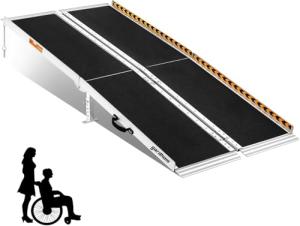

For individuals relying on mobility scooters or wheelchairs, navigating the world often presents physical obstacles that can limit independence. From steep curbs to the high thresholds of SUV boots and vans, these barriers can make transportation a significant challenge. The Tectake Folding Loading Ramps offer a robust, portable solution designed to bridge these gaps.
Constructed with a focus on safety, durability, and ease of use, these ramps are engineered to facilitate the seamless loading of mobility aids into vehicles or over stairs. This guide provides an in-depth exploration of the features, specifications, and practical benefits of the Tectake loading ramp system.
Understanding the Design and Materiality
The Tectake Folding Loading Ramps are primarily crafted from high-grade aluminum. This material choice is intentional, as aluminum provides an optimal strength-to-weight ratio. While the ramps are light enough to be carried by a single person, they possess the structural integrity required to support heavy mobility scooters along with their batteries.
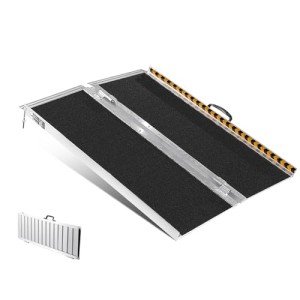
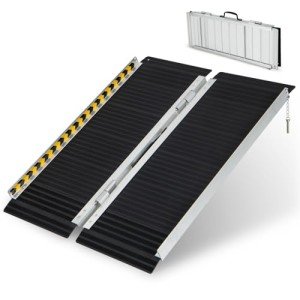
One of the standout features of the Tectake design is the folding mechanism. Unlike rigid, single-piece ramps that require significant storage space, these ramps fold down the middle (longitudinally). This reduces their width, making them narrow enough to be stored in a car boot, under a seat, or in a utility cupboard when not in use.
Key Features at a Glance
- Anti-Slip Surface: The ramps feature a perforated or serrated surface that provides maximum grip, even in wet weather.
- Safety Edges: Raised side rails prevent wheels from slipping off the edge during the loading process.
- Folding Construction: A central hinge allows for compact storage and easy transport.
- End Supports: The flat, chamfered ends ensure a smooth transition from the ground to the ramp and from the ramp to the vehicle.
- Integrated Handles: Heavy-duty handles are often included to make carrying the pair of ramps more ergonomic.
Technical Specifications
When selecting a loading ramp, technical data is crucial to ensure compatibility with the vehicle and the mobility device. Below is a detailed breakdown of the specifications typically associated with the Tectake mobility scooter ramp set.
Table 1: Technical Data Overview
| Feature | Specification (Per Pair) |
|---|---|
| Material | High-Grade Aluminum |
| Total Length | Approx. 183 cm to 210 cm (depending on model) |
| Total Width | Approx. 70 cm to 80 cm |
| Folded Width | Approx. 35 cm to 40 cm |
| Maximum Load Capacity | Up to 270 kg (600 lbs) |
| Weight of Ramps | Approx. 15 kg - 18 kg per pair |
| Surface Finish | Serrated Non-Slip |
| Safety Rails | Yes (approx. 3-5 cm height) |
Safety Considerations for Mobility Loading
Safety is the paramount concern when moving heavy equipment up an incline. The Tectake ramps incorporate several engineering choices to mitigate risk.
1. Traction Control
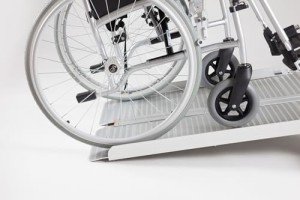
The surface of the ramp is arguably its most critical safety feature. Mobility scooter tires are often made of solid rubber or filled polyurethane, which can become slippery on smooth metal. Tectake addresses this by using a serrated, "chequered plate" or punched-hole design. This provides mechanical "bite," ensuring that the scooter maintains traction even if the wheels are damp.
2. Guard Rails
To prevent the user from accidentally steering the scooter off the side of the ramp, Tectake includes raised safety curbs. These edges act as a guide, keeping the wheels centered within the track. For users with limited hand dexterity who may find steering through narrow spaces difficult, these rails provide an essential "fail-safe."
3. Loading Angle and Stability
While the ramps are rated for high weight capacities, the stability of the ramp depends on the incline. It is generally recommended to follow the 1:12 slope ratio for manual wheelchairs, though mobility scooters with motors can often handle slightly steeper inclines (around 1:6 or 1:8). The Tectake ramps are long enough to provide a manageable gradient for most standard SUVs and van entryways.
Practical Applications
The versatility of the Tectake Folding Loading Ramps extends beyond just vehicle loading. They are multi-purpose tools for enhancing domestic and public accessibility.
Common Uses Include:
- Vehicle Access: Loading three-wheel or four-wheel scooters into the rear of a van or large estate car.
- Threshold Crossing: Overcoming high door thresholds or "lips" in older buildings.
- Garden Steps: Providing a temporary path over patio steps or garden tiers.
- Commercial Use: Delivery drivers may use them for moving heavy wheeled stock or trolleys.
Advantages and Disadvantages
To provide a balanced view, it is important to weigh the benefits against the potential limitations of this specific ramp style.
Table 2: Pros and Cons
| Advantages | Disadvantages |
|---|---|
| Portability: Foldable design and carry handles make them mobile. | Length Constraints: May be too short for very high trucks, creating a steep angle. |
| Durability: Aluminum is rust-proof and weather-resistant. | Weight: Though light for their size, 15kg+ may still be heavy for someone with limited strength. |
| High Capacity: Can support heavy-duty bariatric scooters. | Width Requirements: Users must ensure the vehicle opening is wide enough for the unfolded ramp. |
| No Installation: Ready to use out of the box with no drilling required. | Two-Piece Setup: Requires aligning two separate tracks or unfolding a suitcase-style unit. |
Maintenance and Care
To ensure the longevity of the Tectake ramps, regular maintenance is recommended. Because they are often used outdoors, they are exposed to moisture, road salt, and dirt.
- Cleaning: Regularly wash the ramps with mild soap and water to remove grit and salt, which can degrade the aluminum over many years or make the surface slippery.
- Hinge Lubrication: Periodically apply a silicone-based lubricant to the folding hinges to ensure they operate smoothly and do not creak or stiffen.
- Inspection: Check for any signs of structural warping or cracks in the welds, especially if the ramps have been used near their maximum weight capacity.
- Dry Storage: While aluminum does not rust, storing the ramps in a dry environment prevents the buildup of mold or oxidation on the safety handles and hinges.
Frequently Asked Questions (FAQ)
Can these ramps be used for manual wheelchairs as well?
Yes. The Tectake loading ramps are highly versatile. While they are marketed for mobility scooters, they are equally effective for manual wheelchairs, powerchairs, and even empty trolleys or lawnmowers.
Do I need to bolt these ramps to my vehicle?
No. These are portable ramps designed for temporary use. They feature a support lip that rests securely on the bumper or threshold of the vehicle. However, some models include holes for pins or straps if the user wishes to secure them more permanently during a specific loading session.
What is the difference between a "Suitcase" ramp and these folding ramps?
Tectake offers both styles. A "suitcase" ramp typically folds in half like a book and has a carry handle, looking much like its namesake. These are generally easier to set up as a single unit. Track ramps (two separate pieces) offer more flexibility for different wheel widths but require more effort to align correctly.
Are they suitable for bariatric scooters?
Users should check the specific weight rating of their scooter (including the battery and any accessories). Most Tectake folding ramps support up to 270 kg. If the combined weight of the scooter and the user (if they are sitting on it while it is powered up the ramp) exceeds this, it is not recommended. Note: It is generally safer to walk alongside the scooter using the remote or throttle rather than sitting on it during loading.
Final Thoughts
The Tectake 2 Folding Loading Ramps represent a significant advancement in personal mobility solutions. By combining the lightweight properties of aluminum with a clever folding architecture, Tectake has created a product that balances strength with portability.
For many, these ramps are not just a piece of metal equipment; they are a gateway to the community, allowing for easier travel, medical appointments, and social outings. By ensuring a non-slip transition and a sturdy platform, these ramps provide caregivers and users alike with the confidence needed to overcome the physical hurdles of modern infrastructure. When selecting these ramps, users should always measure their vehicle's load height to ensure the resulting incline is safe and manageable for their specific mobility device.