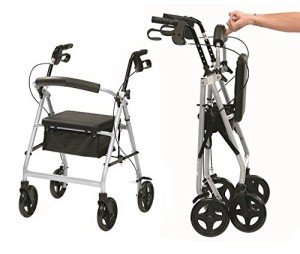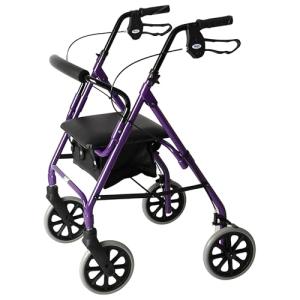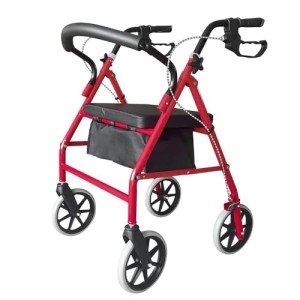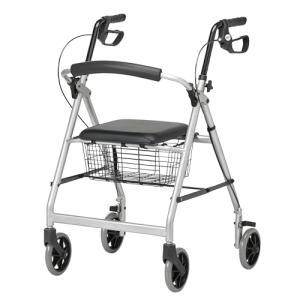





For individuals facing mobility challenges due to age, injury, or chronic conditions, maintaining independence is often a top priority. The transition from unassisted walking to using a mobility aid can be a significant life adjustment. Among the various tools available, the lightweight 4-wheel rollator walker with a seat—particularly in a vibrant blue finish—has emerged as one of the most popular and effective solutions.
This guide provides an in-depth analysis of the features, benefits, and technical specifications of this essential mobility device, offering insights into why it remains a preferred choice for users seeking a balance between stability and portability.
What is a 4-Wheel Rollator Walker?
A rollator differs from a standard walker in one primary way: it features wheels on all its legs. While a traditional walker requires the user to lift the device with every step, a rollator allows for a smooth, continuous walking motion. The 4-wheel configuration, specifically, provides maximum stability and is designed for users who can balance themselves but need a little extra support and a place to rest during longer excursions.
The addition of a built-in seat transforms the walker from a simple support frame into a multi-functional mobility station. The blue aesthetic is not merely a stylistic choice; it offers a modern, high-visibility look that departs from the "clinical" appearance of chrome or grey medical equipment.
Key Features of the Lightweight Blue Rollator
The modern lightweight rollator is a feat of ergonomic engineering. Below are the primary components that contribute to its functionality:
1. The Aluminum Frame
Most lightweight rollators utilize high-grade aluminum. This material is chosen for its high strength-to-weight ratio, ensuring the device can support significant weight while remaining easy for the user or a caregiver to lift into a vehicle.
2. Ergonomic Handgrips and Braking System
The handles are typically contoured to fit the natural shape of the hand, reducing strain on the wrists. Attached to these handles are loop-lock brakes. These serve two purposes:
- Slowing down: Pulling up on the levers provides immediate braking while walking.
- Parking: Pushing down on the levers locks the wheels in place, which is essential before the user sits on the seat.
3. Padded Seat and Backrest
One of the most significant advantages of this model is the integrated seat. Usually made of durable, wipe-clean material with foam padding, it provides a convenient place to rest when the user becomes fatigued. A padded backrest bar ensures safety and comfort while seated.
4. Storage Solutions
Most 4-wheel rollators include a basket or a pouch located under the seat. This allows users to transport personal items, groceries, or medical supplies hands-free, further enhancing independence.
Technical Specifications
When selecting a mobility aid, technical details are crucial to ensure the device fits the user’s body type and lifestyle needs.
Table 1: Standard Specifications for a Lightweight 4-Wheel Rollator
| Feature | Typical Specification |
|---|---|
| Frame Material | Lightweight Aluminum |
| Product Weight | 15 - 18 lbs (6.8 - 8.2 kg) |
| Weight Capacity | 300 lbs (136 kg) |
| Wheel Diameter | 6 - 8 inches |
| Handle Height Adjustability | 31" – 37" |
| Seat Height from Floor | 18" – 22" |
| Color | Cobalt Blue / Metallic Blue |
| Folded Width | 8" – 10" |
Comparing Walkers: Standard vs. 4-Wheel Rollator
Understanding the differences between types of walkers helps in making an informed purchase.
Table 2: Comparison of Mobility Aids
| Feature | Standard Walker | 4-Wheel Rollator |
|---|---|---|
| Movement Method | Must be lifted or slid | Continuous rolling |
| Terrain | Best for indoor/flat surfaces | Indoor and outdoor (grass, gravel) |
| Seating | None | Integrated padded seat |
| Physical Effort | Higher (requires arm strength) | Lower (requires coordination) |
| Speed | Slow and deliberate | Faster, natural gait |
| Braking System | None | Manual loop-lock brakes |
The Benefits of Choosing a Blue Lightweight Model
The choice of a "lightweight" and "blue" model offers specific advantages that go beyond the basic mechanics of walking.
Enhanced Portability
Because these models weigh under 20 pounds, they are significantly easier to manage for elderly individuals or those with limited upper-body strength. They usually feature a one-hand folding mechanism, allowing the walker to collapse into a slim profile for storage in a car trunk or a closet.
Psychological Impact of Color
The color blue is often associated with calmness, stability, and trust. In the context of medical devices, moving away from "hospital silver" can help users feel less self-conscious about using a mobility aid. A stylish blue rollator looks more like a piece of personal lifestyle equipment than a piece of medical machinery.
Versatility in Terrain
The 4-wheel design, especially those equipped with 7-inch or 8-inch wheels, handles uneven outdoor surfaces much better than standard walkers. Whether navigating a park path, a grocery store aisle, or a cracked sidewalk, the rollator provides a stable base.
Safety Guidelines for Users
To maximize the benefits of a 4-wheel rollator, users should adhere to the following safety protocols:
- Ensure Proper Height: The handles should be at the level of the user's wrists when their arms are hanging naturally at their sides.
- Lock the Brakes: Never attempt to sit on the rollator without first engaging the parking brakes.
- Don't Use as a Wheelchair: A rollator is designed for a stationary person to sit on. It is not designed to be pushed while someone is sitting in it.
- Regular Maintenance: Check the wheels for debris and ensure the brakes are tightened periodically.
Frequently Asked Questions (FAQ)
1. Is the rollator difficult to assemble?
Most lightweight rollators arrive partially assembled. Generally, the user or a caregiver only needs to attach the handles and the backrest, often using tool-free thumb screws. The process typically takes less than 10 minutes.
2. Can the seat height be adjusted?
While handle height is almost always adjustable, seat height is often fixed based on the frame size. However, some "universal" or "hemi" models offer adjustable seat heights. It is important to check the specific product dimensions before purchasing.
3. Is the blue paint durable?
Yes, most modern rollators use a powder-coated finish. This process creates a hard, durable layer that is resistant to chipping, scratching, and fading over time.
4. Can this rollator be used inside a small apartment?
While 4-wheel rollators are wider than standard walkers, many are designed with a compact footprint. Users should measure their doorways (standard doors are usually 30-32 inches) and compare them to the rollator's width (usually 24-26 inches).
5. What is the difference between 6-inch and 8-inch wheels?
Six-inch wheels are excellent for indoor use and smooth flat surfaces. Eight-inch wheels offer a smoother ride over bumps, cracks, and outdoor terrain like grass or gravel.
The Lightweight 4-Wheel Rollator Walker with Seat in Blue is more than just a mobility aid; it is a tool for empowerment. By combining a lightweight aluminum frame with the safety of a braking system and the comfort of a padded seat, it addresses the most common concerns of those with limited mobility.
Its stylish blue finish provides a modern touch, while its functional design ensures that users can navigate both indoor and outdoor environments with confidence. For anyone looking to maintain an active lifestyle despite mobility challenges, this rollator represents a reliable, versatile, and user-friendly investment in their independence.