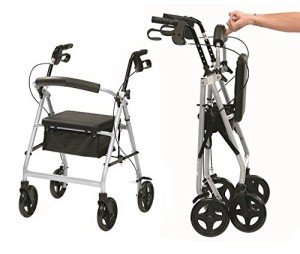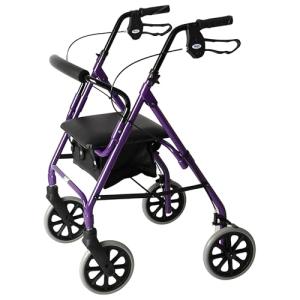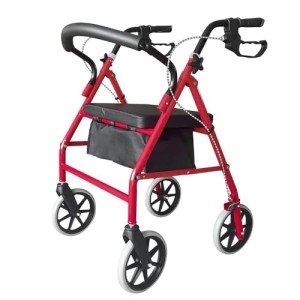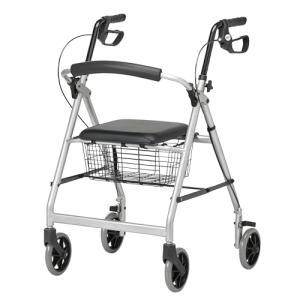

Maintaining mobility is one of the most significant factors in preserving a high quality of life as individuals age. For many seniors, the transition from independent walking to needing assistance can be challenging. However, modern mobility aids have evolved far beyond the traditional, clunky metal walkers of the past. Today, the lightweight 4-wheel rollator with a seat stands out as a premier solution, offering a perfect balance of stability, portability, and comfort.
This guide explores the essential features, benefits, and selection criteria for lightweight 4-wheel rollators, providing seniors and caregivers with the information needed to make an informed decision.
Understanding the Rollator: More Than Just a Walker
While many use the terms "walker" and "rollator" interchangeably, they are distinct devices. A standard walker has four legs that stay in contact with the ground and must be lifted to move forward. A rollator, conversely, features wheels on all legs and a braking system.
The "lightweight 4-wheel" variety is specifically designed for seniors who can walk but need help with balance or require frequent rest stops. The addition of a built-in seat transforms the device from a mere walking aid into a mobile resting station, significantly expanding the user's range of travel.
Key Features of Lightweight 4-Wheel Rollators
When evaluating different models, several core features dictate the usability and safety of the device.
1. Frame Material and Weight
The primary characteristic of a "lightweight" rollator is its frame. Most modern models utilize high-grade aluminum or carbon fiber. While standard steel rollators can weigh upwards of 25 pounds, lightweight versions typically range between 12 and 18 pounds. This weight difference is crucial for seniors who need to lift the device into a car trunk or navigate curbs.
2. The Integrated Seat and Backrest
The seat is the defining feature of a rollator. It allows seniors to participate in social outings, grocery shopping, or walks in the park without the fear of overexertion. A padded seat and a contoured backrest provide the necessary support for safe resting.
3. Braking Systems
Safety is paramount. Most 4-wheel rollators feature "loop-lock" brakes located on the handles. These function similarly to bicycle brakes but include a locking mechanism. By pushing the levers down, the wheels lock completely, ensuring the rollator does not move while the user is sitting down.
4. Wheel Size and Terrain Capability
Rollators typically come with wheel sizes ranging from 6 to 8 inches.
- 6-inch wheels: Ideal for indoor use on flat surfaces like hardwood or tile.
- 8-inch wheels: Superior for outdoor use, as they navigate over sidewalk cracks, grass, and gravel with less effort.
5. Adjustability
To prevent back strain, the height of the handles must be adjustable. A rollator that is too low causes slouching, while one that is too high provides insufficient leverage for the brakes.
Comparative Analysis: Rollator Materials and Wheel Types
To better understand the options available, the following tables break down the differences in construction and wheel utility.
Table 1: Frame Material Comparison
| Feature | Aluminum Frames | Carbon Fiber Frames | Steel Frames (Standard) |
|---|---|---|---|
| Weight | Lightweight (15-18 lbs) | Ultra-Lightweight (10-13 lbs) | Heavy (20-25+ lbs) |
| Durability | High | Very High | Exceptional |
| Price Point | Moderate | High/Premium | Budget-friendly |
| Best For | General daily use | Traveling and frequent lifting | Low-mobility, indoor use |
Table 2: Wheel Size and Usage
| Wheel Size | Best Environment | Maneuverability | Stability on Uneven Ground |
|---|---|---|---|
| 6-inch | Indoors, tight spaces | Excellent | Low |
| 7-inch | Hybrid (indoor/outdoor) | Good | Moderate |
| 8-inch | Outdoors, parks, malls | Moderate | High |
The Benefits of Choosing a Lightweight Model
Opting for a lightweight 4-wheel rollator offers more than just physical support; it provides psychological and lifestyle advantages.
Increased Independence
Seniors often fear losing their independence. A rollator allows them to move through their environment without relying on a companion for physical support. This autonomy is vital for mental well-being and a sense of self-worth.
Energy Conservation
Walking can be exhausting for those with respiratory issues or heart conditions. The ability to stop and sit at any moment allows seniors to conserve energy, meaning they can stay out longer and remain active in their community.
Fall Prevention
The four-wheel design provides a wide base of support. For those with mild balance issues or vertigo, the rollator acts as a constant "anchor," significantly reducing the risk of falls—a leading cause of injury among seniors.
Social Engagement
Mobility limitations often lead to social isolation. A lightweight rollator that is easy to transport in a taxi or a family car encourages seniors to attend family gatherings, go to the cinema, or visit local parks.
How to Properly Fit a Rollator for a Senior
An improperly fitted rollator can do more harm than good. Follow these steps to ensure a safe fit:
- Check the Handle Height: The user should stand straight with their shoes on. Their arms should hang naturally at their sides. The handles of the rollator should be level with the user's wrists. This ensures a slight bend in the elbow (about 20-30 degrees) when gripping the device.
- Evaluate Seat Height: When seated, the user’s feet should rest flat on the floor. If the user’s feet dangle, the seat is too high, which can impair circulation.
- Confirm Weight Capacity: Most lightweight rollators support up to 250–300 pounds. For individuals requiring more support, "bariatric" models are available, though they may be slightly heavier.
Maintenance and Safety Tips
To ensure the longevity of the rollator and the safety of the user, regular maintenance is necessary.
- Inspect the Brakes Regularly: Over time, brake cables can stretch. Ensure the brakes engage immediately and that the locking mechanism holds the device firmly in place.
- Check the Wheels: Ensure there is no debris (like hair or string) caught in the axles, which can cause the wheels to drag or lock up.
- Tighten Bolts: Frequent folding and unfolding can loosen the hardware. A monthly check of all screws and bolts is recommended.
- Safe Seating Procedure: Never sit on the rollator unless the brakes are in the locked position. Furthermore, a rollator is not a wheelchair; it should never be pushed while someone is sitting on it.
FAQ: Common Questions About 4-Wheel Rollators
Q: Can a lightweight rollator be used on carpet?A: Yes, but larger wheels (8 inches) perform significantly better on thicker carpeting. Smaller wheels may require more effort to push.
Q: Do insurance or Medicare cover the cost of a rollator?A: In many cases, Medicare Part B may cover a portion of the cost if the device is deemed "medically necessary" and prescribed by a doctor. It is classified as Durable Medical Equipment (DME).
Q: How do you transport a rollator in a car?A: Most lightweight models feature a folding mechanism. Usually, pulling a strap on the seat or clicking a side lever allows the device to fold flat. Because they are lightweight, most seniors or caregivers can lift them into a backseat or trunk easily.
Q: What is the difference between a 3-wheel and a 4-wheel rollator?A: 3-wheel rollators are more maneuverable in tight spaces but lack a seat and are generally less stable than 4-wheel models. For most seniors, the 4-wheel model is preferred for its safety and the resting seat.
The lightweight 4-wheel rollator with a seat is a transformative tool for seniors. By combining the ease of movement provided by a wheeled frame with the safety of a locking brake system and the convenience of a built-in chair, it addresses the most common barriers to mobility. Whether it is for navigating the narrow aisles of a grocery store or enjoying a long afternoon at a local park, the right rollator provides the confidence and support necessary for seniors to lead active, engaged, and independent lives.